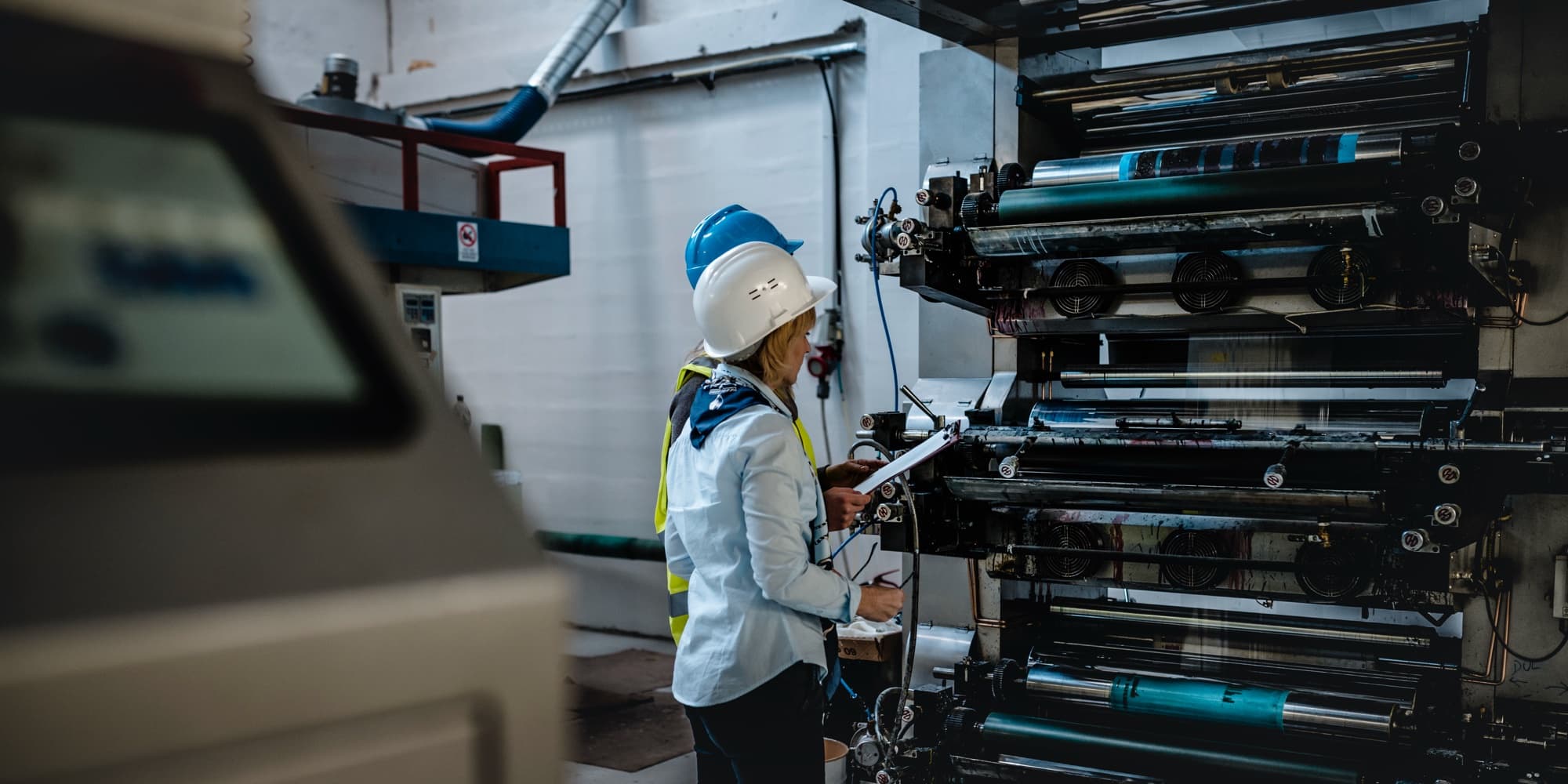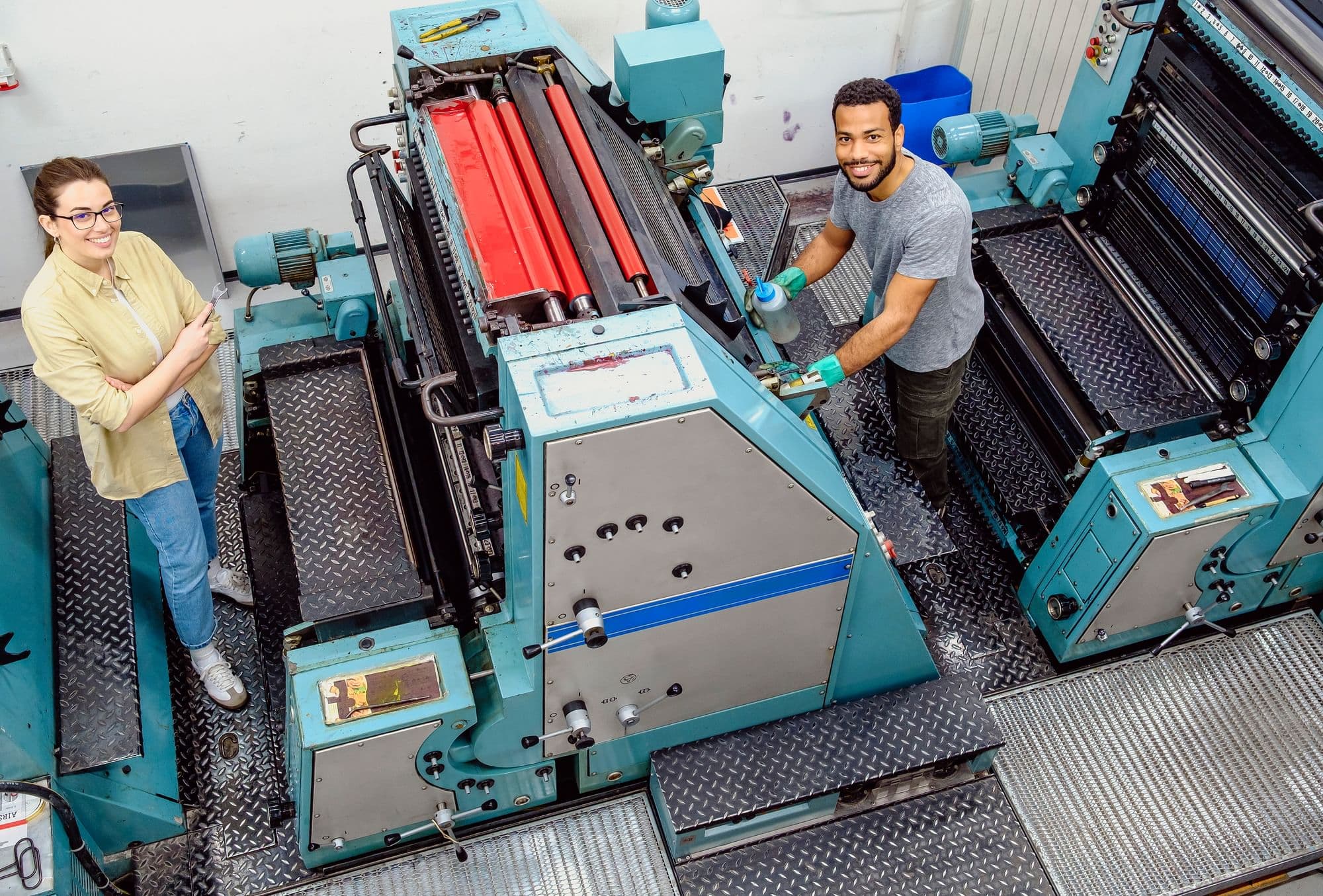
Print Shop Compliance: Where OSHA and EPA Responsibilities Meet
A print shop can have capable people, clean production areas, and a written safety program, yet still carry compliance gaps in the handoffs between production, maintenance, purchasing, safety, and environmental responsibilities.
That happens because OSHA and EPA requirements do not become one combined rule. They can, however, be triggered by the same operational change. A new cleaner may affect employee hazard communication, air records, waste determinations, and chemical-inventory reporting. A ventilation change may affect worker exposure controls and an air permit. A revised maintenance process may affect energy-control procedures and how solvents, wipes, or waste are managed.
Requirements vary by process, materials, equipment, location, waste characteristics, permit status, and state or local programs. The real question is whether the shop can connect press-floor changes to the records, controls, and decisions behind them.
A New Material Can Change More Than the Chemical Inventory
A production manager may approve a new ink, coating, adhesive, or cleaning product to solve a quality or turnaround issue. Purchasing may switch suppliers. None of those decisions is automatically a compliance failure, but each one should trigger review.
When a new product is introduced, the shop should update its chemical inventory and Safety Data Sheet (SDS) system, check workplace labels, and decide whether the product introduces a new chemical hazard that requires additional employee training under OSHA's Hazard Communication Standard.
Secondary containers need the same practical attention. OSHA generally requires workplace containers to carry appropriate hazard information, but a portable container may qualify for the immediate-use labeling exception when the chemical remains under the control of the employee who transferred it during that same work shift. Containers left for later use, used across shifts, or shared with others generally do not fit that exception.
SDS access also has to match the way the shop runs. Electronic systems can work, but employees need ready access during each work shift without barriers that delay access.
One Chemical Inventory May Support More Than One Program
The chemical inventory is not only a Hazard Communication document. Depending on the chemicals and quantities present, the same information may support Emergency Planning and Community Right-to-Know Act (EPCRA) reporting.
Facilities that must maintain SDSs for hazardous chemicals and exceed applicable reporting thresholds may need to provide SDSs or chemical lists to emergency-planning authorities and fire departments, and may need annual inventory reports. The standard federal threshold for many hazardous chemicals is 10,000 pounds, while extremely hazardous substances can have lower thresholds.
That is one of the clearest places where worker-safety information and environmental reporting meet. A new ink, solvent, adhesive, or bulk chemical purchase should trigger more than an SDS upload. The shop may also need to review maximum on-site quantity, storage location, and any applicable Tier II reporting.
Waste Decisions Begin at the Point of Generation
Waste status cannot be assumed from a product name, old disposal habit, or unused product SDS. Under the federal hazardous-waste framework, the generator must make an accurate hazardous-waste determination at the point where the waste is generated, before it is mixed, diluted, or otherwise changed.
That determination may use reliable process knowledge, testing, or both. It should address applicable exclusions, listed wastes, and hazardous characteristics. If a waste is hazardous, the shop should also confirm its generator category because monthly generation can change the requirements that follow.
Solvent-contaminated wipes deserve their own review. Some wipes may qualify for EPA's conditional exclusions when accumulation, labeling, container, recordkeeping, and no-free-liquid conditions are met. Others may need to be managed as hazardous waste, and state adoption must be verified.
Equipment and Ventilation Changes Need Cross-Functional Review
Production pressure can make maintenance procedures informal. A familiar technician may know the equipment well, but familiarity does not replace a process for evaluating hazardous energy, machine guarding, chemical use, waste generation, and ventilation changes.
OSHA's lockout/tagout standard requires an energy-control program with procedures, training, and periodic inspections when servicing or maintenance could expose employees to unexpected energization, startup, or release of stored energy. Some narrowly defined minor servicing performed during normal production may use effective alternative protective measures when all of OSHA's criteria are met. The shop should document why the selected procedure applies.
Machine guarding and lockout/tagout are related but distinct control systems. A press may need guarding during normal production and lockout/tagout during servicing. Before changing an exhaust hood, duct, dryer setting, or control-device connection, the shop should review worker-exposure controls and the assumptions in any applicable air permit or emissions record.
Air Requirements Depend on the Printing Process and Facility
Federal air requirements are process- and source-specific. EPA's Printing and Publishing National Emission Standards for Hazardous Air Pollutants primarily address major hazardous air pollutant (HAP) sources operating publication rotogravure, product and packaging rotogravure, or wide-web flexographic presses. Many commercial printers operate other press types and may instead encounter state or local air permits, volatile organic compound (VOC) rules, or requirements based on materials and emissions.
A broad print-shop compliance review should not assume one federal air rule is the main issue for every offset, digital, letterpress, flexographic, gravure, or screen-printing operation. It should identify the actual process, materials, emission points, control equipment, permit assumptions, and records that apply.
The practical connection is concrete. A new cleaner or ink can affect Hazard Communication information, worker exposure controls, emissions records, air-permit limits, waste classification, and solvent-wipe management.
Use a Change-Control Process That Connects the Responsibilities
A focused review should start where the floor and the file cabinet can separate. When a new chemical, supplier, press, coating, cleaning process, ventilation change, or waste practice is proposed, ask:
- Does the chemical inventory match the products present and used?
- Are current SDSs accessible, and does any new product require updated training or workplace labeling?
- Does the change affect exposure controls, ventilation, personal protective equipment, emergency procedures, air-permit records, waste classification, generator category, or solvent-wipe practices?
- Do maintenance, guarding, and energy-control procedures match current work?
- Could chemical quantities affect EPCRA or state chemical-inventory reporting?
- Who owns each decision, and where is the basis documented?
This is not a universal OSHA or EPA form. It is a practical operating process: identify the change, obtain current technical information, review worker hazards and environmental obligations, assign an owner, update records, and verify the change after implementation.
Treat Documentation as an Operating Tool
Documentation is not paperwork for its own sake. In a print shop, current records help managers make consistent decisions when a new material arrives, a press is serviced, or a regulator asks how a process is managed.
Useful records may include chemical inventories, current SDSs, workplace labels, training documentation, hazardous-waste determinations, generator-category support, solvent-wipe records, air permits, emissions records, energy-control procedures, corrective actions, and approvals.
GMG EnviroSafe can help commercial printing facilities connect worker-safety and environmental responsibilities across chemical management, equipment procedures, waste streams, permits, records, and corrective actions. Depending on the facility's needs, GMG supports site assessments, Hazard Communication, employee training, environmental permitting and reporting, and documentation management.
Contact GMG EnviroSafe to discuss a site assessment focused on the handoffs among production, maintenance, chemical management, and environmental compliance.
Sources
(1) OSHA, 29 CFR 1910.1200, Hazard Communication: https://www.osha.gov/laws-regs/regulations/standardnumber/1910/1910.1200
(2) OSHA, 29 CFR 1910.147, The Control of Hazardous Energy: https://www.osha.gov/laws-regs/regulations/standardnumber/1910/1910.147
(3) eCFR, 40 CFR 262.11, Hazardous waste determination and recordkeeping: https://www.ecfr.gov/current/title-40/chapter-I/subchapter-I/part-262/subpart-A/section-262.11
(4) eCFR, 40 CFR 261.4, Exclusions, including solvent-contaminated wipes provisions: https://www.ecfr.gov/current/title-40/chapter-I/subchapter-I/part-261/subpart-A/section-261.4
(5) EPA, Hazardous Waste Generator Regulatory Summary: https://www.epa.gov/hwgenerators/hazardous-waste-generator-regulatory-summary
(6) EPA, Hazardous Chemical Inventory Reporting under EPCRA Sections 311 and 312: https://www.epa.gov/epcra/hazardous-chemical-inventory-reporting
(7) EPA, Printing and Publishing Industry National Emission Standards for Hazardous Air Pollutants: https://www.epa.gov/stationary-sources-air-pollution/printing-and-publishing-industry-national-emission-standards
(8) eCFR, 40 CFR Part 63, Subpart KK, National Emission Standards for the Printing and Publishing Industry: https://www.ecfr.gov/current/title-40/chapter-I/subchapter-C/part-63/subpart-KK
(9) OSHA, Hazard Communication Standard rulemaking: https://www.osha.gov/hazcom/rulemaking