Hearing Conservation in Commercial Printing: Beyond the Pressroom
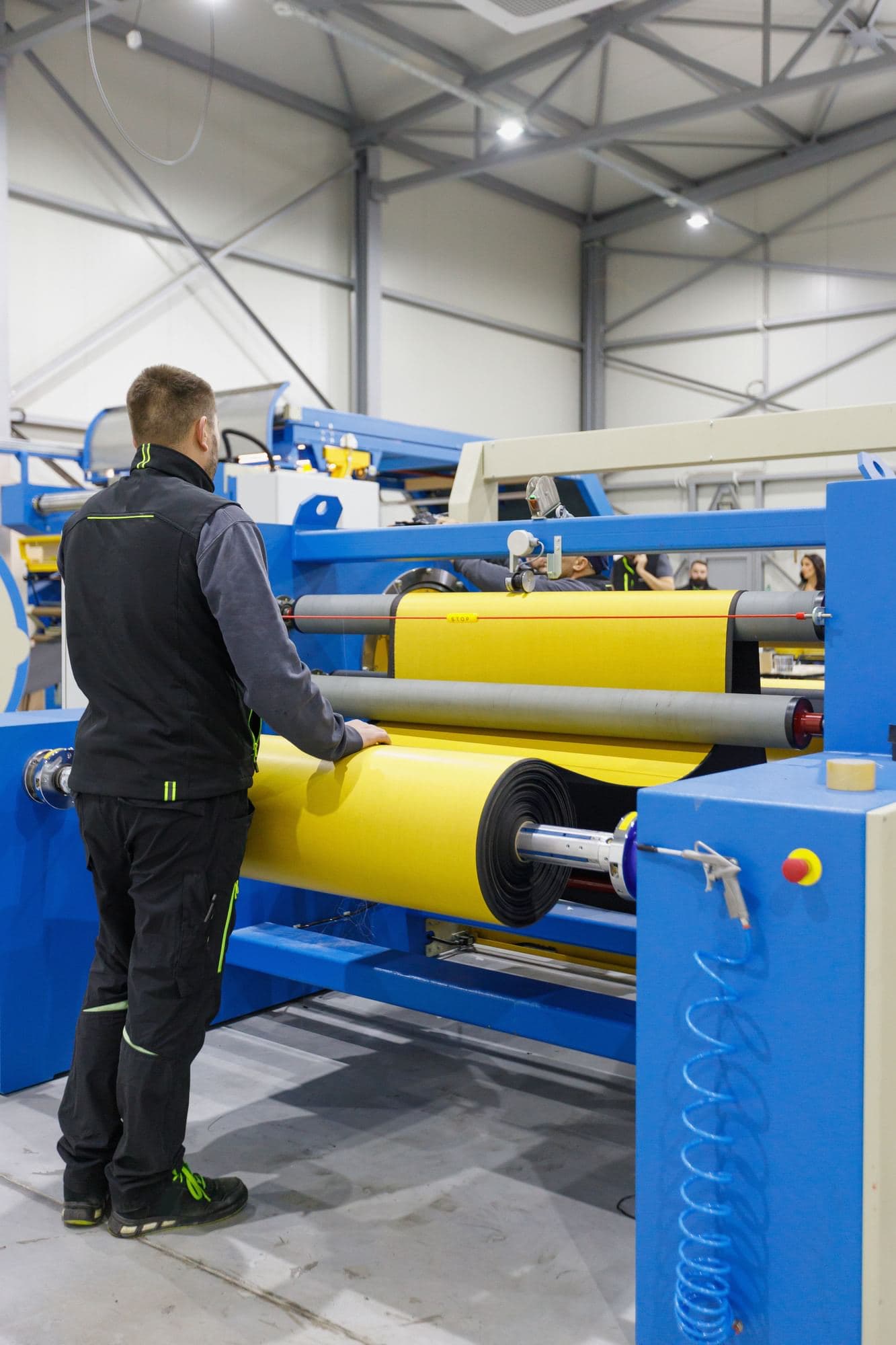
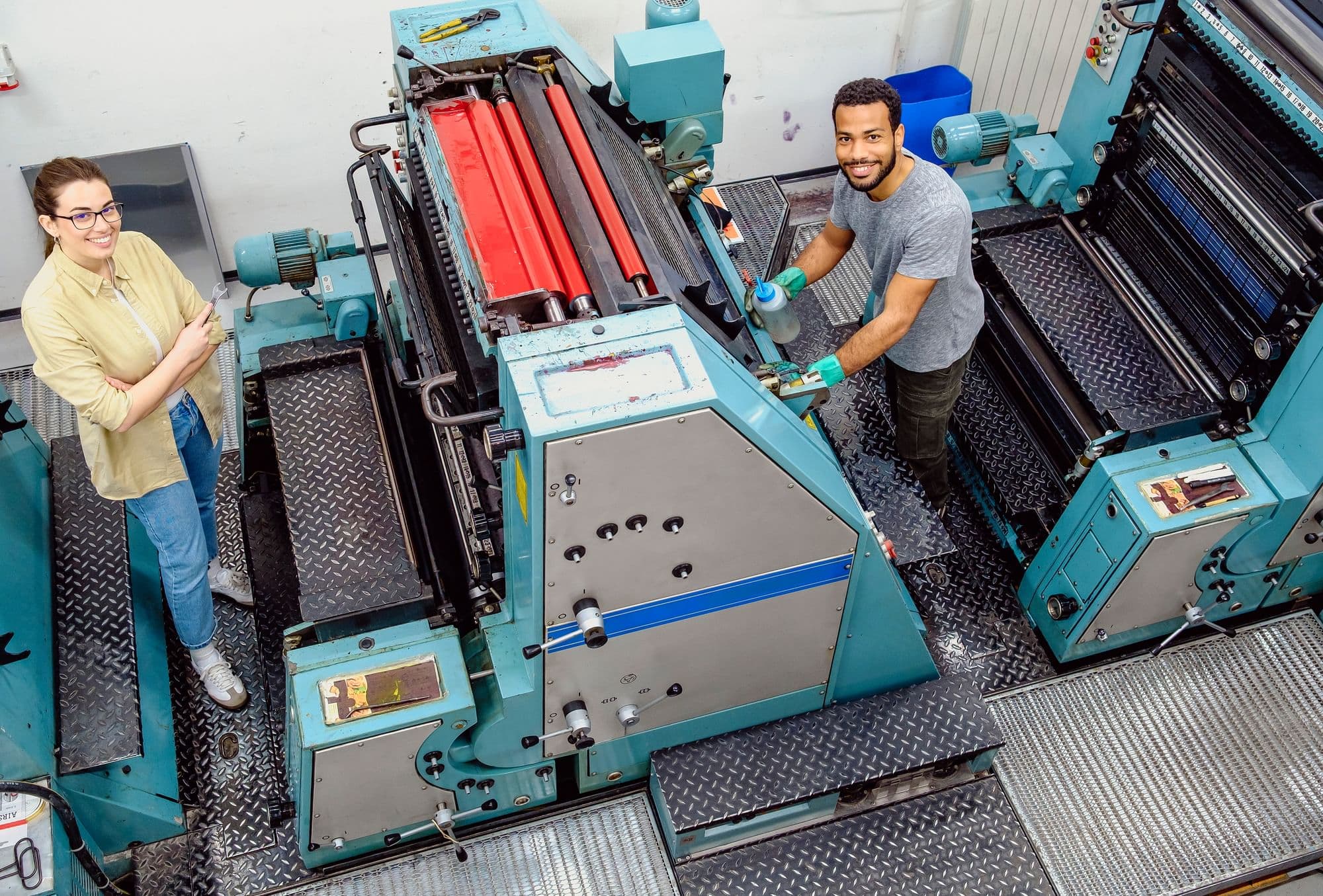
In a pressroom or bindery, noise can become part of the background. Presses, folders, cutters, stitchers, compressors, blowers, finishing lines, and mailing equipment may run through the whole shift. The risk is not only the loudest machine. It is the full-shift exposure created as people move through production, bindery, maintenance, shipping, and support areas.
That is why hearing conservation in commercial printing has to be managed as a current operating system, not a one-time survey or a box of earplugs by the door.
Why the Printing-Specific Data Matters
In 2024, the employer-reported occupational hearing-loss incidence rate for commercial printing, except screen and books (NAICS 323111), was 10.8 cases per 10,000 full-time-equivalent workers, compared with 1.1 for private industry overall. BLS also estimated roughly 300 employer-reported hearing-loss cases in that narrow classification during 2024.
That rate is an incidence estimate, not a measure of hearing-loss prevalence across all print employees. It does not cover every printing operation, screen printing, book printing, digital-only businesses, or in-house print departments. Used carefully, it still supports a practical point: print and bindery operations should verify current exposure instead of assuming familiar noise is harmless.
OSHA Noise Limits: Action Level, PEL, and Duration
OSHA’s general-industry noise standard uses both sound level and duration. The 90 dBA value is the 8-hour permissible exposure level under OSHA’s 5 dB exchange rate, while Table G-16 addresses shorter exposures at higher levels and Appendix A explains mixed-exposure dose calculations. It is not a simple ceiling that noise may never exceed.
The 85 dBA 8-hour time-weighted average action level does different work. At or above that level, measured without credit for hearing-protector attenuation, OSHA requires a continuing, effective hearing conservation program. That program includes monitoring, audiometric testing, hearing protectors, annual training, and required records. Feasible engineering or administrative controls are required when exposures exceed OSHA’s permissible exposure limits.
NIOSH recommends a more protective 85 dBA recommended exposure limit over 8 hours using a 3 dB exchange rate. That recommendation is an important health benchmark, but it is not the federal OSHA permissible exposure limit.
Where Exposure Can Be Missed
Published equipment ranges and “raise your voice” checks can be useful screening tools, but they are not compliance measurements. A worker’s actual exposure depends on where the person works, how long they spend near each source, what equipment is running, whether doors or enclosures are open, and whether production speeds or layouts have changed.
Common gaps include bindery employees who are assumed to be outside the noise problem, maintenance technicians who enter high-noise areas for short tasks, off-shift teams whose conditions differ from day shift, and temporary workers who are not included in the exposure roster. OSHA’s Temporary Worker Initiative frames host employers and staffing agencies as jointly responsible for safe conditions; the host employer is usually best positioned to assess workplace noise, while the staffing agency may be better positioned to help manage audiometric continuity across assignments.
What a Current Hearing Conservation Program Should Cover
When monitoring shows exposure at or above the action level, affected employees must be notified of results and given an opportunity to observe monitoring. Baseline audiograms are generally required within 6 months of first exposure at or above the action level, or within 1 year if a mobile test van is used, provided hearing protection is required for any employee exposed above the action level for more than 6 months before the baseline is obtained.
Baseline tests must be preceded by at least 14 hours without workplace-noise exposure; hearing protectors may substitute for that quiet period, and employees must also be notified to avoid high levels of nonoccupational noise before the test. Annual audiograms then have to be compared with the baseline. If a standard threshold shift is determined, OSHA allows an optional retest within 30 days, and written notice is due to the employee within 21 calendar days after the determination.
Hearing protectors are not just supplies. OSHA expects a suitable variety, initial fitting, training in use and care, supervision for correct use, and attenuation evaluation under Appendix B. Communication matters, but it should not be used as a reason to choose inadequate protection.
Noise and Ototoxic Chemicals Should Be Reviewed Together
Some printing-related products may contain solvents identified by OSHA and NIOSH as ototoxic, such as toluene, xylene, and ethylbenzene, depending on formulation. Safety Data Sheets may not always flag ototoxicity clearly, so ingredient review and industrial-hygiene judgment matter. Chemical controls remain separate obligations, but reviewing noise and chemical exposure together can help identify risks that would be missed in separate silos.
Records: Required Proof Versus Management Documentation
OSHA requires noise exposure measurement records to be kept for at least 2 years and audiometric test records for the duration of the affected employee’s employment. Federal 1910.95 does not create a standalone written-program requirement, but organized management documentation is still useful for showing who is covered, what changed, what was corrected, and when the program was reviewed.
For hearing-loss recordability, 29 CFR 1904.10 requires a separate analysis. A case generally depends on work-relatedness, a standard threshold shift, and a 25 dB average hearing level above audiometric zero in the same ear at 2,000, 3,000, and 4,000 hertz. OSHA also allows retesting within 30 days for recordability decisions and limits age adjustment.
What Owners Should Review Before the Next Survey
A practical review should ask whether monitoring reflects current equipment, production speeds, layouts, shifts, and controls; whether bindery, maintenance, off-shift, and temporary workers are included; whether employees were notified and observation rights were handled; whether baseline timing is current; whether hearing-protector attenuation was evaluated; whether annual training reflects current work processes and protection; and whether ototoxic exposure is being considered.
State-plan employers should also check state requirements. For example, California’s occupational-noise rules are addressed across Title 8, Sections 5096–5100.
How GMG EnviroSafe Can Help
Through HealthAssure®, GMG EnviroSafe supports employers with Workplace Noise Exposure Assessment and Workplace Hearing Protection & Conservation Program services. Depending on the agreed scope, that work may include exposure measurement, program comparison, hearing-protector selection support, audiometric-testing coordination, recordkeeping review, ongoing compliance support, and bilingual English and Spanish training support. In-person Spanish delivery depends on local staff availability, and pre-recorded Spanish training is available.
The right next step is focused: measure current exposure, compare the program against current requirements and operations, and prioritize follow-through under the agreed assessment scope.
Sources
(1) U.S. Bureau of Labor Statistics. Survey of Occupational Injuries and Illnesses, Table SNR08 and Table SNR10, 2024. https://www.bls.gov/iif/nonfatal-injuries-and-illnesses-tables.htm
(2) OSHA. 29 CFR 1910.95, Occupational Noise Exposure. https://www.osha.gov/laws-regs/regulations/standardnumber/1910/1910.95
(3) OSHA. Appendix A to 1910.95, Noise Exposure Computation. https://www.osha.gov/laws-regs/regulations/standardnumber/1910/1910.95AppA
(4) OSHA. Appendix B to 1910.95, Hearing Protector Attenuation. https://www.osha.gov/laws-regs/regulations/standardnumber/1910/1910.95AppB
(5) OSHA. Appendix G to 1910.95, Monitoring Noise Levels. https://www.osha.gov/laws-regs/regulations/standardnumber/1910/1910.95AppG
(6) OSHA. 29 CFR 1904.10, Recording Criteria for Cases Involving Occupational Hearing Loss. https://www.osha.gov/laws-regs/regulations/standardnumber/1904/1904.10
(7) OSHA. Temporary Worker Initiative. https://www.osha.gov/temporaryworkers
(8) NIOSH. Noise and Hearing Loss. https://www.cdc.gov/niosh/noise/
(9) OSHA/NIOSH. Preventing Hearing Loss Caused by Chemical and Noise Exposure. https://www.cdc.gov/niosh/bulletin/2018/ototoxicant-chemicals.html
(10) California Code of Regulations. Title 8, Sections 5096–5100. https://www.dir.ca.gov/title8/sb7g15a105.html
(11) GMG EnviroSafe. Workplace Noise Exposure Assessment. https://www.gmgenvirosafe.com/protect-health-and-reduce-costs/workplace-noise-exposure-assessment
(12) GMG EnviroSafe. Workplace Hearing Protection & Conservation Program. https://www.gmgenvirosafe.com/protect-health-and-reduce-costs/workplace-hearing-protection-and-conservation-program
(13) GMG EnviroSafe. HealthAssure®. https://www.gmgenvirosafe.com/healthassure