OSHA Recordkeeping in Commercial Print: What Your Facility Should Be Tracking and Why It Matters
Most print shop owners think of OSHA recordkeeping as paperwork: a log you fill out, a summary you post, a form you file away. But those records do real work. They're the first thing an inspector asks for, part of the data OSHA uses to decide where to focus, and one of the clearest early-warning systems a shop has for the injuries that hurt production and people.
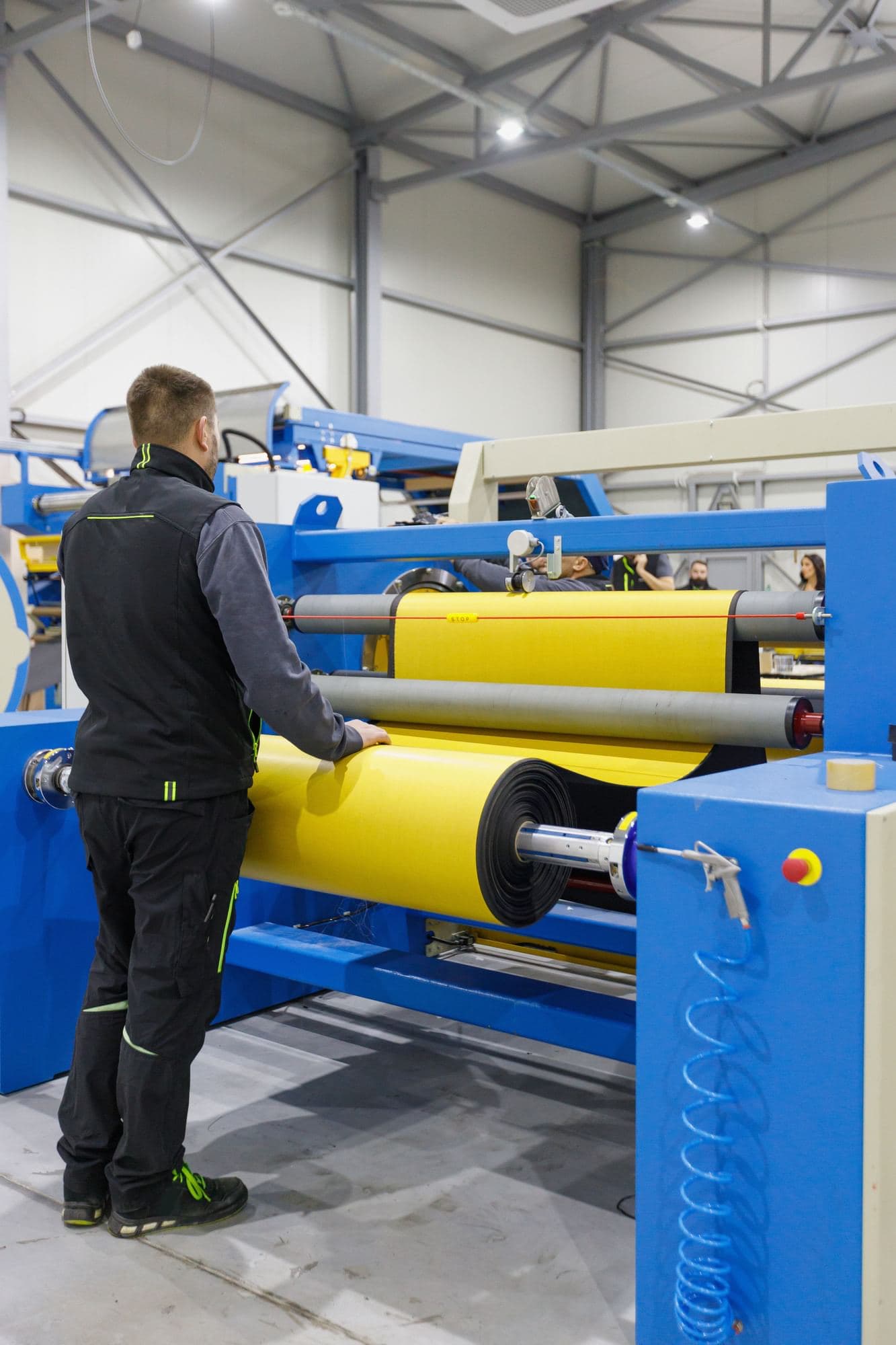
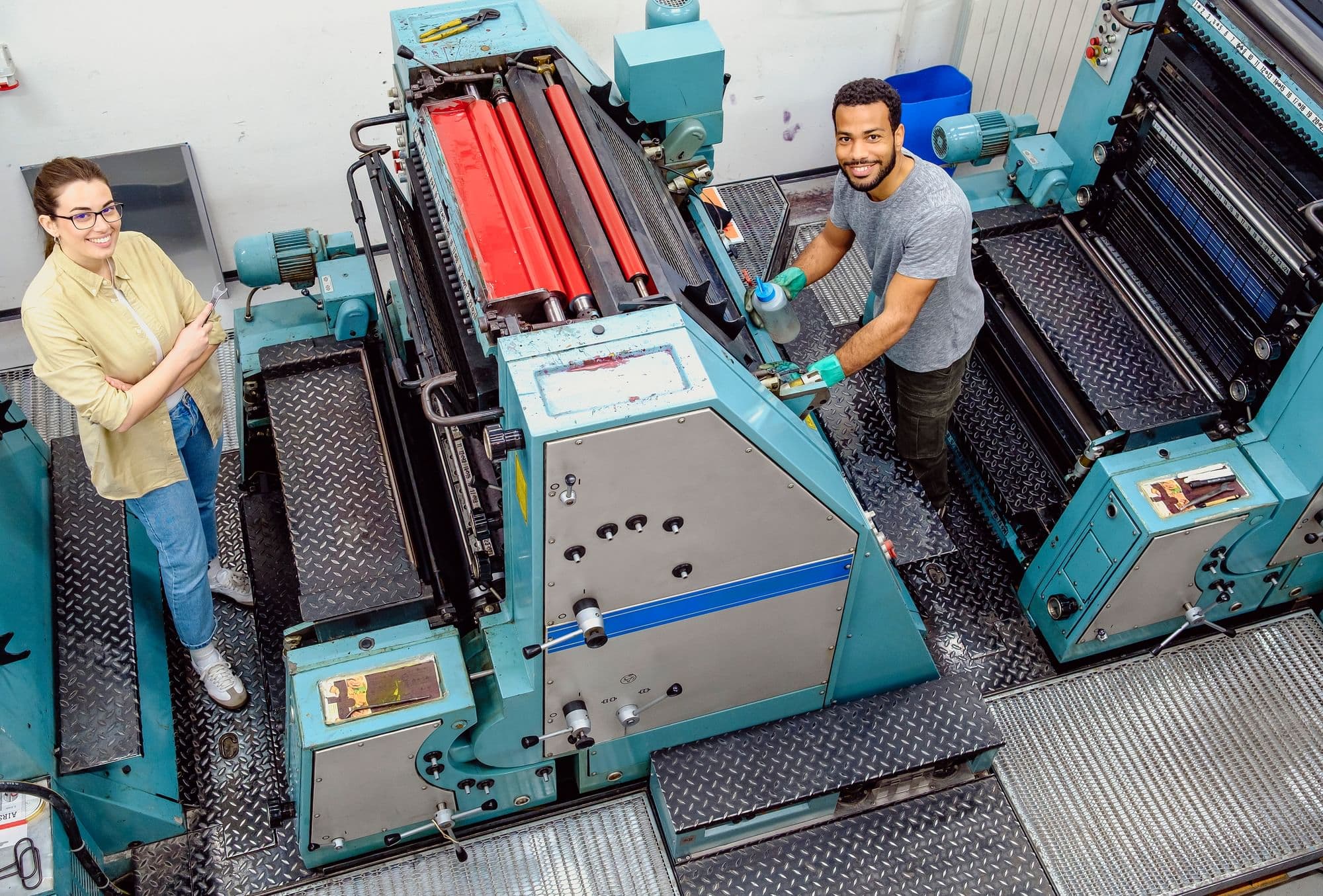
They're also easy to get wrong. A commercial print operation can produce a wide range of injuries and illnesses: cuts and amputations from cutters and presses, skin and breathing problems from solvents and inks, hearing loss from press noise, and strains from the bindery.
Each type follows different recording rules, and that's exactly where logs drift out of accuracy. A case gets coded as first aid when it should have been recorded. A hearing-loss case never makes the log. A summary gets posted late. None of it looks like a problem until it is.
This guide breaks down what your facility should be tracking, where print shops most often go wrong, and why getting it right protects both your team and your business.
Why OSHA Recordkeeping Matters for Print Shops
Under OSHA, most employers with more than 10 employees have to keep records of work-related injuries and illnesses on three forms: the OSHA 300 Log, the 300A Summary, and the 301 Incident Report (1). For many commercial printers, that's not optional, and we'll cover why below.
Accurate records matter for reasons beyond the rule itself:
- They're reviewed first in an inspection. When OSHA shows up, injury and illness records are among the first things requested, and you have just 4 business hours to produce them (2). Disorganized or inaccurate logs make a poor first impression and can widen an inspection.
- The data can influence OSHA's attention. OSHA collects the injury and illness data that covered employers submit electronically, and high or unusual rates can draw added scrutiny (3).
- They're an early-warning system. Reviewed every month or quarter, the 300 Log shows patterns: injuries clustering on a shift, a machine, or a body part. That's how a reactive shop becomes a proactive one.
One reassurance worth stating plainly: recording a case is not an admission that anyone did anything wrong. It doesn't mean the employer was at fault, that a standard was violated, or that the case qualifies for workers' compensation (1). That matters, because the instinct to keep an injury off the log to protect the numbers is exactly the instinct that gets shops into trouble.
Does Your Print Shop Have to Keep OSHA Records?
Two questions decide it: your size and your industry.
- Size. Employers with 10 or fewer employees at all times during the prior year are exempt from routine recordkeeping unless OSHA or the BLS asks in writing. With 11 or more, you're generally in (4).
- Industry. OSHA partially exempts a list of low-hazard industries, mostly retail, finance, insurance, and real estate (5). Commercial printing is not on that list (6); it's manufacturing, which OSHA treats as higher-hazard, so a print shop with 11 or more employees keeps full records.
There's a second obligation many printers miss: electronic submission. Manufacturing is a designated industry under OSHA's electronic reporting rule, so many printing establishments with 20 or more employees must submit their 300A data electronically each year by the March 2 deadline, with case-level submission required only for larger facilities in specific industries (7, 8). OSHA's ITA Coverage Application can confirm exactly what your facility owes (3).
If you run more than one plant, each location that operates for a year or more keeps its own separate records; one shared binder for multiple facilities isn't compliant (1).
Temporary workers can count too. If your facility supervises temporary or leased workers day-to-day, their injuries may need to go on your OSHA log even if a staffing agency pays them (9), something print shops bringing in seasonal or bindery help often assume isn't their responsibility.
OSHA 300, 300A, and 301 Forms Explained
The three forms work as a set: the 301 captures the detail of each case, the 300 lists the recordable cases, and the 300A totals them for the year.
- OSHA 300 Log. A running list of recordable injuries and illnesses. You must enter a new case within 7 calendar days of learning about it (10). Don't wait until an investigation wraps up.
- OSHA 301 Incident Report. The detail behind each 300 entry. Every 300 entry should have a matching 301, and a workers' compensation report can substitute if it captures the same information (10).
- OSHA 300A Summary. The year-end totals. It must be certified by a company executive and physically posted in the workplace from February 1 through April 30, even in a year with zero injuries (11).
Two more rules catch shops off guard:
- Retention. Keep the 300, 300A, and 301 for 5 years, and update the 300 Log during that time if a case changes, for example, a cut that seemed minor later needs surgery (12).
- Reporting is separate from logging. Logging a serious injury doesn't satisfy OSHA's reporting rule. You must report a work-related fatality within 8 hours, and an amputation, in-patient hospitalization, or loss of an eye within 24 hours (13). Amputation hazards are significant in printing, so this one matters.
What Counts as an OSHA Recordable Injury or Illness
A case belongs on the 300 Log if it's work-related, a new case, and it results in any one of the following: death, days away from work, restricted work or a job transfer, medical treatment beyond first aid, loss of consciousness, or a significant injury or illness diagnosed by a physician or other licensed health care professional (14).
The line that trips up print shops most is first aid versus medical treatment. OSHA defines first aid with a specific, fixed list. If the care given is medical treatment beyond that list, the case is generally recordable when the case is work-related and new (14). A few print-floor examples:
- First aid (not recordable): cleaning or flushing a wound, a butterfly bandage or Steri-Strip, a tetanus shot, or over-the-counter medicine at nonprescription strength.
- Medical treatment (recordable): stitches, prescription medication (including prescription-strength versions of common pain relievers), physical therapy, or removing a foreign object embedded in the eye.
So a laceration from a paper cutter closed with a butterfly bandage is first aid. The same cut closed with stitches is recordable. The difference is the treatment, not how the injury feels.
One more commonly missed category: restricted work and job transfer. If an injured bindery worker is moved to light duty or can't perform their routine job, that case is recordable even if they never miss a day (14).
What OSHA Recordkeeping Mistakes Can Cost Your Print Business
The penalties are real but rarely the whole story. Failing to post or certify the 300A can draw a citation on its own, and serious recordkeeping violations, or intentional under-recording, can carry penalties up to $16,550 per serious violation and $165,514 per willful or repeated one (15, 16).
The bigger cost is usually indirect: inaccurate logs can trigger or broaden an inspection, undercut your defense during one, and hide the injury trends that, caught early, could have prevented the next incident.
What Your Print Facility Should Be Tracking Before It Hits the Log
The OSHA forms are the final output, not the starting point. An accurate log depends on a reporting process employees trust. OSHA expects a reasonable way for workers to report injuries and illnesses promptly, and it prohibits discouraging or retaliating against reporting (17). This matters in print, where a tight production deadline can quietly pressure someone not to mention a "minor" cut or strain. If workers delay reporting because they worry about slowing a job or affecting a safety bonus, the log becomes less accurate, and the hazard stays hidden.
When an incident does happen, capture the details while they're fresh. A strong print-shop record includes:
- Date, shift, department, machine, and task
- Employee status: full-time, temporary, leased, or contractor
- The supervisor responsible for day-to-day direction
- Treatment provided, and whether it was first aid or medical treatment
- Days away, restricted duty, or job transfer, with dates
- Whether the case is an injury or an illness
- Whether it triggered OSHA severe-injury reporting
- Corrective actions taken, and the date they closed
- Whether similar first-aid cases or near misses are repeating
Near misses and first-aid cases don't have to go on the OSHA log, but tracking them is how you catch a pattern before it becomes a recordable injury.
OSHA Recordkeeping Support From GMG EnviroSafe
Recordkeeping done right is ongoing, detailed work, and it's easy to get wrong in a busy shop. GMG EnviroSafe acts as your compliance department, keeping your injury and illness records accurate and inspection-ready. Our support commonly includes:
- Correctly classifying cases: recordable versus first aid, injury versus illness, and restricted duty versus days away
- Keeping the 300 Log and 300A current, certified, and posted on time, including electronic ITA submission
- Coordinating recordkeeping for temporary and leased workers, and standardizing it across multiple locations
- Training supervisors and HR on what's reportable and when, and building records that hold up when OSHA asks
The goal isn't just clean paperwork. It's records you can stand behind, fewer surprises during an inspection, and a clearer picture of where to protect your team next.
If you're not confident your OSHA logs would hold up to a closer look, it may be time for a second set of eyes. Contact GMG EnviroSafe for an OSHA recordkeeping review and practical support keeping your logs accurate, current, and inspection-ready.
Sources
- OSHA. Recordkeeping (overview).
- OSHA. 29 CFR 1904.40, Providing Records to Government Representatives.
- OSHA. Injury Tracking Application (ITA) and Electronic Submission.
- OSHA. 29 CFR 1904.1, Partial Exemption for Employers With 10 or Fewer Employees.
- OSHA. 29 CFR 1904.2, Partial Exemption for Establishments in Certain Industries.
- OSHA. 1904 Subpart B Appendix A, Partially Exempt Industries.
- OSHA. 29 CFR 1904.41, Electronic Submission of Injury and Illness Records.
- OSHA. 1904 Subpart E Appendix A, Designated Industries for 300A Electronic Submission.
- OSHA. 29 CFR 1904.31, Covered Employees.
- OSHA. 29 CFR 1904.29, Forms and the Seven-Day Entry Requirement.
- OSHA. 29 CFR 1904.32, Annual Summary and Posting.
- OSHA. 29 CFR 1904.33, Retention and Updating of Records.
- OSHA. 29 CFR 1904.39, Reporting Fatalities, Hospitalizations, Amputations, and Losses of an Eye.
- OSHA. 29 CFR 1904.7, General Recording Criteria (including first aid).
- OSHA. Recordkeeping Policies and Procedures Manual, CPL 02-00-131.
- OSHA. Penalties (current federal maximums).
- OSHA. 29 CFR 1904.35, Employee Involvement.