Printing Ergonomics: Testing Material-Flow Changes Under Real Production Conditions
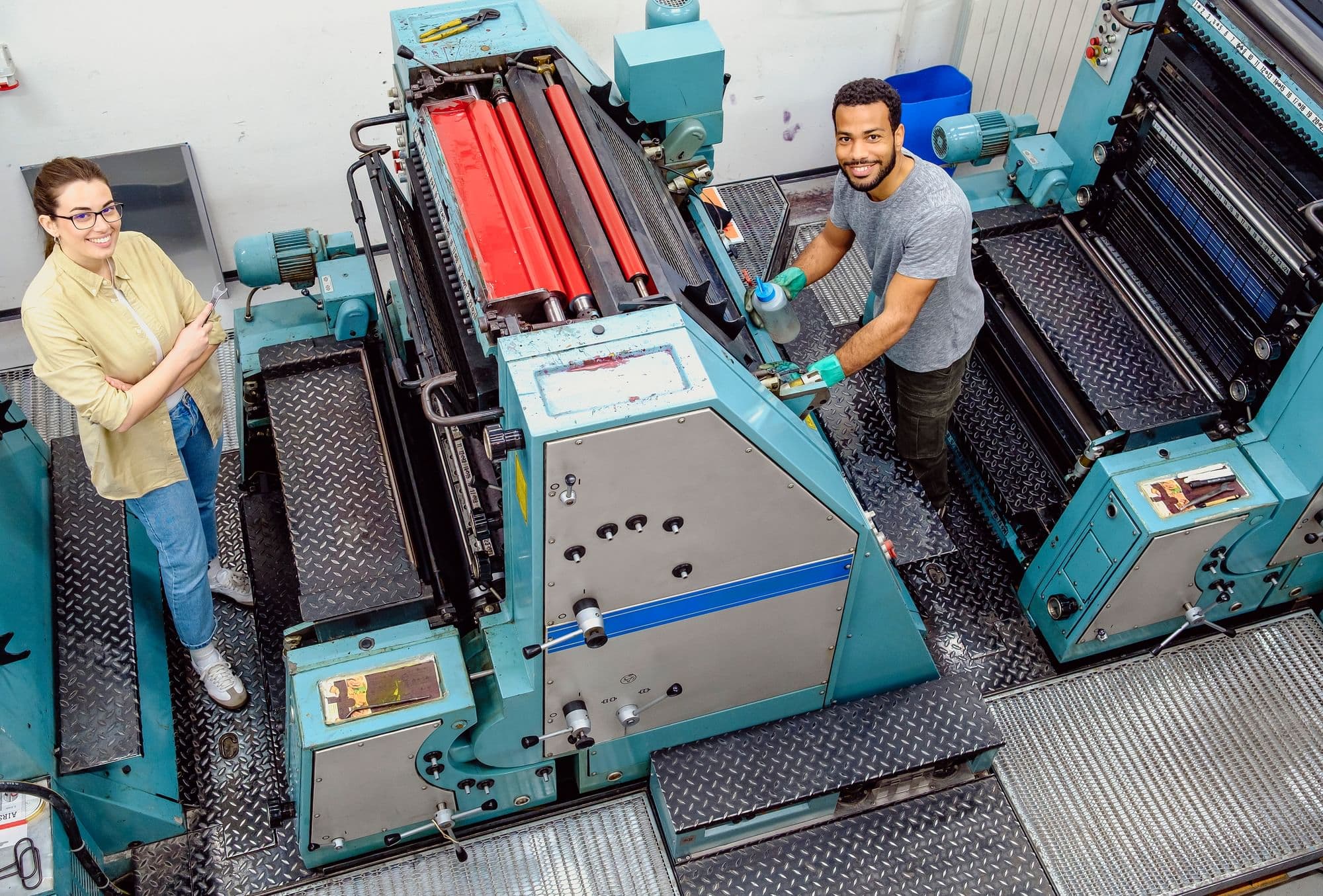
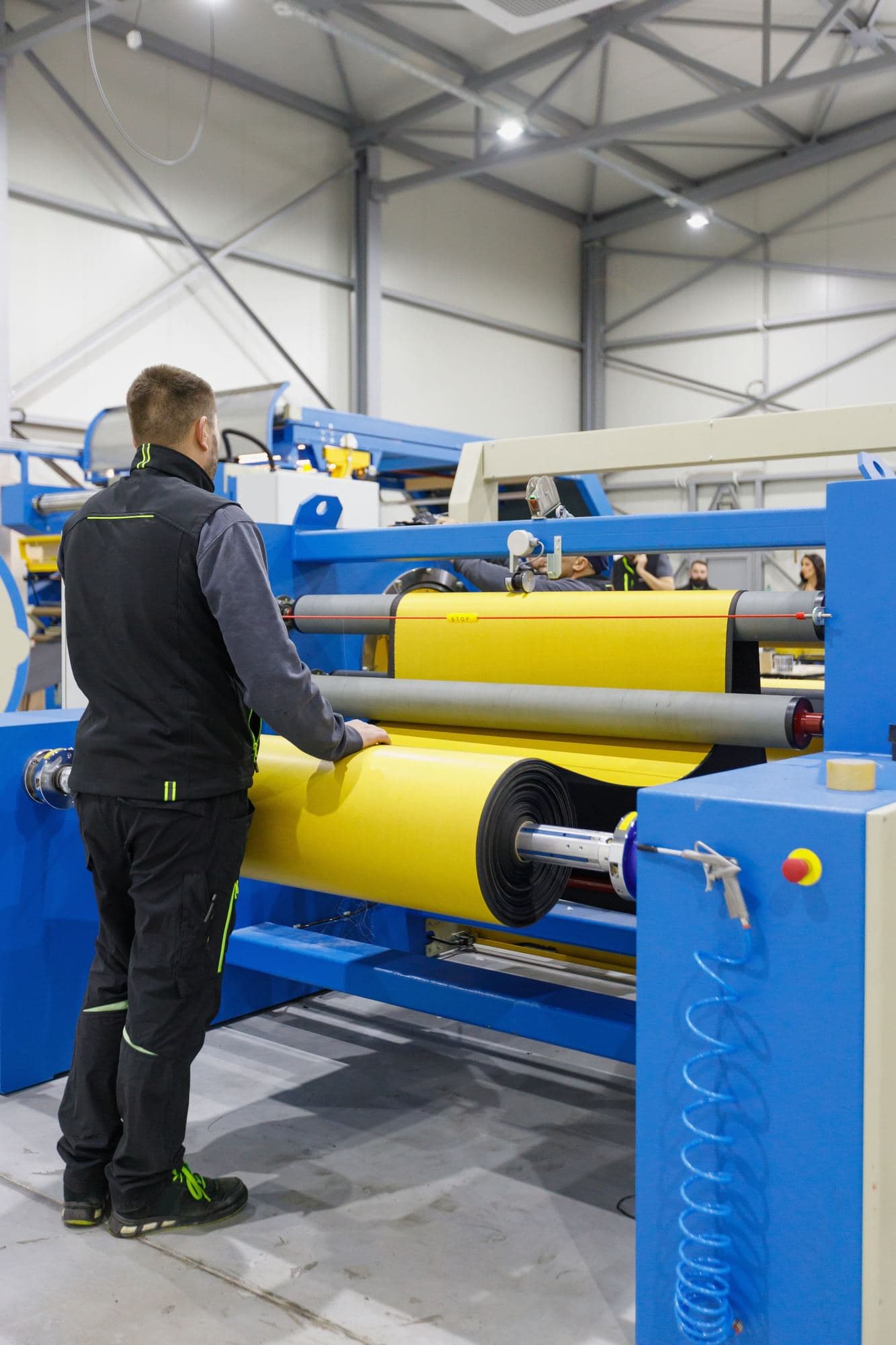
A sheet can change height and direction several times before it becomes a finished job. Stock moves from pallet to press, press delivery to a stack, stack to cutter or folder, then into cartons or onto another pallet. Each transfer can add a reach, lift, push, pull, turn, or hold.
Those transfers are where printing ergonomics becomes visible. A crew may keep the job moving by pulling stock closer with one hand, turning before setting it down, lowering a pallet with each layer, or reaching across a packing surface. Repeated through a long run, that workaround becomes part of the job's physical demand.
The National Institute for Occupational Safety and Health (NIOSH) defines ergonomics as designing work tasks and demands to fit workers' capabilities. It identifies lifting, pushing, pulling, carrying, awkward posture, vibration, and the intensity, frequency, and duration of activity as factors in work-related musculoskeletal disorders. In printing, that definition points directly to material flow and task design.
Watch Where the Load Changes
Start with one representative job and follow the material through normal production. The most useful observation points are often the handoffs:
- a supply pallet to the press feed;
- press delivery to a receiving pallet or cart;
- a stack to the cutter bed;
- a conveyor to a packing station; and
- a carton or bundle to the shipping pallet.
At each transfer, note load height, distance, orientation, and stability. Watch where an operator reaches, bends as the pallet lowers, twists between surfaces, uses a pinch grip, or applies force to slide or square stock.
OSHA printing-industry eTool identifies frequent or heavy lifting and awkward postures as musculoskeletal-disorder concerns in printing. It also describes process-specific options such as air-assist cutter tables, height-adjustable lift tables, turntables, carts, conveyors, and packing stands. The eTool is guidance and does not create new OSHA requirements. The right option still depends on the equipment, task, facility, and hazards present.
Operator knowledge belongs in this observation. Ask the people who load, catch, cut, fold, bind, pack, and move the work to show where they reposition a load, brace against a surface, wait for help, or improvise because the cart, pallet, or table does not line up. Their workaround identifies the point worth studying. It does not, by itself, establish which change is safe or workable.
Define the Trial Before Moving Equipment
Choose one transfer point and one proposed change. A narrow trial makes it easier to tell whether the change helped or merely moved the problem.
Record a short baseline during a normal run:
- job or product family;
- substrate, bundle, or carton being handled;
- crew and shift;
- run length or expected output;
- first-pass quality or rework;
- recurring delays or interruptions; and
- the reach, posture, force, or handling step under review.
Then test the proposed change during a comparable run. A height-adjustable pallet position at press delivery may reduce low bending as the stack grows. An air-assist surface at the cutter may reduce the force needed to position stock. A packing stand placed closer to the discharge point may reduce reaching into a carton. OSHA's printing-industry eTool includes these types of possible controls. NIOSH recommends understanding the work process, task, equipment, and layout, involving workers, implementing a selected intervention, and evaluating how it performs in that setting.
Track the same production measures during the trial. Observe whether the operator uses less force, reaches less often, keeps the load closer, or avoids repeated turning. Check output, quality, interruptions, and the effect on the next person in the workflow. If the change reduces reaching at one station but creates extra lifts at the next, the trial has exposed a transfer problem rather than solved it.
Set the Boundaries and Stop Conditions First
Production performance does not justify a change that defeats another control. Before the trial, identify who has authority to stop it and which conditions require an immediate reset.
Stop or adjust the trial if the change:
- obstructs a guard, emergency stop, control panel, aisle, or required access;
- interferes with lockout/tagout or an approved jam-clearing method;
- creates a pinch, crush, struck-by, stability, or dropped-load hazard;
- places workers in lift-truck or other equipment traffic;
- exceeds equipment or accessory limits;
- blocks maintenance access or changes how maintenance work must be performed; or
- causes an unacceptable effect on output, first-pass quality, or recurring delay.
These conditions do not carry equal weight. A guarding, energy-control, equipment-limit, or other safety concern blocks the trial until the condition is resolved. Output and quality results determine whether the proposed change works as written. They do not justify ignoring the ergonomic concern or bypassing a necessary control.
Maintenance, operations, and safety may each own part of the decision. Equipment instructions, applicable requirements, and site procedures still apply. A trial is a controlled operating change, not permission to bypass the safeguards already built around the process.
Use Comparable Evidence to Make the Decision
A light job can make almost any change look successful. A rush run can make a workable change look worse than it is. Compare runs that are close enough in stock, run length, staffing, and production conditions to support a fair decision.
NIOSH's ergonomics-program guidance calls for worker involvement, evidence collection, implementation, and evaluation. On the printing floor, the team can adopt the change, revise and retest it, or evaluate another control. If the facility considers returning to the prior method, it should first confirm that the method remains acceptable under applicable safety, compliance, equipment, and site requirements. A prior practice does not become acceptable simply because a new trial affected production.
Document what was tested, who participated, what changed for the operator, what happened to production and quality, which safety boundaries were checked, and why the team made its decision.
A change that becomes standard work also needs a named owner. That person should update the work method, arrange any needed training, and confirm that maintenance and safety procedures still match the revised setup. Recheck the task when a new substrate, sheet size, carton, press, finishing sequence, staffing pattern, or layout changes the demand.
Keep the Regulatory Boundary Accurate
Federal OSHA has no general ergonomics standard. OSHA states that it may address ergonomic hazards under the Occupational Safety and Health Act's General Duty Clause when the facts support the required case-specific elements, including a recognized hazard likely to cause serious harm and a feasible means of reducing it. OSHA-approved State Plans may cover different workers and may have additional or different requirements, so each facility should verify the rules that apply in its jurisdiction.
Records are one signal, not the starting point for every task review. As practical GMG operating guidance, recurring employee reports, supervisor observations, and repeated workarounds should prompt the facility to examine the task even when records do not yet show a pattern. Employers should determine applicable recordkeeping and reporting duties separately.
GMG EnviroSafe offers ergonomic assessments and can help printing operations examine material flow, document a bounded trial, and coordinate follow-through across operations, maintenance, safety, and training.
If a transfer point keeps forcing the same reach, lift, or workaround, schedule an ergonomic assessment with GMG to review the task under real production conditions and build a decision the team can use.
Sources
(1) NIOSH. About Ergonomics and Work-Related Musculoskeletal Disorders. https://www.cdc.gov/niosh/ergonomics/about/index.html
(2) OSHA. Printing Industry eTool. https://www.osha.gov/etools/printing-industry
(3) OSHA. Printing Industry eTool: Lithography. https://www.osha.gov/etools/printing-industry/lithography
(4) NIOSH. Elements of Ergonomics Programs. https://www.cdc.gov/niosh/ergonomics/ergo-programs/index.html
(5) OSHA. Ergonomics: Standards and Enforcement FAQs. https://www.osha.gov/ergonomics/faqs
(6) OSHA. OSH Act of 1970, Section 5: Duties. https://www.osha.gov/laws-regs/oshact/section5-duties
(7) OSHA. State Plans. https://www.osha.gov/stateplans
(8) OSHA. State Plans: Frequently Asked Questions. https://www.osha.gov/stateplans/faqs