Fire Extinguishers for Offset Printing Presses: Why Delivery-End Access Matters
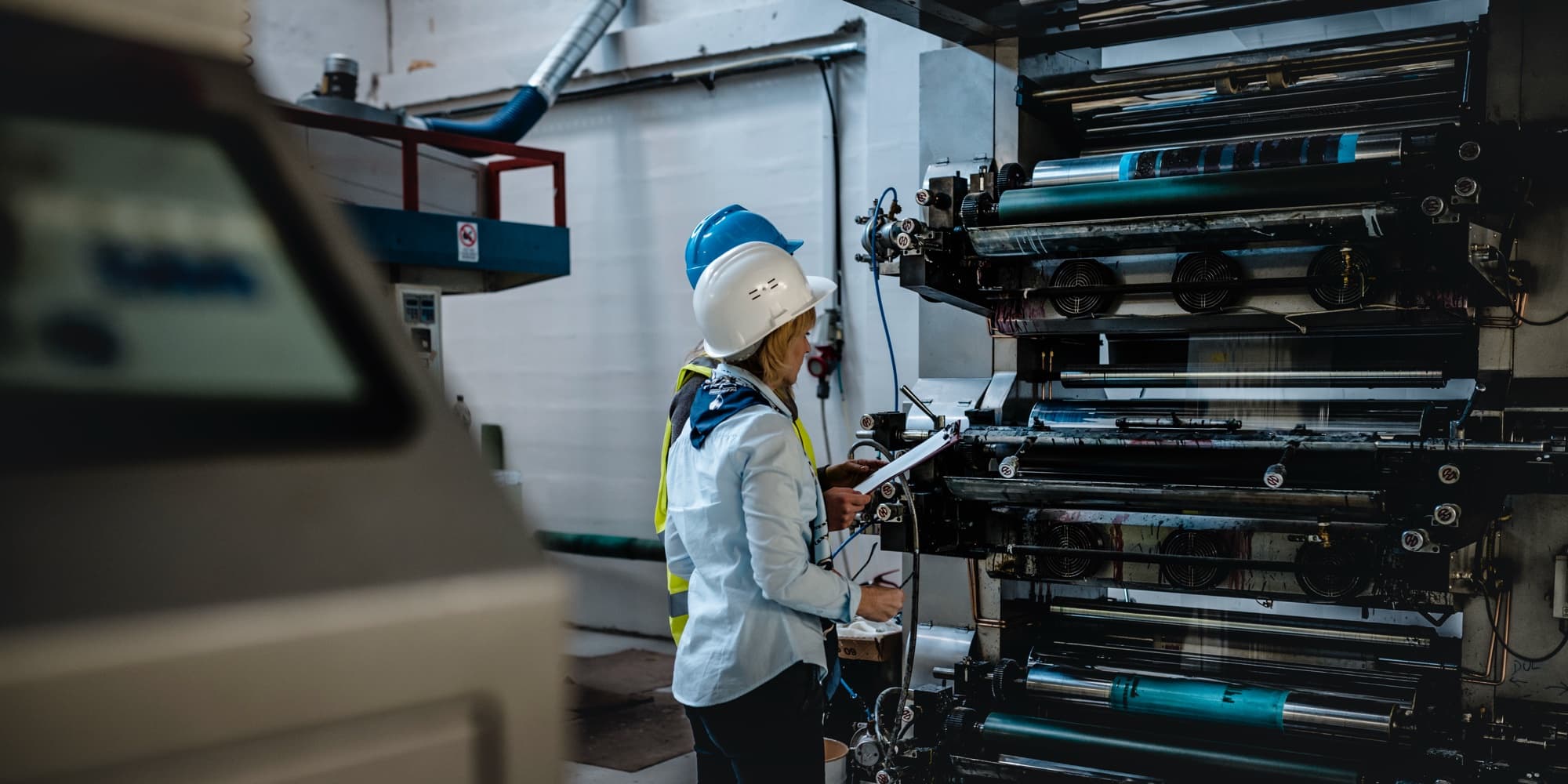
On an offset press, the delivery end is where freshly printed sheets stack and, depending on the press setup, where dryers or curing systems may be located. On any press with a drying or curing system, that area deserves close fire-safety attention, because paper, heat, spray powder, and electrical equipment come together in one active part of the press. When a small fire starts there, early response depends on whether the right fire extinguisher is accessible, ready, and used only by trained employees when it is safe to do so.
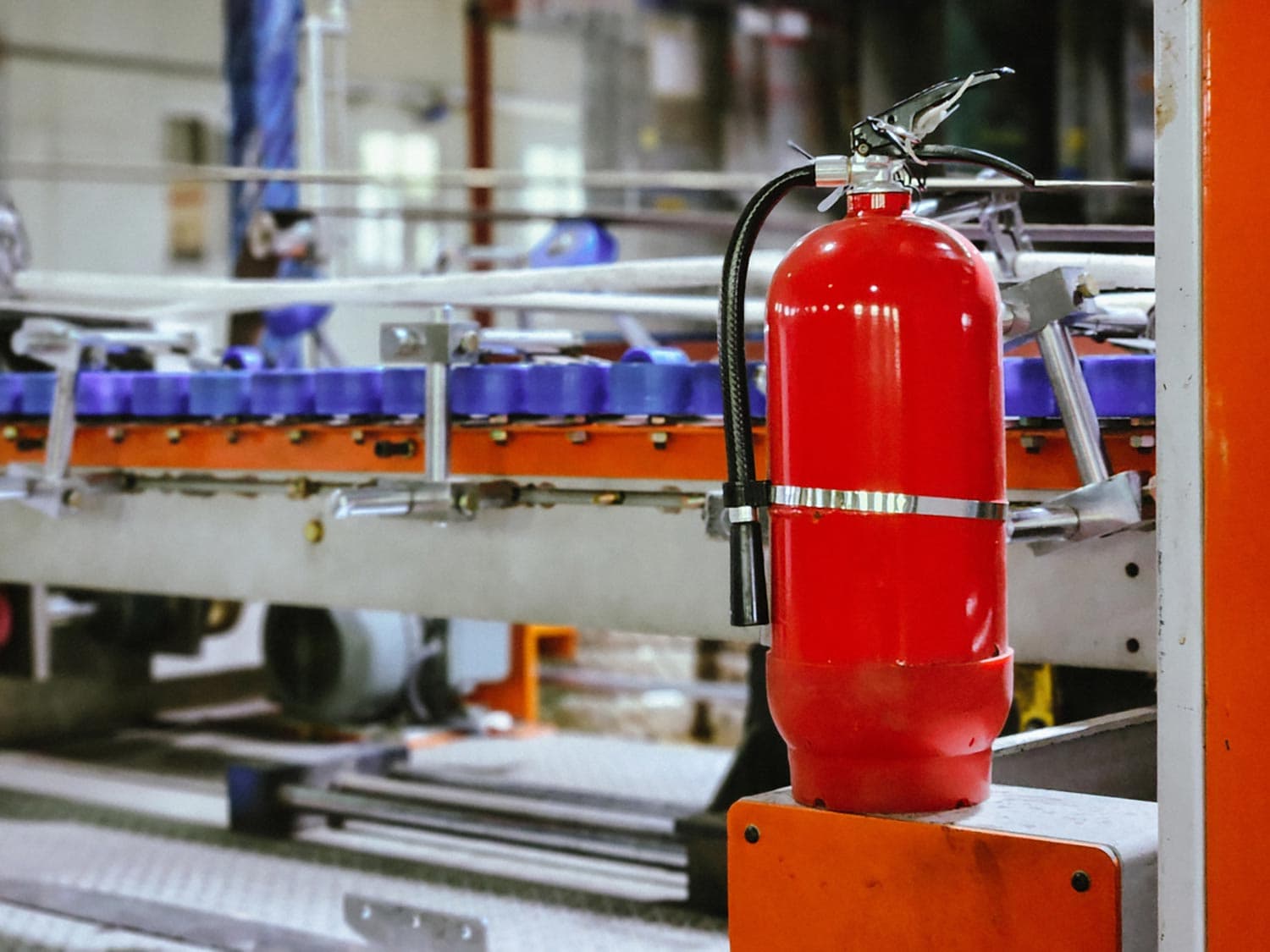
A fire extinguisher mounted somewhere in the pressroom is not the same as protection. Protection is a correctly selected extinguisher, placed within reach of the hazard, kept ready, and backed by training and prevention. This article explains why the delivery end deserves that attention, what OSHA requires of portable fire extinguishers, and how to make sure the extinguisher at your press will work when it matters. It builds on our recent guide to pressroom fire and explosion risks, which covers flammable inks, cleaning solvents, storage, vapor control, and ignition prevention. That broader prevention work starts with controlling flammable materials, vapors, housekeeping, and ignition sources. Here we narrow the focus to the response layer that deserves its own review: whether the right extinguisher is accessible at the delivery end when it is needed.
Why the Delivery End of an Offset Press Deserves Fire-Safety Attention
The delivery end can bring heat sources, combustible materials, and electrical equipment together in one active part of the press.
The heat comes from drying. Many sheetfed presses use infrared (IR) or hot-air dryers mounted directly over the delivery pile to set the ink, and ultraviolet (UV) presses use curing lamps that run hot. If the press stalls or a sheet jams under the dryer, that heat can build against stationary paper until it ignites, and the risk grows if the press keeps moving air across the area. This is why quality dryers are interlocked to shut off when the press stops, and why a bypassed or failed interlock is a serious hazard.
The fuel is the work itself. The delivery pile is ordinary combustible paper or board, often in large quantities, sitting immediately below the heat source. Anti-set-off spray powder, the fine starch-based powder applied to keep freshly printed sheets from transferring ink, can accumulate on the dryer, the ductwork, and surrounding surfaces. Depending on the product and conditions, that buildup can raise housekeeping and fire-spread concerns, so cleanup should follow the product's Safety Data Sheet and the manufacturer's guidance.
The electrical equipment is the press itself, with motors, drives, and control systems packed into the same area.
Put together, the delivery end can present 3 different classes of fire at once: ordinary combustibles such as paper, possible flammable-liquid hazards from certain inks, coatings, solvents, or press washes, and energized electrical equipment. That combination shapes everything about the extinguisher that belongs nearby. For an extinguisher to help at the delivery, four things have to be true: it has to be the right type, within reach, ready, and understood by the people working there. The rest of this article takes them in turn.
Choosing the Right Fire Extinguisher for a Pressroom
OSHA requires that where extinguishers are provided for employee use, they be selected and positioned based on the type and size of fire that could occur. (1) In a pressroom, that selection is not obvious, because the delivery end can involve Class A (paper and powder), Class B (ink and solvent), and Class C (energized equipment) fires.
A multipurpose ABC dry-chemical extinguisher covers all 3 classes, which is why it is the default in most facilities. The tradeoff is its residue: the monoammonium phosphate powder is mildly corrosive, difficult to clean, and can damage the sensitive drives and electronics inside a modern press. Discharging a dry-chemical unit into the press to stop a small fire can turn a minor event into a major repair.
Carbon dioxide (CO2) and clean-agent extinguishers leave no residue and are non-conductive, which makes them well suited to protecting energized equipment and electronics. CO2 is rated for Class B and C only, so it will not reliably control a paper-pile fire on its own, and it does not cool the fuel, so reignition is possible. Clean-agent (halocarbon) units are rated for Class A, B, and C in many models and leave no residue, at a higher cost.
There is no single correct answer, and that is the point. The right approach is to match the agent to the fuels actually present and to weigh the cost of residue against the cost of the fire. Many pressrooms end up with a combination: multipurpose coverage for the paper and the general area, and a CO2 or clean-agent unit positioned to protect the press electronics and control cabinet. NFPA 10, the National Fire Protection Association standard for portable fire extinguishers, provides the framework for selecting and rating extinguishers by hazard. The final selection is worth making with a qualified fire-protection provider who can account for local fire code, insurance requirements, press manufacturer guidance, and the specific materials in the facility, rather than defaulting to whatever is cheapest. (2) Whatever the choice, no extinguisher selection should encourage an employee to fight a fire that is no longer small, contained, and safe to approach.
Fire Extinguisher Placement and OSHA Travel Distance Rules
An extinguisher only helps if someone can reach it before the fire grows. OSHA sets maximum travel distances by fire class: for Class A hazards, an employee must be able to reach an extinguisher within 75 feet; for Class B hazards, within 50 feet. (1) Those distances are measured along the actual path a person would walk, not in a straight line, so a press, a paper skid, or a wall between the operator and the extinguisher counts against the distance.
For the delivery end, the practical test is simple: the operator should be able to reach a suitable extinguisher without crossing the pressroom or going around the press. An extinguisher may look close on a floor plan and still fail that test if the operator has to travel around the press, stock, carts, or other obstructions to reach it.
OSHA also requires that extinguishers be mounted, located, and identified so they are readily accessible, and kept in their designated place at all times except during use. (1) OSHA's portable fire extinguisher resources translate this into practical placement and spacing guidance. (3) Blocked extinguisher access is a common fire-safety gap, and the delivery area, where stock, skids, and waste tend to pile up, is exactly where access can get lost. Portable fire extinguishers remain a common OSHA compliance item, but the more useful reason to keep the path clear is simple: a blocked extinguisher is one no one can use.
Keeping the Extinguisher Charged, Mounted, and Inspection-Ready
A reachable extinguisher of the right type still fails if it is empty, damaged, or hanging where no one can lift it. OSHA requires that extinguishers be kept fully charged and operable, inspected visually every month, and given a thorough maintenance check every year by a qualified person, along with the longer-cycle internal examination and hydrostatic testing that follow from the unit's construction. (1) The monthly inspection is a quick check that the unit is in its place, unobstructed, undamaged, and showing a full charge on the gauge, recorded with a date and initials. An inspection that is not documented is, to an inspector, an inspection that did not happen.
Mounting matters too. Under the requirements drawn from NFPA 10, an extinguisher weighing 40 pounds or less should be mounted with its top no higher than 5 feet above the floor, heavier units no higher than 3.5 feet, and the bottom kept at least 4 inches off the floor. (2) In a busy delivery area, that keeps the unit visible, reachable, and clear of the dust and debris that collect at floor level.
Training, Incipient Fires, and Knowing When to Evacuate
The last condition is the person. Where a workplace provides extinguishers for employees to use, OSHA requires that those employees be trained on the general principles of extinguisher use and the hazards of fighting a fire in its early stage, both when they are first assigned and at least once a year after that. (1)
The most important thing that training conveys is a limit. A portable fire extinguisher is designed for an incipient fire, one that is still small, localized, and just beginning. It is not designed to fight a developed fire, and no print job is worth putting a worker at risk. Once a fire has spread beyond the incipient stage, or if there is any doubt, the correct actions are to stop the press, evacuate, and call the fire department.
Some printing operations decide, reasonably, that their employees should not fight fires at all. OSHA allows this: with a written policy of immediate evacuation, supported by an emergency action plan and a fire prevention plan, a facility can direct all employees to evacuate rather than use extinguishers. (4) Whichever approach a facility chooses, the decision should be made and written down in advance, not left to an operator to work out with a fire in front of them. Fighting an incipient fire and evacuating from a developing one are both legitimate. Improvising between them is not.
Preventing Delivery-End Fires Before They Start
The best extinguisher is the one that stays in its bracket. Many delivery-end fire risks can be reduced with a few consistent disciplines: follow the manufacturer's guidance for dryer and curing-unit interlocks, keep those safety controls working as designed, and never bypass them; remove spray-powder and lint buildup from and around the dryer and ductwork on a regular schedule; keep the delivery area clear of excess stock; and maintain the dryer and its electrical connections. Prevention is where fire safety is actually won. The extinguisher is the layer that has to be there for the times prevention fails.
Because the fuels at a press extend well beyond the delivery, delivery-end fire safety works best as part of a broader pressroom fire prevention program, one that also addresses how flammable inks and cleaning solvents are stored, handled, and kept away from ignition sources. Our companion article on pressroom fire and explosion risk covers that ground in detail.
Common Delivery-End Fire Safety Gaps to Check
A short self-check can surface most of the weak points before they matter:
- The extinguisher is in the pressroom, but not near the delivery area
- The extinguisher is blocked by skids, carts, waste bins, or finished loads
- The extinguisher type has not been reviewed against the paper, solvent, and electrical hazards present
- Monthly visual inspections are missed or undocumented
- The annual service tag is outdated
- Employees do not know whether they are expected to use the extinguisher or evacuate
- Dryer and curing-unit safeguards are not part of the fire prevention plan
- Spray powder, lint, or paper dust buildup is not cleaned on a set schedule
- Solvent rags or waste paper are stored near the press
- Fire response procedures do not spell out press shutdown and evacuation steps
If several of these look familiar, it is worth reviewing the delivery-end setup before the next production run.
How GMG EnviroSafe Helps Printing Operations Protect the Delivery End
Getting the delivery end right means answering a series of specific questions: which fire classes each press actually presents, which extinguisher agents fit those hazards without damaging the equipment, whether every press and delivery is inside the required travel distance, whether access stays clear during a production run, and whether the team is trained and the inspection records are current.
GMG EnviroSafe works with printing operations to answer those questions and build them into a program: assessing the fire hazards at each press, matching extinguisher type and placement to the actual layout, setting up inspection and training routines, and connecting it all to the wider fire prevention and OSHA compliance picture.
If your pressroom relies on dryers, spray powder, and solvents, the extinguisher at the delivery is worth getting right before it is ever needed. GMG EnviroSafe can help you review extinguisher placement, confirm access, organize inspection and training routines, and connect these details to your broader fire prevention program.
Sources
- OSHA. 29 CFR 1910.157, Portable Fire Extinguishers. osha.gov/laws-regs/regulations/standardnumber/1910/1910.157
- NFPA. NFPA 10, Standard for Portable Fire Extinguishers. nfpa.org/codes-and-standards/nfpa-10-standard-development/10
- OSHA. Portable Fire Extinguishers eTool: Placement and Inspection. osha.gov/etools/evacuation-plans-procedures/emergency-standards/portable-extinguishers
- OSHA. 29 CFR 1910.38 and 1910.39, Emergency Action Plans and Fire Prevention Plans. osha.gov/laws-regs/regulations/standardnumber/1910/1910.38