Eye Safety in Commercial Print Facilities: Match Protection to the Task
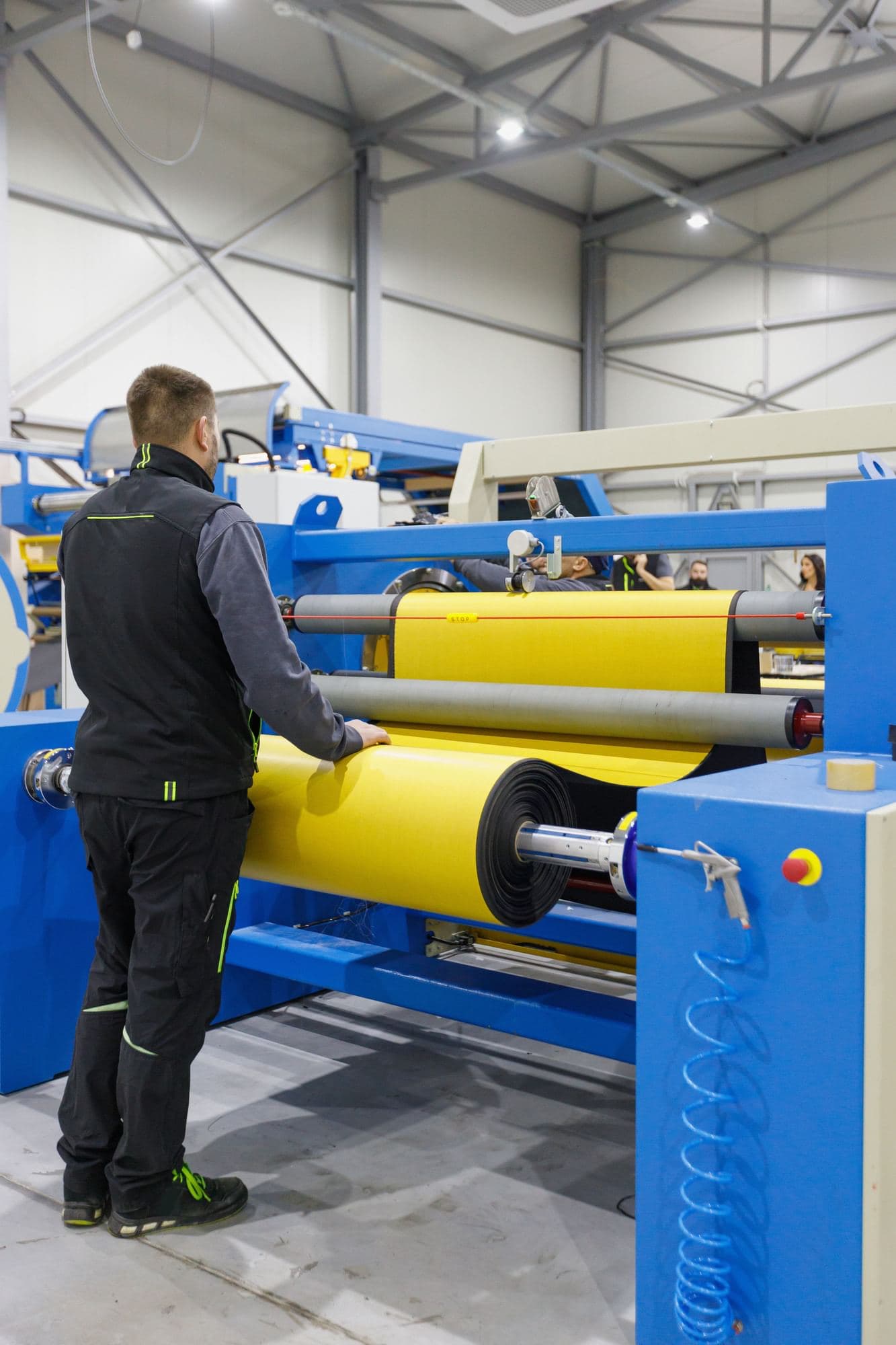
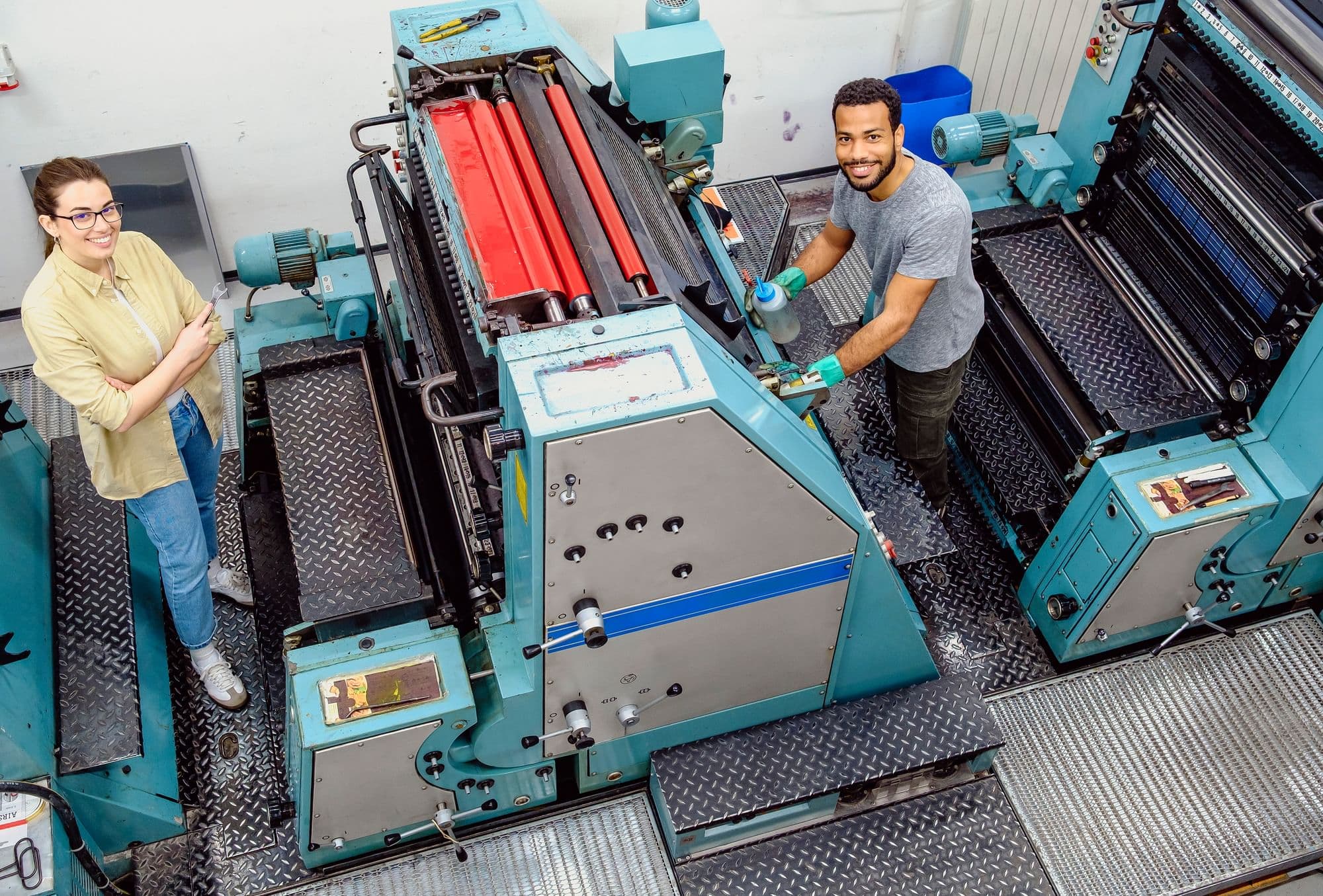
Safety glasses near the press do not tell you whether employees have the right protection. The answer depends on the work in front of them. A press operator making routine adjustments may face a different exposure than an employee mixing a chemical, clearing debris, trimming stock, or opening equipment for maintenance.
That is why eye safety should be organized around tasks, not job titles or a single rule for the whole facility. Start with the hazard, reduce it where practical, and then select eye and face protection for the exposure that remains.
Walk the Work Before Choosing Protection
OSHA requires employers to assess the workplace for hazards that are present or likely to be present and require personal protective equipment (PPE). When those hazards exist, the employer must select protection for each affected employee, communicate the selection, and certify in writing that the assessment was completed.
In a commercial print facility, one assessment may not cover every operation. The review should include the actual work performed in prepress, press, finishing, cleanup, and maintenance. It should also account for less frequent tasks such as clearing a jam, changing a blade, cleaning dried residue, transferring a chemical, or using compressed air during approved cleanup work.
For each task, look at what could reach the eyes or face, where it would come from, and how much force or splash potential it may carry. Common exposure types can include:
- flying particles or fragments from cutting, trimming, drilling, scraping, or maintenance;
- liquid chemical splash during transfer, mixing, washup, or spill cleanup;
- dust or fine debris during cleaning and finishing work;
- chemical gases or vapors where the hazard assessment identifies an eye or face exposure; and
- potentially injurious light radiation from a specific process or maintenance activity.
The assessment should also consider fit. Employees who wear prescription lenses need protection that incorporates the prescription or fits over those lenses without disturbing either pair. Eye protection must fit properly, and it should stay in the correct position and work with other required PPE.
Reduce the Exposure Before Relying on PPE
NIOSH’s hierarchy of controls includes PPE as its final layer. Elimination, substitution, and engineering controls are generally preferred because they reduce exposure with less dependence on perfect day-to-day behavior.
On the print floor, that can mean changing a chemical or process when a safer option is suitable, keeping guards and shields in place, containing splashes, capturing contaminants, or changing the way a task is performed. PPE is then selected for the remaining exposure. It should not become the only response when the hazard can be reduced at the source.
This order helps managers avoid a common program gap: buying better eyewear while leaving the same uncontrolled splash, debris path, or cleanup method in place.
Match the Protector to the Hazard
OSHA requires appropriate eye or face protection for hazards such as flying particles, liquid chemicals, acids or caustic liquids, chemical gases or vapors, molten metal, and potentially injurious light radiation. It also requires side protection where flying objects are a hazard.
The selection still has to be task-specific. Safety glasses with side protection may fit some impact exposures. Goggles can provide closer coverage for certain dust or splash conditions. A face shield may add face coverage for more severe exposure, but OSHA’s nonmandatory selection guidance says to wear face shields over primary eye protection, such as spectacles or goggles.
Do not choose from that list in the abstract. The hazard assessment, the relevant safety data sheet (SDS), equipment or chemical manufacturer instructions, and floor conditions should guide the decision. Protection that fogs, shifts, blocks a needed view, or conflicts with a respirator can create a gap between the written rule and the work.
Connect Chemical Information to the PPE Decision
OSHA’s Hazard Communication Standard requires employers to communicate hazardous-chemical information through a workplace program that includes labels, SDSs, and employee training. For eye safety, the useful step is to connect that information to the task. Review the SDS and the way the chemical is transferred, mixed, used, and cleaned up before selecting protection.
Emergency flushing belongs in the same review, but the requirement is narrower than a general rule that every chemical area needs the same equipment. OSHA requires suitable facilities for quick drenching or flushing within the work area where a person’s eyes or body may be exposed to injurious corrosive materials. Whether that applies depends on the material and the potential exposure. State-plan requirements, local rules, and recognized consensus guidance may add details, so verify the setup for the facility and task.
Keep the Assessment Current
A written assessment becomes less useful when the floor changes and the document does not. Revisit the affected tasks when the facility introduces a chemical, press, finishing process, tool, guard, cleaning method, or layout change. Worker reports also matter. Fogging, damaged lenses, missing sizes, poor fit, or frequent removal can show that the selected protection is not working as intended.
Employees who must use PPE need training on when it is necessary, what to use, how to put it on and adjust it, its limitations, and how to care for it. OSHA also requires retraining when workplace changes make earlier training obsolete, when PPE changes, or when an employee’s knowledge or use shows that training has not been retained.
A practical review should leave managers with clear answers: which tasks need protection, what protection applies, what other controls are in place, where the decision is documented, and what changes trigger another look.
GMG EnviroSafe can help commercial print facilities assess workplace conditions, document gaps, and connect PPE decisions with training and ongoing EHS program management. If your written assessment no longer matches the work on the floor, contact GMG to review the tasks and build a clear path forward.
Sources
(1) Occupational Safety and Health Administration. 29 CFR 1910.132, General Requirements. https://www.osha.gov/laws-regs/regulations/standardnumber/1910/1910.132
(2) Occupational Safety and Health Administration. 29 CFR 1910.133, Eye and Face Protection. https://www.osha.gov/laws-regs/regulations/standardnumber/1910/1910.133
(3) National Institute for Occupational Safety and Health. Hierarchy of Controls. https://www.cdc.gov/niosh/hierarchy-of-controls/about/index.html
(4) Occupational Safety and Health Administration. 29 CFR 1910 Subpart I Appendix B, Nonmandatory Compliance Guidelines for Hazard Assessment and Personal Protective Equipment Selection. https://www.osha.gov/laws-regs/regulations/standardnumber/1910/1910SubpartIAppB
(5) Occupational Safety and Health Administration. 29 CFR 1910.1200, Hazard Communication. https://www.osha.gov/laws-regs/regulations/standardnumber/1910/1910.1200
(6) Occupational Safety and Health Administration. 29 CFR 1910.151, Medical Services and First Aid. https://www.osha.gov/laws-regs/regulations/standardnumber/1910/1910.151