HealthAssure
Ergonomics at Work: Reducing Strain Through Better Job Design
An ergonomics concern is not always a training problem.
A worker may understand the expected method and still face a load that is too heavy, a shelf that requires repeated reaching, a tool that demands too much force, or a workstation set at the wrong height. Observable discomfort can be an early signal that a task should be reviewed alongside the worker's reported experience and the job's force, repetition, reach, posture, and recovery demands.
Workplace ergonomics is the practice of fitting work to people by reviewing the task, tool, layout, load, pace, posture, and recovery time. The goal is not to promise that pain or injuries disappear. The goal is to reduce unnecessary physical demand and verify that improvements work under normal operating conditions.
Why Ergonomics Matters
Poorly designed work can contribute to musculoskeletal disorder risk. MSDs can affect muscles, tendons, ligaments, nerves, joints, cartilage, and related tissues. Work-related MSDs may involve back strain, shoulder problems, tendinitis, carpal tunnel syndrome, and other conditions, but not every ache or diagnosis is work-related.
Common ergonomic risk factors include force, repetition, awkward or static posture, contact stress, vibration, long duration, high pace, and limited recovery time. Many jobs combine several of these factors at once.
These concerns are not limited to warehouses or factories. They can appear in offices, repair bays, labs, healthcare, retail, distribution, construction, and remote work. Some tasks, such as patient handling or specialized lifting, require methods and tools beyond a general lifting reminder.
Federal OSHA and Ergonomics
Federal OSHA does not have one broad ergonomics standard for most workplaces. That does not mean ergonomic hazards can be ignored. OSHA may address serious ergonomic hazards through the General Duty Clause when no specific standard applies and when the required enforcement elements are met, including employer recognition, a serious hazard, a feasible and useful means of abatement, and employee exposure.
State requirements may add more specific obligations. California has a repetitive-motion-injury standard that can be triggered when covered work-related repetitive motion injuries occur under the conditions described in the rule. Minnesota has ergonomics requirements for certain covered warehouse distribution centers and healthcare facilities, with details that vary by covered employer type.
Because state laws and enforcement expectations can change, employers should verify the requirements that apply to their locations before program updates or legal decisions.
Review the Work, Not Just the Worker
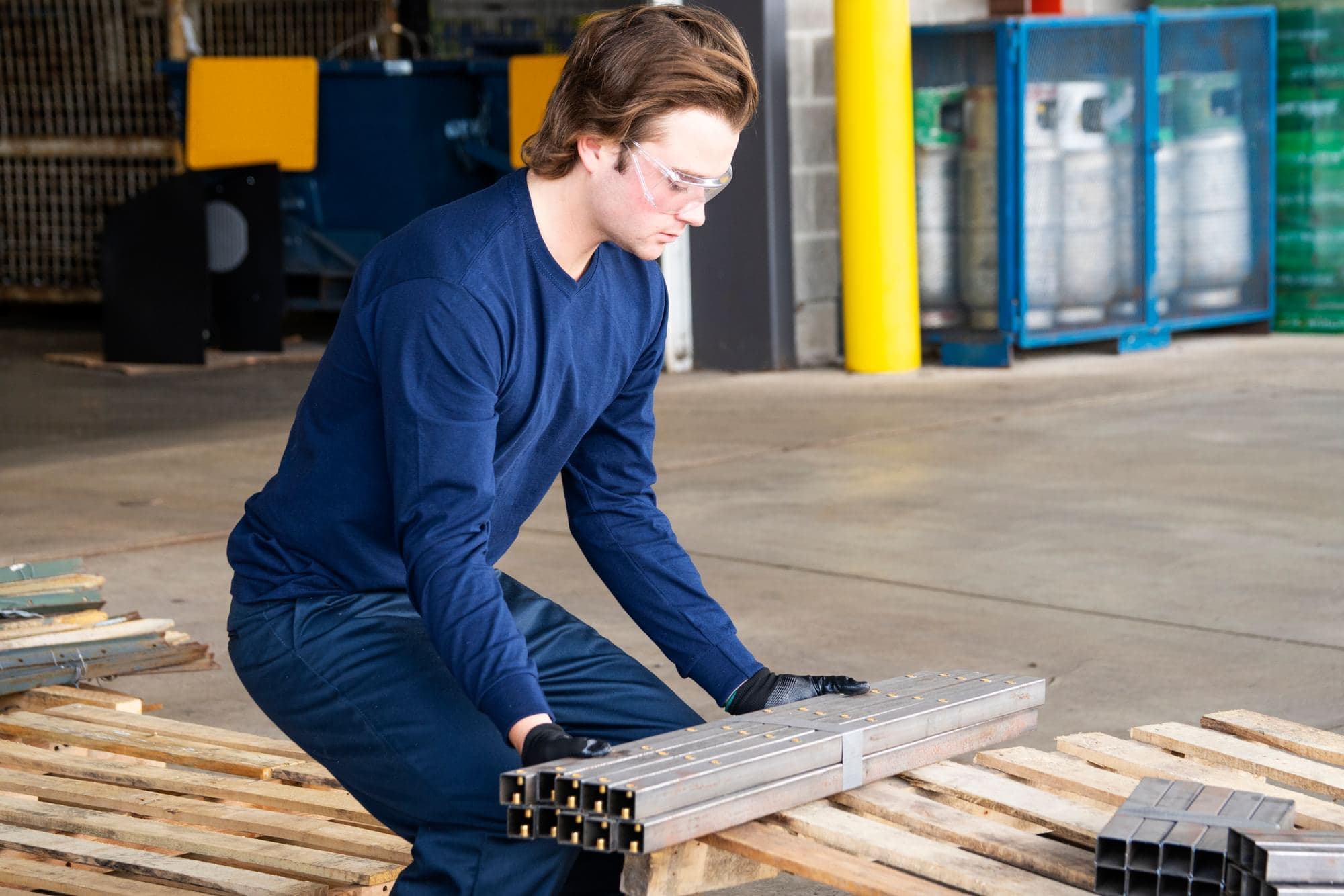
A useful ergonomics review follows the actual task. It asks what employees lift, reach, push, pull, grip, repeat, see, hear, adjust, and document during normal production. It also looks at differences across shifts, product mixes, staffing levels, maintenance conditions, and seasonal demand.
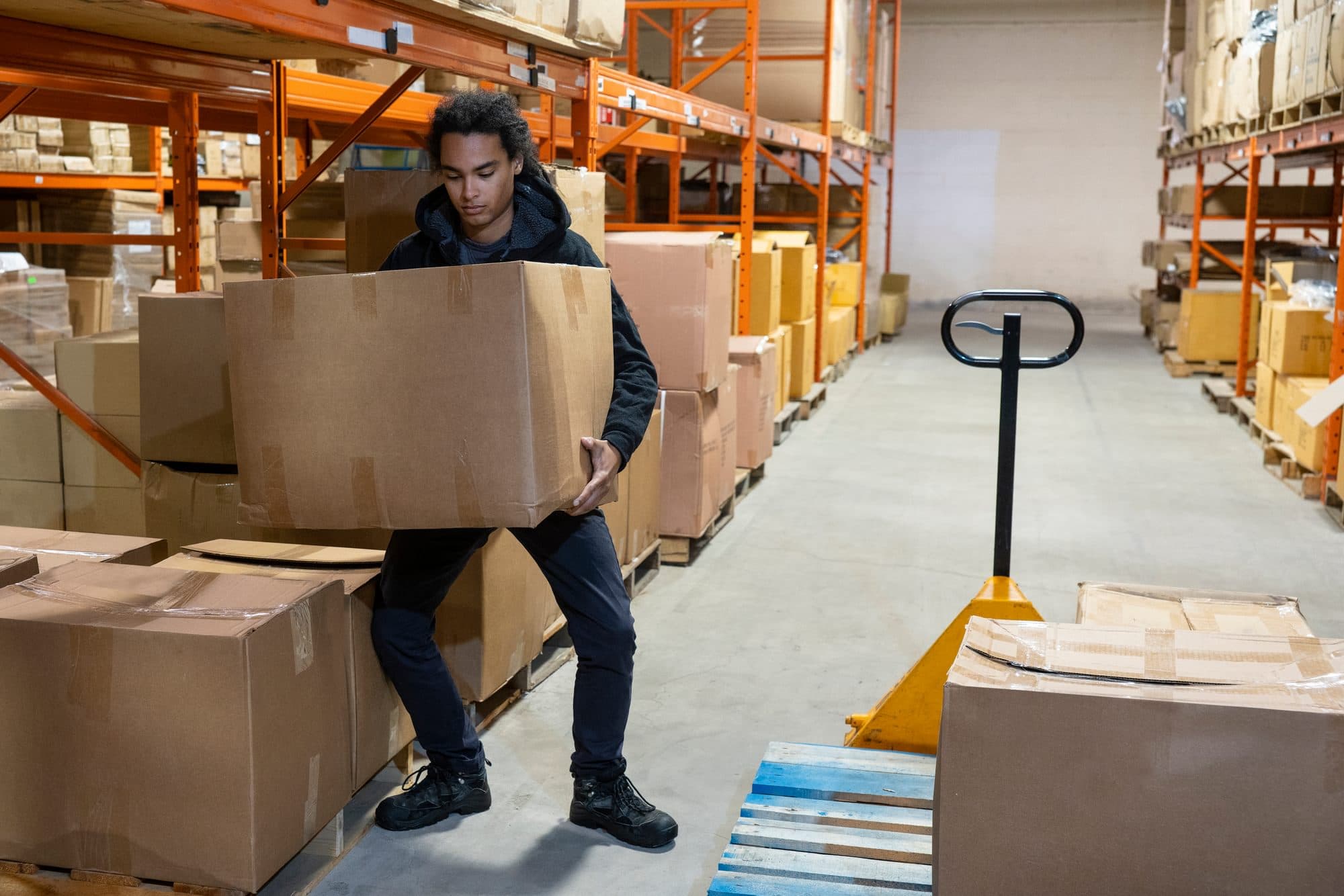
The Revised NIOSH Lifting Equation can help evaluate certain two-handed object-lifting tasks using defined measurements and task conditions. It is not a universal lifting limit and should not be applied automatically to patient handling, carrying, pushing, pulling, seated or kneeling lifts, unstable loads, or tasks outside its design assumptions.
Employees should be involved because they know where workarounds happen. A review is stronger when workers can describe what changes during a shift, which tasks create the greatest force or repetition, and whether a proposed fix actually helps.
Controls Should Reduce the Demand
Training can support an ergonomics program, but it should not substitute for improving the work. Stretching may help workers prepare for movement, but it does not remove a heavy lift, poor reach, fast pace, or badly placed tool. Job rotation can help only when the rotated tasks use meaningfully different movements or muscle groups.
The preferred approach is to reduce the source of the demand where feasible. That may mean changing layout, lift height, tool design, material flow, workstation adjustability, staffing, pace, or mechanical assistance. Administrative controls, training, and personal support such as knee pads or gloves can help, but they are usually supplemental and limited if the underlying task still creates excessive force, repetition, or posture demands.
Documentation should focus on observations, decisions, corrective actions, and effectiveness checks. Confidential health and medical information should be kept separate from operational ergonomics records.
Temporary Workers and Shared Responsibility
Host employers and staffing agencies share responsibility for protecting temporary workers. Ergonomic expectations should be clear before the assignment begins and should be reinforced when the job changes. Temporary workers should know how to report discomfort, who receives the concern, how the concern will be reviewed, and whether the task or process changed as a result.
A reporting process is less useful when employees raise concerns but do not receive acknowledgment or feedback about what happens next.
How GMG EnviroSafe Can Help
HealthAssure® is GMG EnviroSafe's workplace health and safety program focused on prevention, worker health, exposure concerns, and practical safety support. Depending on the facility's needs and selected support, HealthAssure® may include a workplace assessment, ergonomic task review, recommendations, policy or program support, employee training, and follow-up guidance.
GMG also offers services such as a Workplace Ergonomics & Injury Prevention Assessment, Workplace Ergonomics Improvement Program, and Ergonomics & Injury Prevention Skills Training. Online and prerecorded Spanish options may be available; in-person Spanish delivery depends on local staff availability.
Contact GMG EnviroSafe to discuss a Workplace Ergonomics & Injury Prevention Assessment for your facility. Based on the agreed scope, GMG can help review task-level conditions, document ergonomic concerns, and prioritize practical recommendations for follow-through.
Sources
(1) NIOSH. About Ergonomics and Work-Related Musculoskeletal Disorders. https://www.cdc.gov/niosh/ergonomics/about/index.html
(2) NIOSH. Elements of Ergonomics Programs. https://www.cdc.gov/niosh/ergonomics/ergo-programs/index.html
(3) OSHA. Ergonomics: Standards and Enforcement FAQs. https://www.osha.gov/ergonomics/faqs
(4) OSHA. Ergonomics: Identify Problems. https://www.osha.gov/ergonomics/identify-problems
(5) OSHA. Ergonomics: Solutions to Control Hazards. https://www.osha.gov/ergonomics/control-hazards
(6) NIOSH. Revised NIOSH Lifting Equation. https://www.cdc.gov/niosh/docs/94-110/default.html
(7) OSHA. Protecting Temporary Workers. https://www.osha.gov/temporaryworkers
(8) California Code of Regulations. Title 8, Section 5110. https://www.dir.ca.gov/title8/5110.html
(9) Minnesota Statutes. Section 182.677. https://www.revisor.mn.gov/statutes/cite/182.677