General
Noise, Ergonomics, and Injury Prevention: How to Connect the Dots
A task can be loud, physically demanding, and hard to coordinate at the same time. A worker may need to hear an instruction while reaching around equipment, controlling a vibrating tool, or keeping pace with material moving through the work area. Noise can make alarms and verbal warnings harder to detect. Force, repetition, awkward posture, and vibration can add musculoskeletal risk.
Those conditions belong in the same operational conversation, but they do not become one hazard or one compliance program. The useful connection is the task itself: how the work is arranged, how employees perform it, and whether a change made for one concern creates a problem somewhere else.
Measure Each Hazard on Its Own Terms
Start by separating what must be measured from what must be observed.
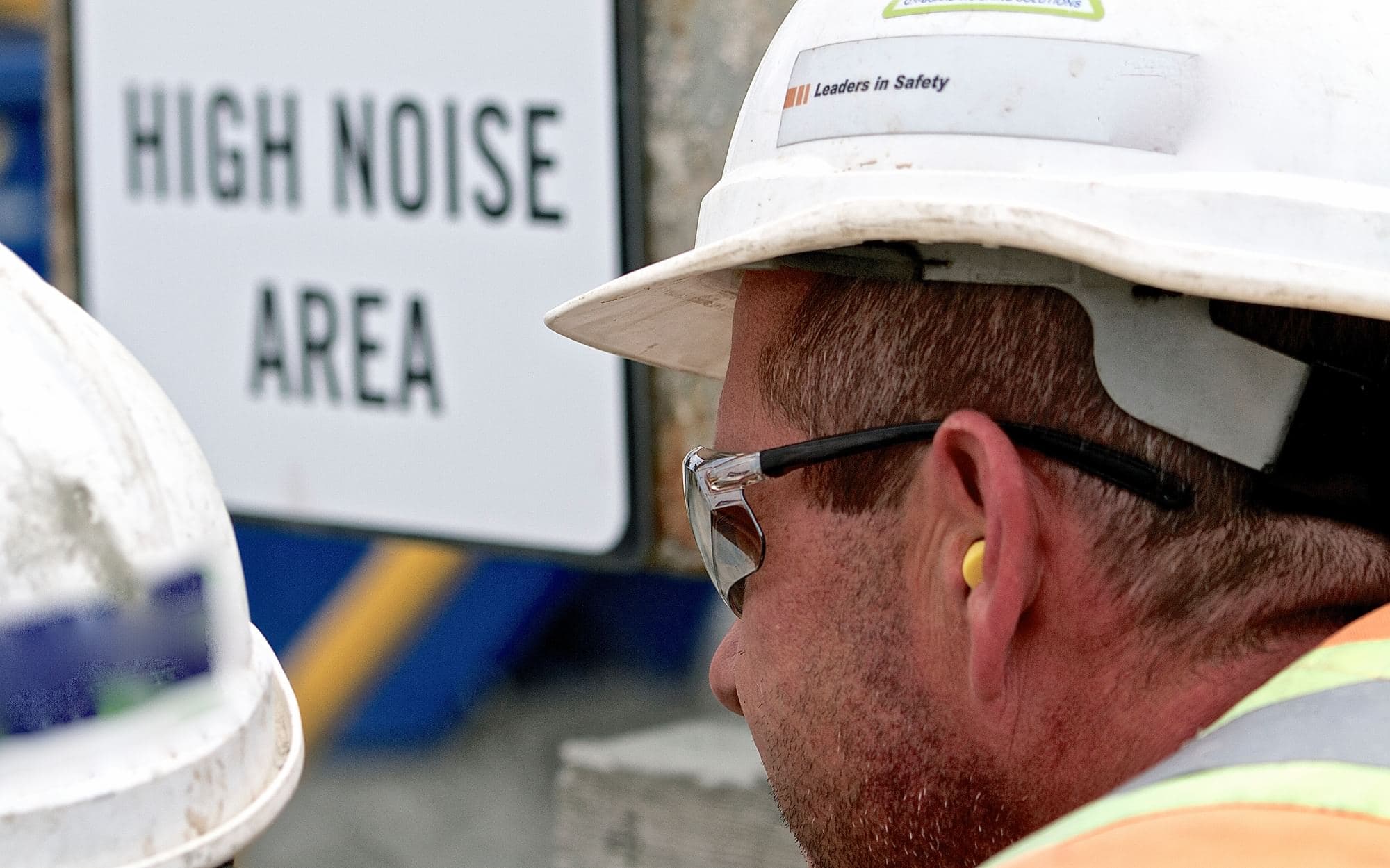
For general industry, OSHA requires a continuing, effective hearing conservation program when employee exposure equals or exceeds an 8-hour time-weighted average of 85 A-weighted decibels. When available information indicates that exposure may reach that action level, the employer must implement a monitoring program. The sampling approach must identify affected employees and support proper hearing-protector selection. OSHA separately requires feasible engineering or administrative controls when exposure exceeds the permissible levels in Table G-16, including 90 dBA for 8 hours.
Ergonomic concerns are evaluated differently. Federal OSHA does not have one ergonomics standard that applies to every workplace. Its guidance calls for employers to identify task-level risk factors, involve workers, implement controls, and evaluate whether changes work. Equipment placement, reaching, lifting, pushing, pulling, repetition, awkward posture, and task duration can all matter. Engineering changes are generally the preferred response when feasible.
Construction employers should not borrow the general-industry 85 dBA hearing-conservation trigger without checking the construction standard. Federal construction requirements use Table D-2 and require feasible administrative or engineering controls when exposure exceeds the listed limits. OSHA-approved State Plans may also have different or more protective requirements.
Follow the Work Before Choosing a Fix
Worker reports often show where to look first. "I cannot hear the alarm from this position" and "my shoulder starts hurting halfway through the shift" are useful signals. They are not substitutes for representative noise monitoring or a task-specific ergonomic review.
Observe the work under normal conditions and when the job changes. Compare what happens across shifts, employees, production levels, equipment setups, and material flows. Ask:
- Where does the employee need to hear an alarm, instruction, or coworker?
- Which reaches, lifts, grips, postures, or repeated motions are built into the task?
- What changes when the pace increases, staffing changes, or equipment is moved?
- Which existing records or reports point to a condition that needs a closer look?
NIOSH has documented this kind of overlap in a veterinary-hospital evaluation involving employee noise exposure and ergonomic risks during dental procedures. The response was not to merge noise and ergonomics into a single category. Investigators examined noise exposure, communication needs, posture, equipment, and workstation conditions as connected parts of the work.
Test Controls for Tradeoffs
A control should solve the identified problem without quietly transferring risk.
A noise enclosure may reduce exposure but make access or communication more difficult. Moving a workstation may improve posture while placing an employee closer to noisy equipment. Rotating employees may shorten one person's time on a demanding task, but it can expose more people if the underlying condition remains unchanged.
Review possible changes with the employees who perform the work. For noise, reduce exposure at the source or through engineering controls where feasible, then use administrative controls and hearing protection as required by applicable standards and exposure levels. For ergonomic risk, consider equipment, workstation height, tool design, material flow, reach distance, lifting assistance, work methods, task duration, and recovery time. Training supports those controls, but it does not correct poor task design on its own.
After implementation, verify the result using the method appropriate to each hazard. That may mean repeating exposure monitoring after a production, process, equipment, or control change, observing the revised task, checking whether employees can still hear critical signals, and asking workers whether the change created a new difficulty.
Keep the Evidence Separate and the Follow-Through Connected
One corrective-action process can track owners, deadlines, and verification for both hazards. The supporting evidence should remain distinct.
Under the general-industry noise standard, required records include employee exposure measurements and audiometric test records. Retain noise exposure measurements for 2 years, and retain audiometric test records for the affected employee's duration of employment. The broader employee-exposure and medical-record rule has its own preservation and access requirements, including specific rules for releasing medical information to a designated representative. A specific OSHA standard may set a different retention period.
You can keep ergonomic task observations, worker input, control decisions, implementation owners, and follow-up findings with the operational corrective-action record. Don't treat medical details like ordinary management notes. Keep enough information to act on the condition while preserving the access and confidentiality boundaries that apply to the underlying records.
Bring the Two Views Together at the Decision Point
The payoff comes when the team can clearly answer four questions:
- What did we measure?
- What did we observe?
- What must change?
- How will we know the change worked?
GMG EnviroSafe offers a Workplace Noise Exposure Assessment and a Workplace Ergonomics & Injury Prevention Assessment. Depending on the agreed scope, GMG can help evaluate the conditions, document findings, and develop practical recommendations for the operation.
Contact GMG EnviroSafe if a task involves both hazardous noise concerns and physically demanding work. A coordinated review can connect the decisions while keeping the measurements, requirements, records, and responsibilities clear.
Sources
(1) NIOSH. Preventing Occupational Noise-Induced Hearing Loss. https://www.cdc.gov/niosh/noise/prevent/index.html
(2) NIOSH. About Ergonomics and Work-Related Musculoskeletal Disorders. https://www.cdc.gov/niosh/ergonomics/about/index.html
(3) OSHA. 29 CFR 1910.95, Occupational Noise Exposure. https://www.osha.gov/laws-regs/regulations/standardnumber/1910/1910.95
(4) OSHA. Ergonomics: Standards and Enforcement FAQs. https://www.osha.gov/ergonomics/faqs
(5) OSHA. Ergonomics: Solutions to Control Hazards. https://www.osha.gov/ergonomics/control-hazards
(6) OSHA. 29 CFR 1926.52, Occupational Noise Exposure. https://www.osha.gov/laws-regs/regulations/standardnumber/1926/1926.52
(7) OSHA. State Plans. https://www.osha.gov/stateplans
(8) OSHA. Occupational Noise Exposure: Standards. https://www.osha.gov/noise/standards
(9) NIOSH. A Case Study to Demonstrate Noise and Ergonomic Issues in the Workplace. https://www.cdc.gov/niosh/bulletin/2022/ergo-noise.html
(10) eCFR. 29 CFR 1910.1020, Access to Employee Exposure and Medical Records. https://www.ecfr.gov/current/title-29/subtitle-B/chapter-XVII/part-1910/section-1910.1020
(11) GMG EnviroSafe. Workplace Noise Exposure Assessment. https://www.gmgenvirosafe.com/protect-health-and-reduce-costs/workplace-noise-exposure-assessment
(12) GMG EnviroSafe. Workplace Ergonomics & Injury Prevention Assessment. https://www.gmgenvirosafe.com/stop-injuries-before-they-cost-you/workplace-ergonomics-and-injury-prevention-assessment