Distribution
Beyond the Fire Extinguisher: Building Fire Prevention Into Warehouse Operations
Warehouse fire prevention can fall behind quietly. A staging area grows, a product line changes, overflow inventory moves into a temporary space, or a forklift charging area becomes busier than it was when the facility set it up. The written plan may stay the same while the work around it changes.
That gap matters because fire prevention depends on the conditions employees work around every day. Packaging waste, charging equipment, maintenance work, stored materials, and exit routes all affect how a fire can start, spread, or interfere with evacuation. Looking at those conditions during a normal shift gives you a clearer picture than reviewing the plan by itself.
If OSHA requires your facility to have a fire prevention plan, it should answer a few simple questions:
- What are your biggest fire hazards?
- How are materials, waste, and ignition sources controlled?
- Who is responsible for each one?
Federal OSHA is only the starting point. State programs, local fire codes, and your insurance provider may require more.
Look at What Happens During a Busy Shift
A quiet walkthrough can miss conditions that develop during peak receiving, order preparation, shift change, maintenance, or cleanup. Watch where employees open packaging, place damaged pallets, charge batteries, stage materials, and store overflow inventory. That is when a temporary workaround can become part of the normal floor.
Compare what you see with the written plan. Does the plan describe the materials, equipment, and work taking place now? Do the assigned responsibilities still match the people and shifts doing the work? If a temporary process has lasted for months, the facility may need to update the plan, the work area, or both.
Follow Waste Through the Workday
Cardboard, shrink wrap, damaged pallets, and other combustible waste often collect where the work is moving fastest. Tight staging space, unclear ownership, or a pickup schedule that no longer matches production can allow waste to remain on the floor longer than expected. The concern grows when that material collects near charging areas, maintenance work, fire equipment, or travel routes.
OSHA requires storage areas to remain free from accumulated materials that create tripping, fire, explosion, or pest-harborage hazards. Flammable liquids are subject to separate OSHA requirements where they are present.
Walk the area with the employees who work there and check:
- where waste collects during a busy shift;
- who removes it and when;
- whether temporary staging blocks extinguishers, fire-protection equipment, aisles, or exit routes;
- whether layout changes created new collection points; and
- whether someone returns to verify that a reported problem was corrected.
A recurring pile usually points to a problem with space, timing, ownership, or material flow. Removing it once clears the immediate condition. Fixing the cause keeps it from becoming part of the operation again.
Recheck Charging and Ignition Sources When Work Changes
The same changes that affect waste and staging can also bring ignition hazards closer to your materials. Maintenance moves to a temporary area, a contractor brings in heat-producing tools, or a charging station gets relocated, and suddenly there are sparks or heat near materials that weren't there before.
Take a fresh look at forklift charging whenever your equipment, battery type, ventilation, traffic, or nearby storage changes. OSHA requires designated charging areas with precautions that fit the equipment being used.
Different equipment needs different precautions. OSHA's charging-area rules were written around lead-acid batteries. Lithium-ion batteries and battery maintenance bring their own hazards, and the manufacturer's instructions matter too. Before assuming an older charging setup still works, check the equipment documentation and how the area is used today.
Check Fire Protection When Storage Changes
A new product, taller storage, different packaging, revised rack layout, or temporary overflow can affect more than material flow. It may reduce sprinkler clearance or conflict with the assumptions used to design and approve the fire-protection system.
OSHA's automatic-sprinkler standard applies when a system is installed to meet a particular OSHA requirement. For those covered systems, maintain at least 18 inches of clearance between the sprinklers and the stored materials below. This is the federal OSHA minimum. Commodity type, rack arrangement, system design, applicable fire and building codes, insurer requirements, and the authority having jurisdiction may require additional review or greater clearance.
When storage changes, bring in a qualified fire protection professional or your local fire official before making decisions about your sprinkler system. GMG EnviroSafe can help you spot and document the changes that need their review.
Walk Exit Routes During a Real Shift
Overflow storage and temporary staging can affect how people leave the building. An exit route may look clear on a drawing or during a quiet walkthrough and still be obstructed when pallets, carts, or equipment occupy the path during normal work.
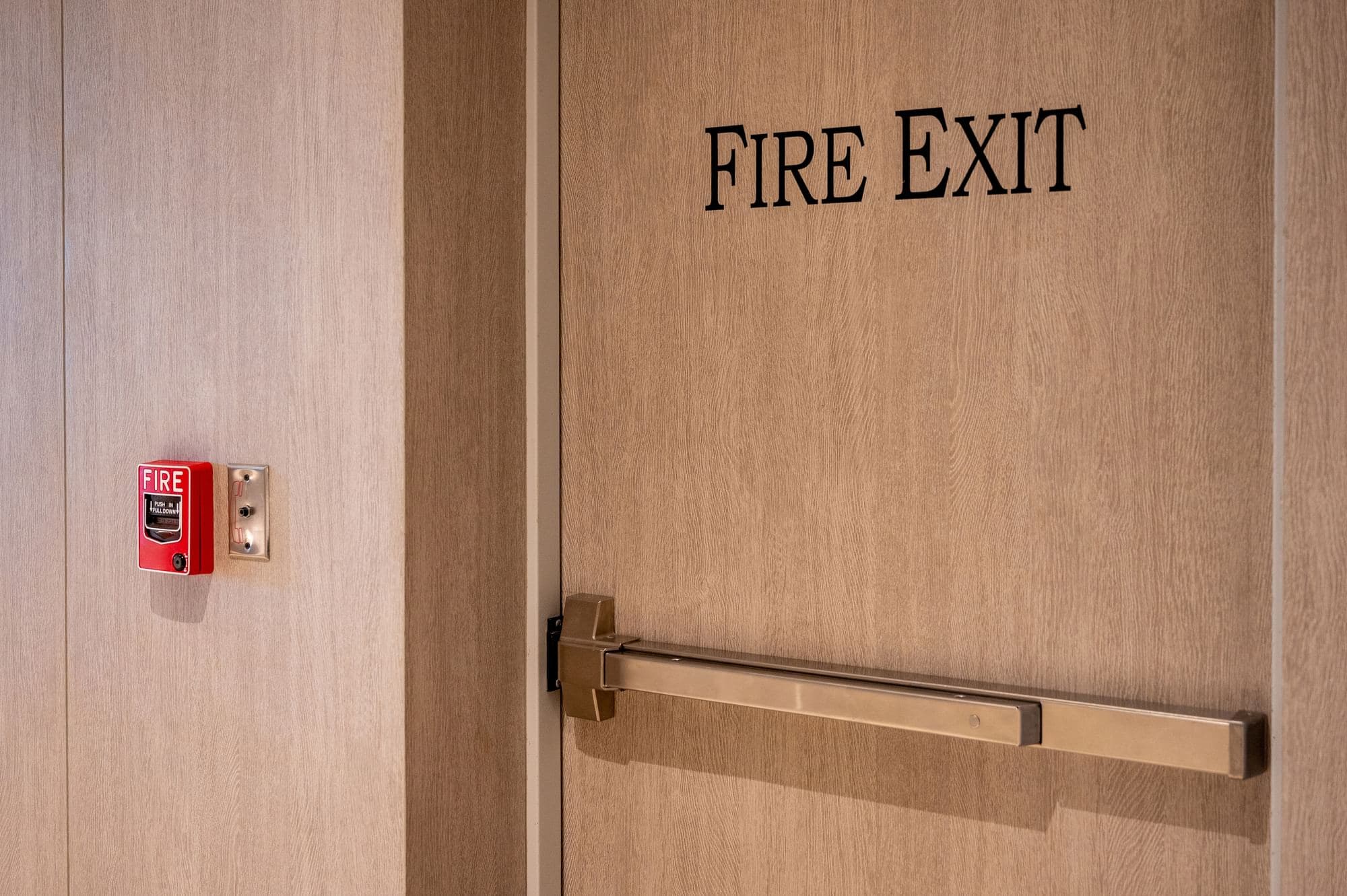
OSHA requires exit routes to remain free and unobstructed. Walk the routes during the conditions employees actually experience, then compare the path with exit signs, posted evacuation diagrams, training, and the written plan.
A clear exit route only helps if people know what to do when the alarm sounds. If your facility needs an emergency action plan, it should tell employees how to report an emergency, how to get out, who has which evacuation role, and how everyone is accounted for afterward. Make sure those steps work on every shift, including for contractors, drivers, and visitors who may not know the building.
Match Extinguisher Access and Training to Your Policy
Employees need to know whether the facility expects them to evacuate or permits designated employees to use an extinguisher on a small, early-stage fire. The written policy, employee education or training, and actual workplace practice should give the same answer.
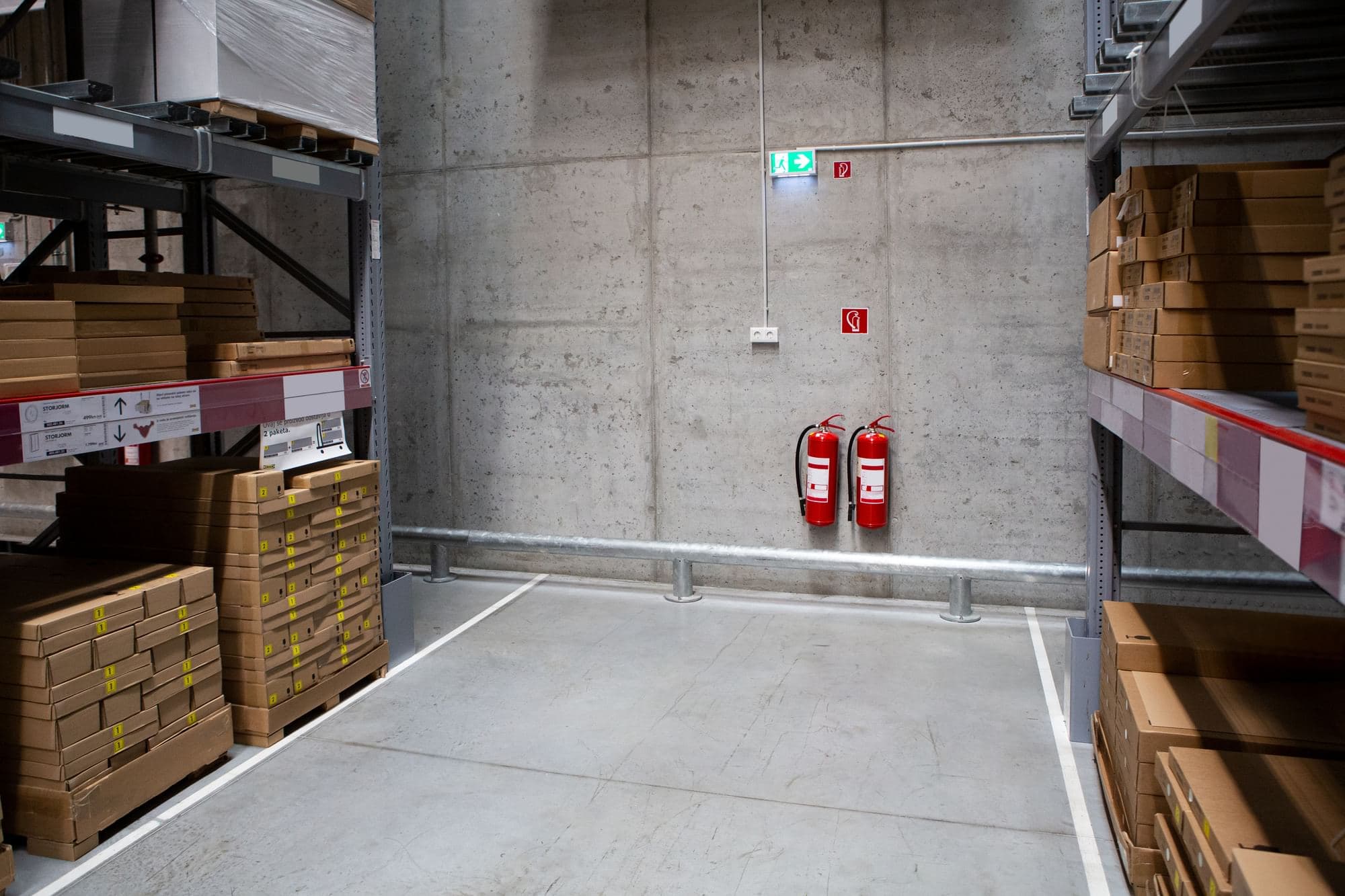
OSHA requires extinguishers meant for employee use to match the fire hazards in each area, be easy to spot and reach, and stay in their designated place, charged and ready. That's harder than it sounds in a busy warehouse, where pallets and equipment move all day. Make one person responsible for monthly visual checks, annual maintenance, required testing, and fixing any unit that's blocked or damaged.
If what you store or the work being done has changed, check whether your extinguishers are still the right type and in the right places. Base that decision on your current hazards and on whether your policy is for employees to evacuate or for designated employees to use extinguishers.
Give Every Finding an Owner and a Field Check
It's easy for a problem to get noticed on a walkthrough and then never get fixed. Whether it's a blocked extinguisher, a waste pile that keeps coming back, or a responsibility list that's out of date, every issue needs a clear next step. Write down what you found and where, then assign it to one person with a date to have it fixed.
Return to the area after the reported fix. Confirm that the work was completed and that it corrected the condition employees actually face. Recheck the control when materials, equipment, layout, staffing, or workflow changes again.
If your written fire-prevention procedures no longer match your storage, charging, staging, or evacuation conditions, GMG EnviroSafe can help assess the workplace, review training and assigned responsibilities, and organize corrective actions. Contact GMG EnviroSafe to discuss the conditions that have changed in your warehouse or distribution facility.
Sources
(1) OSHA. 29 CFR 1910.39, Fire Prevention Plans. https://www.osha.gov/laws-regs/regulations/standardnumber/1910/1910.39
(2) OSHA. 29 CFR 1910.157, Portable Fire Extinguishers. https://www.osha.gov/laws-regs/regulations/standardnumber/1910/1910.157
(3) OSHA. 29 CFR 1910.176, Handling Materials, General. https://www.osha.gov/laws-regs/regulations/standardnumber/1910/1910.176
(4) OSHA. 29 CFR 1910.106, Flammable Liquids. https://www.osha.gov/laws-regs/regulations/standardnumber/1910/1910.106
(5) OSHA. 29 CFR 1910.178, Powered Industrial Trucks. https://www.osha.gov/laws-regs/regulations/standardnumber/1910/1910.178
(6) OSHA. 29 CFR 1910.159, Automatic Sprinkler Systems. https://www.osha.gov/laws-regs/regulations/standardnumber/1910/1910.159
(7) OSHA. 29 CFR 1910.37, Maintenance, Safeguards, and Operational Features for Exit Routes. https://www.osha.gov/laws-regs/regulations/standardnumber/1910/1910.37
(8) OSHA. 29 CFR 1910.38, Emergency Action Plans. https://www.osha.gov/laws-regs/regulations/standardnumber/1910/1910.38
(9) OSHA. Fact Sheet, Lithium-ion Battery Safety (FS-4480). https://www.osha.gov/sites/default/files/publications/OSHA4480.pdf