HealthAssure
Noise-Induced Hearing Loss in the Workplace: Prevention, Compliance, and New PPE Solutions
Noise-induced hearing loss (NIHL) is one of the most common workplace health problems, and one of the most preventable. It rarely happens all at once. It builds slowly, shift after shift, until a worker starts missing parts of conversations, struggling to follow speech over background noise, or living with a constant ring in their ears. By the time it's noticeable, it's usually permanent.
The encouraging part is that workplace noise risk can often be identified early, before permanent hearing loss progresses. With the right program, employers can measure where noise is a problem, reduce it at the source, protect what's left with better-fitted equipment, and respond early when hearing changes appear.
This guide covers what noise-induced hearing loss is, what OSHA requires, and what's new in hearing protection, all through the lens of GMG's HealthAssure approach to comprehensive worker health.
Why Noise-Induced Hearing Loss Is a Worker Health and Safety Issue
Workplace noise is more widespread than most people expect. About 27 million U.S. workers are exposed to hazardous noise on the job each year. (1) Roughly 11 percent of all workers have hearing difficulty, and about 8 percent live with tinnitus, a constant ringing or buzzing in the ears. (1) Yet more than half of noise-exposed workers, 53 percent, report not wearing hearing protection. (1)
Hearing loss is also more than an ear problem, which is exactly why it belongs within a broader worker health view. It can affect communication, focus, and well-being, and workplace noise has been linked to broader health concerns. (1) It's a safety issue too: a worker who can't hear a backup alarm, a warning shout, or an oncoming vehicle is more likely to be hurt on the job. (1)
And it isn't limited to one industry. Manufacturing, warehouses, printing, auto and collision repair, construction, and car washes all operate noise sources such as compressors, conveyors, presses, grinders, dryers, and pneumatic tools. A simple field test: if you have to raise your voice to be understood by someone an arm's length away (about 3 feet), the noise is likely at or above 85 decibels. (1)
When OSHA Requires a Hearing Conservation Program
The main rule for general industry is OSHA's occupational noise standard, 29 CFR 1910.95. It runs on two thresholds, and the difference between them matters:
- The 85 dBA action level. When a worker's exposure reaches an 8-hour time-weighted average (TWA) of 85 A-weighted decibels (dBA), the employer must put a full hearing conservation program in place. (2)
- The 90 dBA permissible exposure limit (PEL). Above this 8-hour average, the employer must use feasible engineering or administrative controls, and hearing protection use becomes mandatory. (2)
Here's the part employers miss most: the program starts at 85 dBA, not 90. A worker can sit below the legal PEL and still be owed the full program. (2) OSHA uses a 5-dB exchange rate, so the permissible time halves for every 5 dBA increase (8 hours at 90 dBA, 4 hours at 95, 2 hours at 100), and impulse or impact noise may not exceed a 140 dB peak. (2)
When the action level is reached, the program has 6 parts: (2)
- Noise monitoring to measure who is exposed and how much
- Audiometric (hearing) testing, with a baseline and annual tests
- Hearing protection offered at no cost, in a variety of styles
- Annual training
- Recordkeeping
- Employee access to their records
One more benchmark worth knowing: NIOSH recommends a more protective limit of 85 dBA using a 3-dB exchange rate. (3) It isn't legally enforceable the way the OSHA rule is, but many strong programs use it as a design target, because meeting the legal minimum is not always the same as protecting hearing.
A note for multi-site employers: construction noise falls under a separate standard, 29 CFR 1926.52, and some state plans set stricter rules, so requirements can vary by industry and location. This article focuses mainly on general-industry requirements. (4)
Prevention First: Reducing Workplace Noise at the Source
Here's a distinction that changes how you think about the whole topic. A strong program shouldn't stop at documentation and protective equipment. Real prevention means reducing the noise workers are exposed to where feasible, then protecting them from what's left, and doing so in a clear order of priority.
Measure it. You can't manage noise by guessing. A noise survey and personal dosimetry show who is actually exposed, which tasks drive the exposure, and whether controls are working. (2) Evaluate noise by task, not just by area, because 2 people in the same room can have very different exposures depending on what they do and where they stand. Re-measure after any change in equipment, process, or production that could raise exposure. (2) Workers exposed at or above the action level must also be notified of their monitoring results. (2)
Reduce it at the source (engineering controls). These are the most effective controls, because they cut the noise itself: maintaining bearings, belts, and compressed-air systems; enclosing or isolating loud machinery; adding barriers or sound-absorbing panels; and choosing quieter equipment when it's time to replace a machine. (5) Buying quieter equipment up front, sometimes called Buy Quiet, is one of the best long-term fixes. (5)
Reduce exposure (administrative controls). When you can't lower the noise enough, you can lower the time people spend in it: rotating workers, scheduling loud tasks when fewer people are nearby, adding distance, posting high-noise zones, and providing quiet break areas. (6)
Rising equipment noise is also an early warning sign. A machine that's getting louder often needs maintenance, so monitoring noise can protect both your workers and your equipment.
New PPE Solutions: Smarter Hearing Protection and Fit Testing
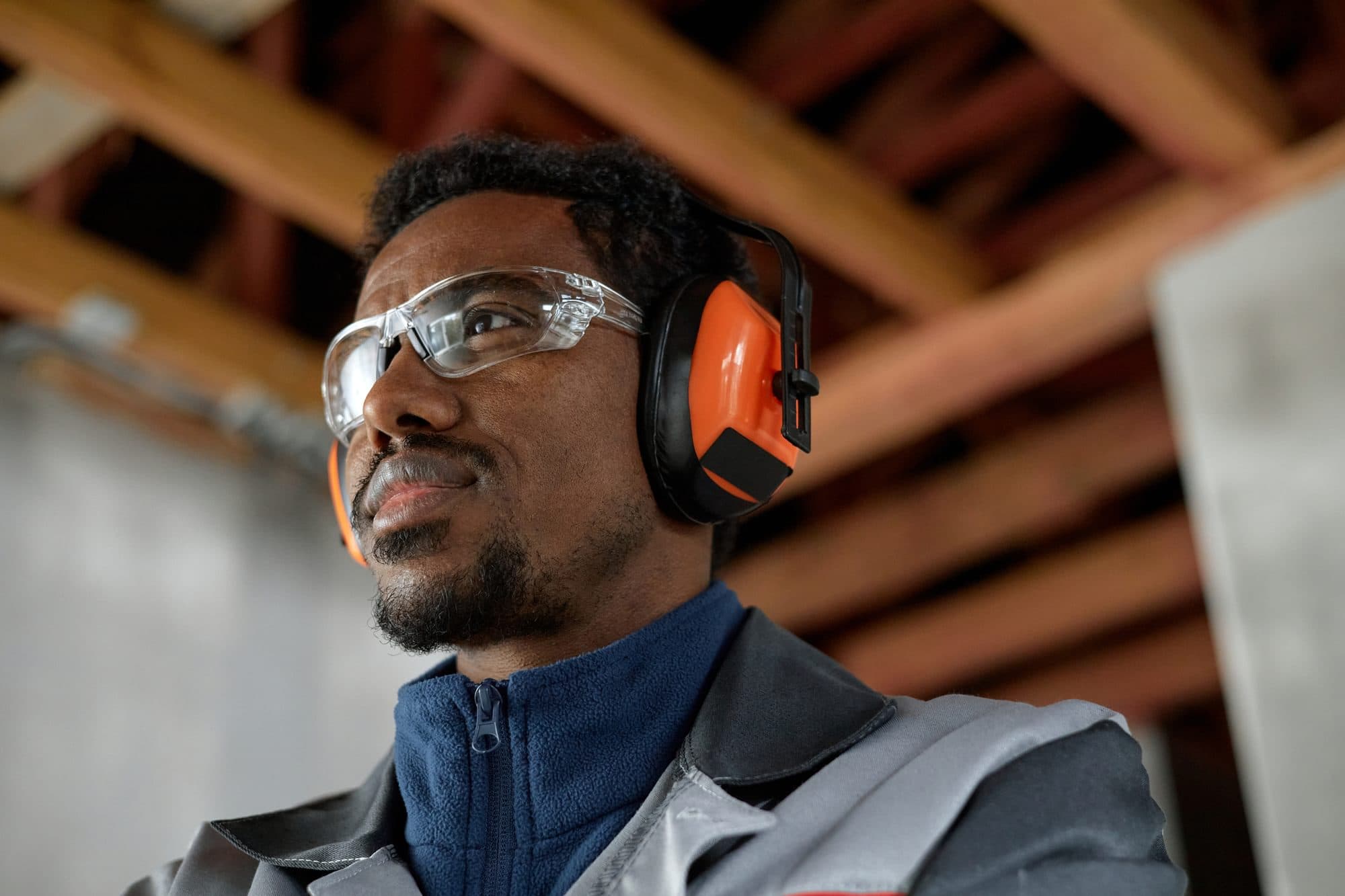
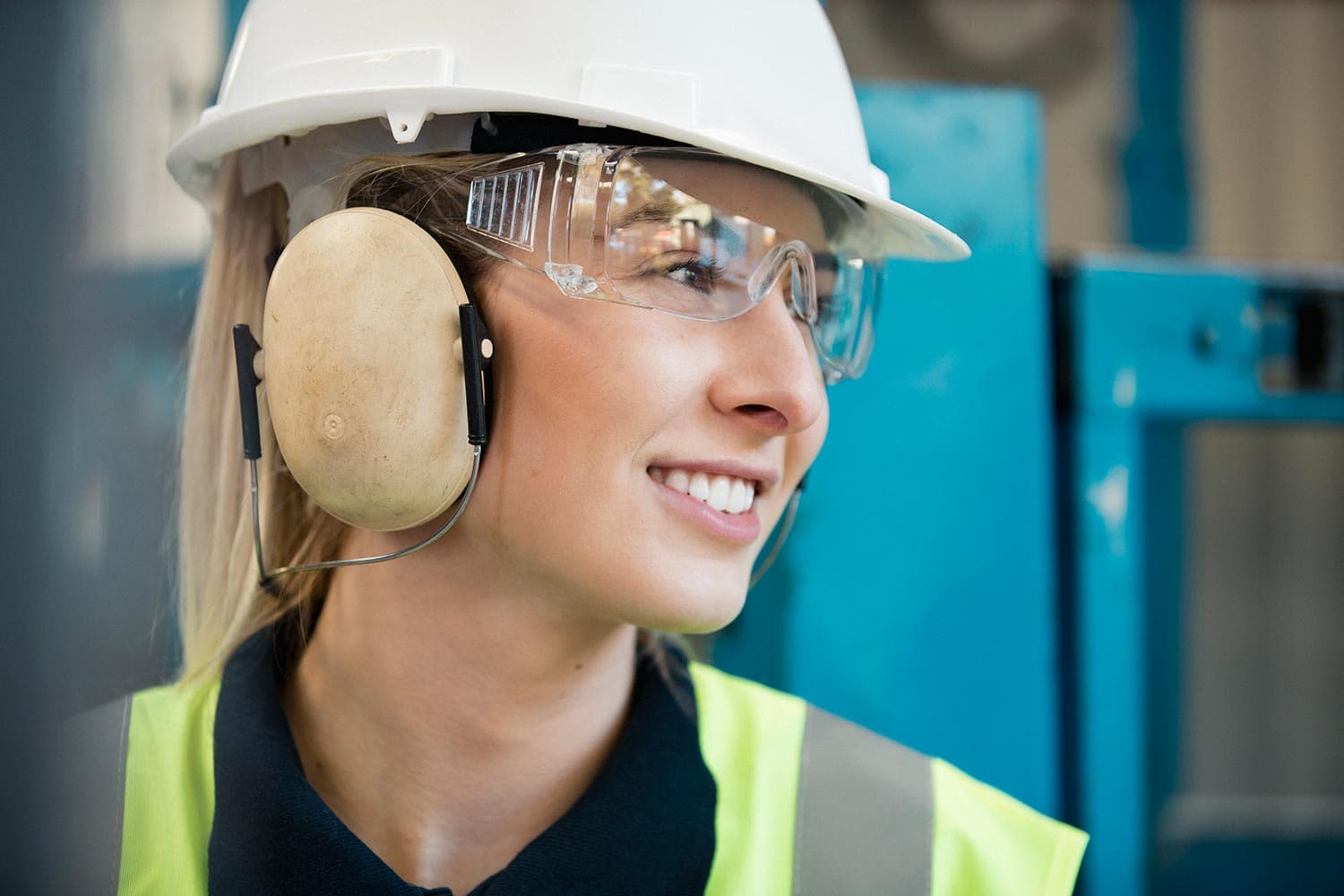
Hearing protection is the last line of defense, not the first, but it's where the most interesting changes are happening. The old approach was simple: read the Noise Reduction Rating (NRR) printed on the package and assume that's the protection a worker gets. The problem is that the NRR is a laboratory average. It can't predict what an individual actually receives, and real-world protection is usually lower. (7) That's why OSHA derates the NRR when estimating real protection. In practice, the protection a worker actually gets is often well below the package rating, especially if the plug isn't inserted correctly. (2)
The biggest shift is individual fit testing. In January 2025, NIOSH updated its guidance to recommend that employers use individual quantitative fit testing to measure the protection each worker actually receives from their hearing protector. (7) The result is a single number, often called a Personal Attenuation Rating, that reflects how the device performs as that person wears it. OSHA followed with a 2026 information bulletin describing fit testing as a recommended best practice. (8) Worth stating plainly: fit testing is a strong best practice, but it is not currently required by the OSHA noise standards. (8)
Fit matters in both directions. Fit testing doesn't only catch workers who aren't protected enough. Research has found that many workers in moderate noise are overprotected, getting more attenuation than they need, which can make it hard to hear speech and warning signals. (7) When that happens, workers often loosen or remove their protection to stay aware of their surroundings, which defeats the purpose. The goal is the right amount of protection, not the most. The right balance depends on the measured exposure, the worker's communication and warning-signal needs, and the task.
There are more protector options than ever. This is also why OSHA requires a variety of suitable protectors, rather than a single foam plug style. (2) Newer choices include:
- Level-dependent or electronic protectors that block harmful noise while letting speech and alarms through
- Uniform-attenuation (flat) earplugs that lower sound more evenly, so communication sounds more natural
- Custom-molded protectors for comfort and consistent all-day wear
- Wearable dosimeters that tie exposure data to individual workers and tasks
One reminder: no device is automatically compliant. Whatever you choose still has to provide enough attenuation for the measured noise and fit the worker correctly.
Audiometric Testing: Catching Hearing Loss Before It Progresses
Because hearing loss is gradual, annual hearing tests are the best way to spot it early, while you can still act. Employers must provide audiometric testing at no cost to workers at or above the action level. A baseline audiogram is established within 6 months of first exposure (or up to 12 months if a mobile test van is used, with hearing protection worn in the meantime), followed by annual tests compared against that baseline. (2)
The signal to watch for is a Standard Threshold Shift (STS): an average change of 10 dB or more at 2000, 3000, and 4000 Hz in either ear, compared to the baseline. (2) When a work-related STS occurs, the employer must notify the worker in writing within 21 days, refit and retrain them on hearing protection, and provide more protective equipment if needed. (2) A shift is a signal to act: review the worker's exposure, protector fit, and whether controls are still doing their job.
Beyond individual cases, the entire program warrants a fresh look after equipment or layout changes, new production schedules, or audiometric trends indicating workers aren't adequately protected.
Recordability on the OSHA 300 log is a separate, higher bar. A hearing loss case is recorded only when it's work-related, and the worker's total hearing level averages 25 dB or more above audiometric zero at those same frequencies. (9) Many shifts trigger follow-up without being recordable, and getting both halves right is the mark of a real program.
Don't forget chemicals. Noise isn't the only workplace exposure that harms hearing. Some chemicals, called ototoxicants, can cause or worsen hearing loss, and the risk climbs when they are combined with noise, sometimes even when noise is below the PEL. (10) Common examples include solvents like toluene and xylene, which means hearing risk and chemical safety overlap in shops that use them, such as auto repair, printing, and manufacturing. (10) An audiogram shows the shift but not the cause, so chemical exposure belongs in the conversation.
Training and Records: Keeping the Program Working
A program only works if the people in it understand it. OSHA requires annual training that covers the effects of noise on hearing, the purpose and proper use of hearing protectors (including fitting and care), and how audiometric testing works. (2) Practical reinforcement helps: toolbox talks, visual reminders in high-noise areas, and training delivered in the languages your team actually speaks.
Records tie it together. Noise exposure measurements must be kept for at least 2 years, and audiometric records for the duration of each worker's employment. (2) Good documentation isn't busywork. It shows who was exposed, what protection was provided, what testing was done, and whether the program is improving over time.
Keep penalties in perspective. Hearing conservation gaps can also create compliance exposure: in 2026, OSHA's maximum penalty is $16,550 for a serious violation and $165,514 for a willful or repeat one. (11) But the real reason to get this right is simpler: hearing loss is permanent, and everything you prevent, the worker keeps for life.
How HealthAssure Supports Hearing Conservation
Hearing loss is a slow-moving injury that most workplaces can see coming in their data. That is exactly the kind of gap HealthAssure, GMG EnviroSafe's comprehensive worker health program, is built to close by turning exposure data into action across prevention, protection, and culture.
Our hands-on support includes:
- Workplace noise assessments and personal dosimetry to find where exposure exists and who is affected.
- Hearing conservation program review and development aligned with OSHA's standard and your operations.
- Audiometric testing coordination and recordkeeping support, including follow-up for Standard Threshold Shift.
- Hearing protector selection and fit guidance, matched to measured noise and communication needs.
- Engineering and administrative control recommendations to reduce noise at the source.
- Ototoxic chemical exposure review where noise and chemicals overlap.
- Employee and supervisor training, available in English and Spanish.
Hearing conservation doesn't have to be complicated, but it does have to be consistent. We help manage the details, so your team stays protected, and your compliance program stays on track.
Want to know where your hearing conservation program stands? GMG EnviroSafe’s HealthAssure program is here to help you protect your team and keep your compliance program on track.
Sources
- CDC / NIOSH. Overall Statistics, All U.S. Industries: Noise and Hearing Loss. cdc.gov/niosh/noise
- OSHA. 29 CFR 1910.95, Occupational Noise Exposure. osha.gov/laws-regs/regulations/standardnumber/1910/1910.95
- CDC / NIOSH. About Noise-Induced Hearing Loss. cdc.gov/niosh/noise
- OSHA. 29 CFR 1926.52, Occupational Noise Exposure (Construction). osha.gov
- CDC / NIOSH. Preventing Hearing Loss: Implement Engineering Controls. cdc.gov/niosh/noise
- CDC / NIOSH. Preventing Hearing Loss: Use Administrative Controls. cdc.gov/niosh/noise
- NIOSH. Science Policy Update: Individual Fit-Testing Recommendation for Hearing Protection Devices (Pub. No. 2025-104, January 2025). cdc.gov/niosh
- OSHA. Hearing Protector Fit Testing: Ensuring Appropriate Noise Protection at Work (Safety and Health Information Bulletin, February 2026). osha.gov
- OSHA. 29 CFR 1904.10, Recording Criteria for Cases Involving Occupational Hearing Loss. osha.gov
- OSHA. Safety and Health Information Bulletin: Preventing Hearing Loss Caused by Chemical (Ototoxicity) and Noise Exposure. osha.gov
- OSHA. Penalties (2026 maximums). osha.gov/penalties