HealthAssure
Respiratory Protection Programs Need Medical Clearance, Fit Testing, and Field-Level Alignment
A respirator can look like a simple piece of PPE. The program behind it is not.
When a worker is assigned a respirator, the business has to connect hazard evaluation, respirator selection, medical evaluation, fit testing, training, maintenance, and day-to-day supervision. If those elements live in separate files or are handled by different people without a clear process, a program can appear complete on paper while workers are using protection that has not been fully evaluated or maintained.
That is the operational risk in respiratory protection. A respirator is not a substitute for managing an airborne hazard. It is one part of a written program that has to work in the real conditions where employees perform the job.
Start with the hazard, not the equipment
OSHA requires employers to evaluate respiratory hazards in the workplace, including a reasonable estimate of employee exposures, and to identify the contaminant's chemical state and physical form. When that evaluation shows that respirators are necessary, the employer must provide an appropriate respirator. The rule also requires employers to use feasible engineering controls to prevent atmospheric contamination where possible. (1)
For an operations leader, that means a purchasing decision should not come first. The question is what employees may be exposed to during the task, how often the task occurs, whether the work changes by location or shift, and what controls are already in place.
Welding, sanding, spraying, chemical use, dust-generating work, confined-space activity, maintenance, and emergency response can create very different respiratory-protection needs. The written program should reflect the actual task and hazard, not a generic equipment list.
Medical evaluation comes before required use
Respirator use can place a physiological burden on the wearer. OSHA requires employers to provide a medical evaluation before an employee is fit tested or required to use a respirator in the workplace. The evaluation must identify whether the employee is medically able to use the respirator, and it must be provided confidentially during normal working hours or at a time and place convenient to the employee. (2)
This is a common point of disconnect. A company may have respirators available, training records, and a fit-test roster, yet be unable to show that medical evaluation occurred in the right sequence for every affected employee.
A reliable program makes the sequence visible. When a new employee is assigned respirator-required work, the responsible manager should be able to confirm the hazard evaluation, medical-evaluation status, fit-test status, equipment assignment, and training record without reconstructing the answer from email threads.
Medical evaluation is not a one-time filing task. OSHA requires additional medical evaluations when an employee reports signs or symptoms related to respirator use, when a medical professional recommends follow-up, when observations during fit testing or program evaluation indicate a need, or when workplace conditions substantially increase the physiological burden on the employee. (2)
Fit testing must match the respirator the employee actually wears
For tight-fitting facepiece respirators, OSHA requires fit testing before initial use, whenever a different respirator facepiece is used, and at least annually thereafter. (3) The fit test is tied to the specific make, model, style, and size of the respirator. It is not a general approval that transfers automatically to another facepiece.
That distinction matters in the field. Inventory substitutions, changing vendors, employee turnover, and different work assignments can quietly create a mismatch between the respirator on a shelf and the respirator documented in the program.
Facial hair and other conditions that interfere with the face-to-facepiece seal also matter. OSHA prohibits tight-fitting facepiece use when facial hair comes between the sealing surface and the face or interferes with valve function. (1) Supervisors need a practical way to address that requirement before a worker enters a task where the respirator is required.
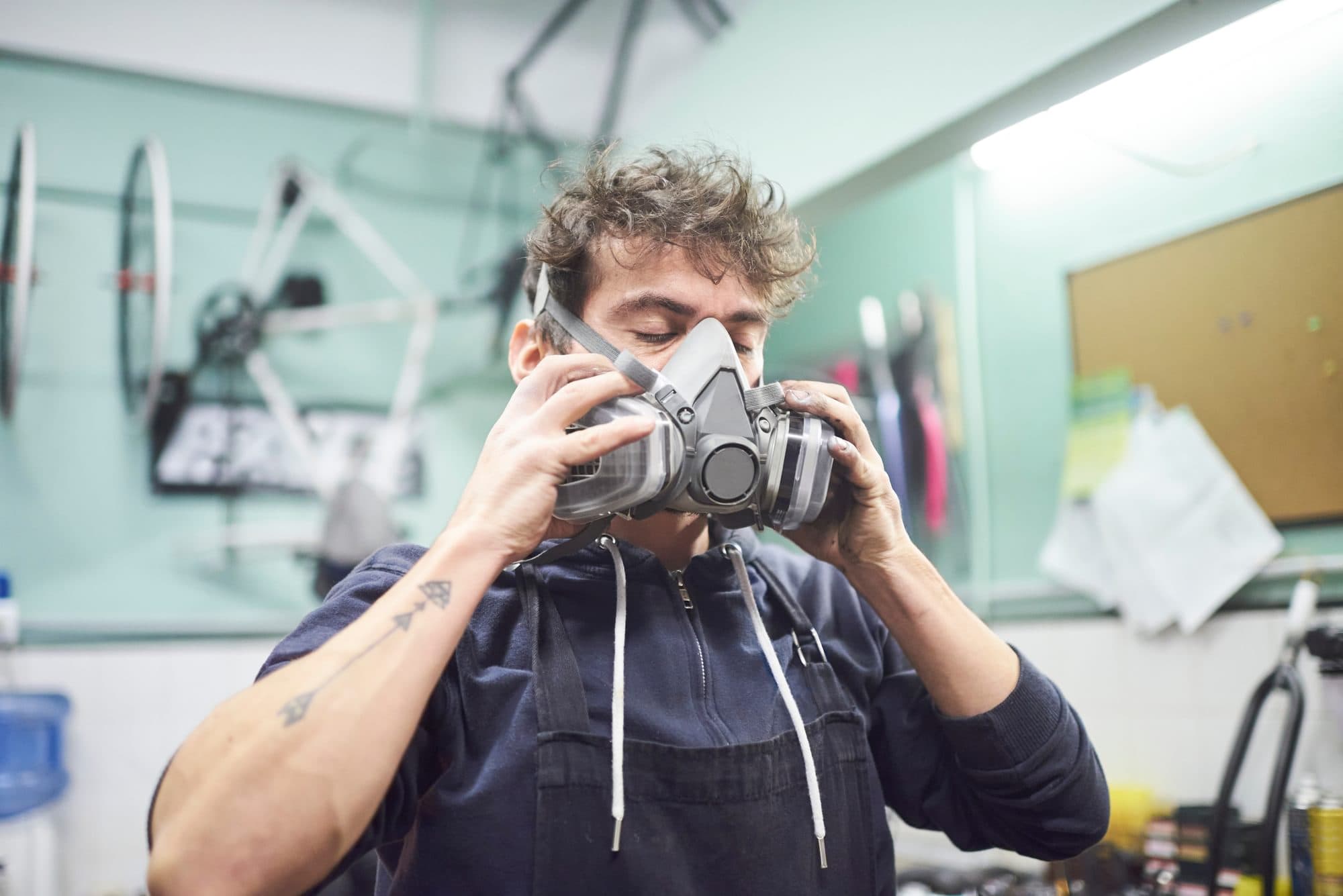
Fit testing is also not the same as the user seal check. OSHA requires a user seal check each time a tight-fitting respirator is put on. (1) The fit test confirms the selected facepiece can achieve an acceptable fit. The user seal check helps the employee confirm the seal before each use.
Documentation should help managers see the gaps
A respiratory protection program needs a written, worksite-specific program administered by a suitably trained program administrator. (1) Documentation should make the program easier to run, not harder to audit.
A practical records review can focus on six connected items:
- Current hazard evaluations and the basis for respirator selection
- Medical-evaluation clearances and required follow-up
- Fit-test records tied to the exact facepiece used
- Training and retraining records
- Inspection, cleaning, storage, and repair practices
- Program evaluations and corrective actions
The point is not to create more paperwork. It is to make sure managers can identify an expired fit test, a changed task, a missing clearance, or a damaged respirator before that gap becomes a worker-exposure or compliance problem.
Program evaluation is where paper meets practice
OSHA requires employers to conduct evaluations of the workplace as necessary to ensure the written respiratory protection program is being properly implemented and to consult employees who use respirators to assess their views on program effectiveness and identify problems. (1)
That requirement gives leaders a useful operating question: does the written program describe what workers and supervisors are actually doing?
A field-level review can reveal issues that a spreadsheet will not. Employees may be using a different model than the one listed in their fit-test record. Storage may expose equipment to damage or contamination. A supervisor may not know when to remove a worker from a task because of a medical or seal issue. A task may have changed without the hazard evaluation being updated.
Those are management-system gaps. They are also correctable when the organization has a clear process for finding, documenting, assigning, and verifying them.
How GMG EnviroSafe can help
GMG EnviroSafe can help your business assess respiratory protection program gaps, review documentation and field conditions, support training alignment, and identify where medical evaluation, fit testing, equipment practices, or program administration need attention.
HealthAssure® is available as a separately quoted additional service for workplace health, exposure, and industrial-hygiene needs, including qualitative and quantitative respirator fit testing and respirator medical evaluation when appropriate.
Requirements and appropriate controls can vary by hazard, respirator type, work process, and facility conditions. Your program should be evaluated against the work your employees actually perform.
Contact GMG EnviroSafe to schedule a respiratory protection program assessment for your business. GMG can compare your written program, records, and field practices so you can turn identified gaps into clear corrective actions your team can track.
Sources
(1) OSHA. Respiratory Protection, 29 CFR 1910.134. https://www.osha.gov/laws-regs/regulations/standardnumber/1910/1910.134
(2) OSHA. 29 CFR 1910.134(e), Medical evaluation. https://www.osha.gov/laws-regs/regulations/standardnumber/1910/1910.134#1910.134(e)
(3) OSHA. 29 CFR 1910.134(f), Fit testing. https://www.osha.gov/laws-regs/regulations/standardnumber/1910/1910.134#1910.134(f)