Auto
Automotive Lift Operator Training: What OSHA and ALI Require
A technician may know how one lift works and still be unprepared to safely operate a different model. Controls, rated capacities, contact points, adapters, warning labels, and safety features can vary. A shop needs a training process that connects general lift-safety principles to the equipment employees will actually use.
That process should also reflect the different roles of federal OSHA, the ANSI/ALI ALOIM consensus standard, manufacturer instructions, and the employer. They work together, but they do not carry the same legal authority.
Start With the Federal OSHA Duty
In a 2014 interpretation, Federal OSHA stated that it has no specific standard for users of automotive service lifts. The interpretation does not remove the employer’s responsibility for serious lift hazards. Section 5(a)(1) of the Occupational Safety and Health Act, commonly called the General Duty Clause, requires employers to provide a workplace free from recognized hazards that are causing or are likely to cause death or serious physical harm.
OSHA also explained that private consensus standards and manufacturer recommendations are not automatically federal OSHA requirements. When a specific OSHA standard does not apply, however, those materials may serve as evidence that a hazard was recognized and that a feasible way to address it was available.
This article addresses the federal OSHA framework. An employer should confirm whether any other authority governing its operation adds a requirement that changes the training decision.
Use the Current ALOIM Standard for Lift-Specific Direction
The current published consensus standard is ANSI/ALI ALOIM:2020, Standard for Automotive Lifts, Safety Requirements for Operation, Inspection and Maintenance. It became effective on January 1, 2021, replacing the 2008 edition referenced in OSHA’s 2014 interpretation. ALI lists another ALOIM revision as being in development, but that draft is not the current published standard.
ALI’s public description says ALOIM:2020 addresses lift-operator qualifications, training, and responsibilities, along with employer responsibilities for operator training. The standard also includes an operator training log. These are consensus-standard expectations, not a federal automotive-lift regulation.
Using the current edition gives a shop a recognized framework for organizing lift safety. It also keeps the program from relying on the stale edition number in the older OSHA interpretation.
Connect Training to the Lift in the Bay
ALI advises operators to review the manufacturer’s instructions and warning labels before using a lift, especially when they use a new or different model. Its lift-user guidance also tells operators to understand the equipment's rated capacity, controls, safety features, manufacturer-recommended lifting points, and approved accessories.
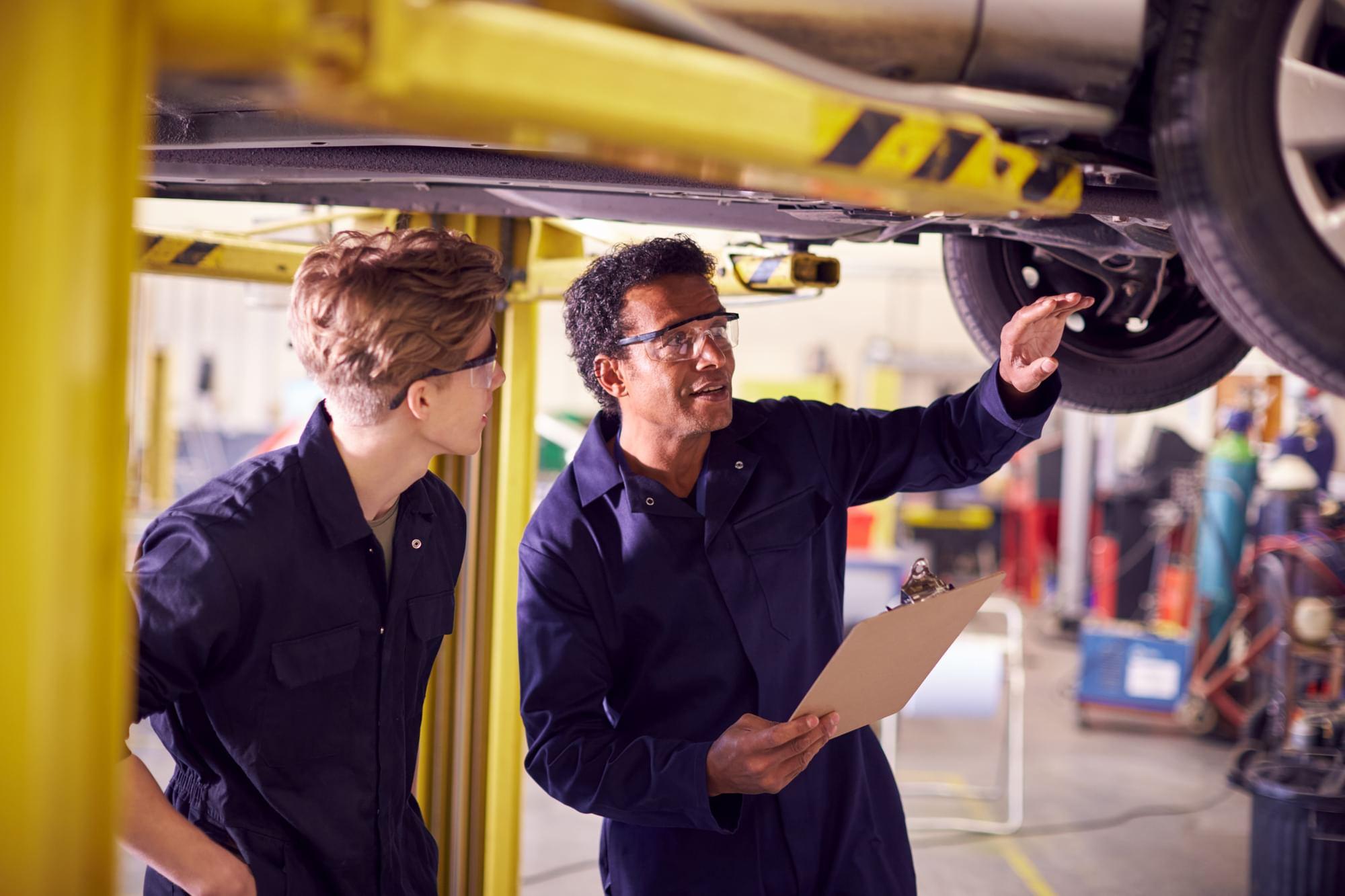
A general automotive lift course can establish shared principles, terminology, and safe-use expectations. The employer still needs to connect that instruction to the shop’s equipment.
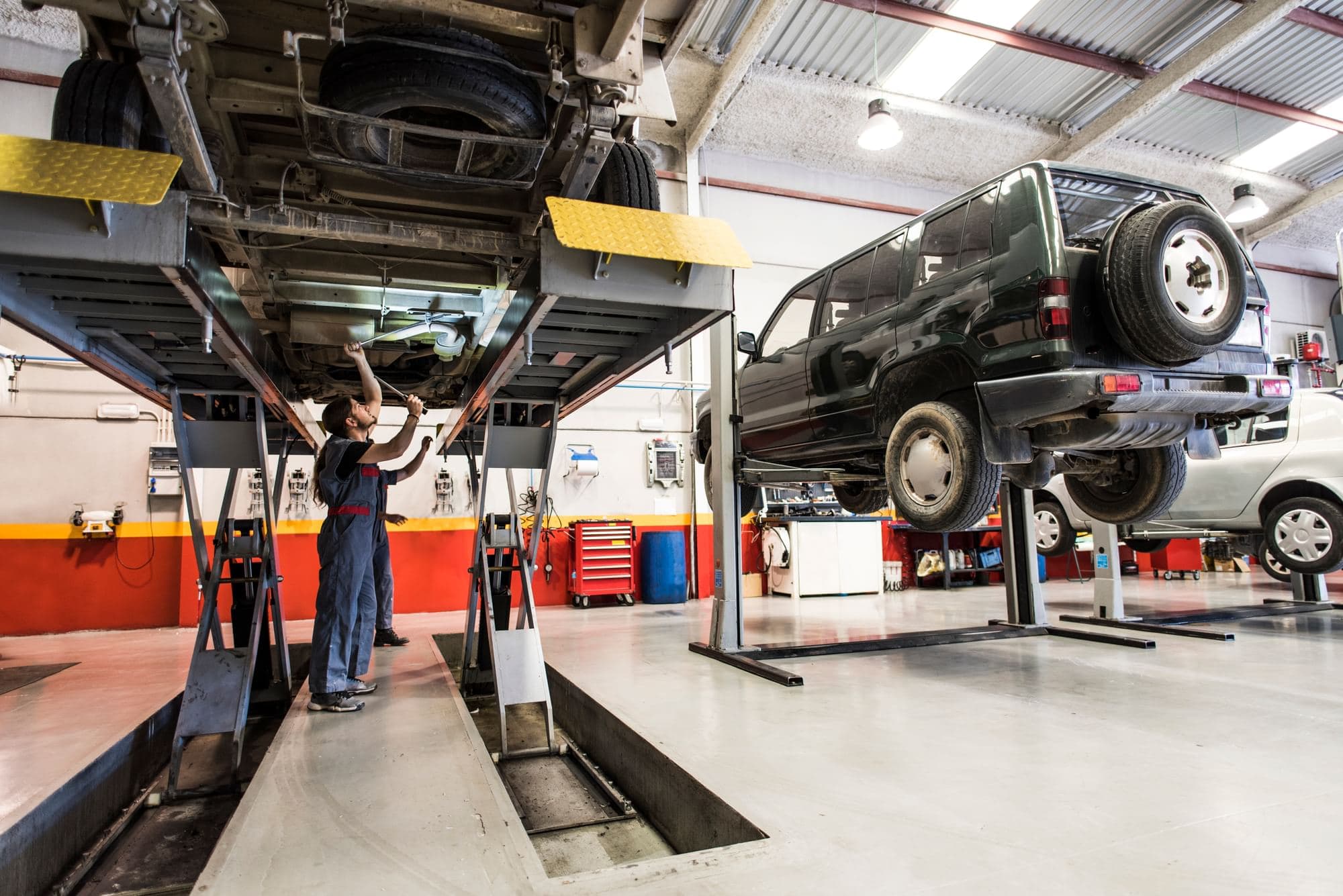
Before authorizing an employee to use a lift, the shop should confirm the employee received instruction relevant to that lift or lift type, including the current manual, readable warning labels, applicable controls, load limits, lifting points, accessories, and operating steps.
That boundary matters when a technician changes bays, starts using a different lift design, or works with a vehicle that requires different lifting points or adapters. Prior experience can support learning, but it does not replace familiarity with the equipment being used now.
Record What the Training Established
Course attendance and operator readiness answer different questions. Attendance shows that an employee completed a learning activity. Readiness depends on what the employee was taught to operate and whether the equipment-specific instruction was addressed.
ALI says lift-operator training should be documented, and ALOIM includes an operator training log. Federal OSHA’s automotive-lift interpretation does not create a separate automotive-lift training-record rule. Shops should keep the distinction clear when describing their records.
A practical training record can identify:
- the employee and training date;
- the lift, lift type, or equipment covered;
- the manufacturer materials and warnings reviewed;
- the trainer or person who evaluated the instruction; and
- the shop’s authorization or follow-up decision.
Those fields are practical program controls unless a controlling authority expressly requires them. Their value is operational: a manager can see who has been trained on which equipment and what still needs addressing.
Add Instruction When the Work Changes
The federal sources reviewed for this article do not establish a universal annual retraining schedule for automotive lift operators. Instead, a shop can define clear triggers for additional instruction or evaluation.
A new or different lift is one supported trigger because ALI tells operators to become familiar with the manufacturer’s instructions for the equipment they will use. Revised manufacturer information, a change in job assignment or shop procedure, observed misuse, or a performance concern can also justify another review as an operational control.
Operator training, lift inspection, and lift maintenance remain separate responsibilities. A training record does not prove that the lift was inspected or maintained, and an inspection report does not prove that an employee knows how to operate the equipment.
Put GMG’s Automotive Lift Operator Training Into the Process
GMG EnviroSafe offers Automotive Lift Operator Training. Current GMG material describes the training as focused on properly lifting a vehicle and understanding the importance of lift maintenance. The exact delivery and support should be confirmed for the customer’s engagement because the service is not automatically included in every GMG plan.
GMG training can provide the general operator-training layer and help the employer organize its training process. The employer still needs to provide or verify instruction tied to the actual lift, current manufacturer materials, shop procedures, and the employee’s assigned work.
GMG training completion is not federal OSHA certification, ALI certification, lift certification, or a substitute for the manufacturer’s instructions. A shop should be able to explain its process in plain terms: which employees may use each lift, what training and equipment-specific instruction they received, where that information is documented, and what prompts another review.
GMG EnviroSafe can help customers build that operator-training foundation within an agreed scope.
Sources
(1) Occupational Safety and Health Administration. Standard Interpretation, OSHA Standards Applicable to Automotive Service Lifts (November 19, 2014). https://www.osha.gov/laws-regs/standardinterpretations/2014-11-19
(2) Occupational Safety and Health Administration. Occupational Safety and Health Act of 1970, Section 5: Duties. https://www.osha.gov/laws-regs/oshact/section5-duties
(3) Automotive Lift Institute. ANSI/ALI ALOIM:2020 Standard for Automotive Lifts, Safety Requirements for Operation, Inspection and Maintenance. https://www.autolift.org/product/ansiali-aloim-standard-current-edition/
(4) Automotive Lift Institute. Standards Development. https://www.autolift.org/ansi-standards-auto-lift-institute-knowledge-center/standards-development/
(5) Automotive Lift Institute. How to Safely Use a Car Lift or Truck Lift. https://www.autolift.org/be-a-smart-auto-lift-user/