Distribution
Warehouse Ergonomics: How to Manage Risk Across Every Shift
A warehouse task can change before the written process does. A new carton size arrives. Fast-moving products are moved to different slots. A temporary staging area narrows the route to a pallet. The job still has the same name, but the reaching, lifting, pushing, pulling, and repetition have changed.
That is why warehouse ergonomics cannot be managed with a lifting reminder or a one-time review. Leaders need to see how work is performed on every shift, then act on the conditions creating unnecessary physical demand.
Follow the Task From Start to Finish
Begin with one real task, not a job title. Follow an item from receiving through storage, picking, packing, and shipping. Watch where employees first touch the load, how far they carry it, where they change direction, and what happens when the normal path is blocked.
OSHA's guidance for warehousing identifies lifting and lowering, overhead reaching, pushing and pulling heavy loads, awkward postures, and repeated motions as ergonomic risk factors. NIOSH also emphasizes that risk depends on the work's intensity, frequency, and duration. A light carton handled hundreds of times can deserve as much attention as a heavier item moved occasionally.
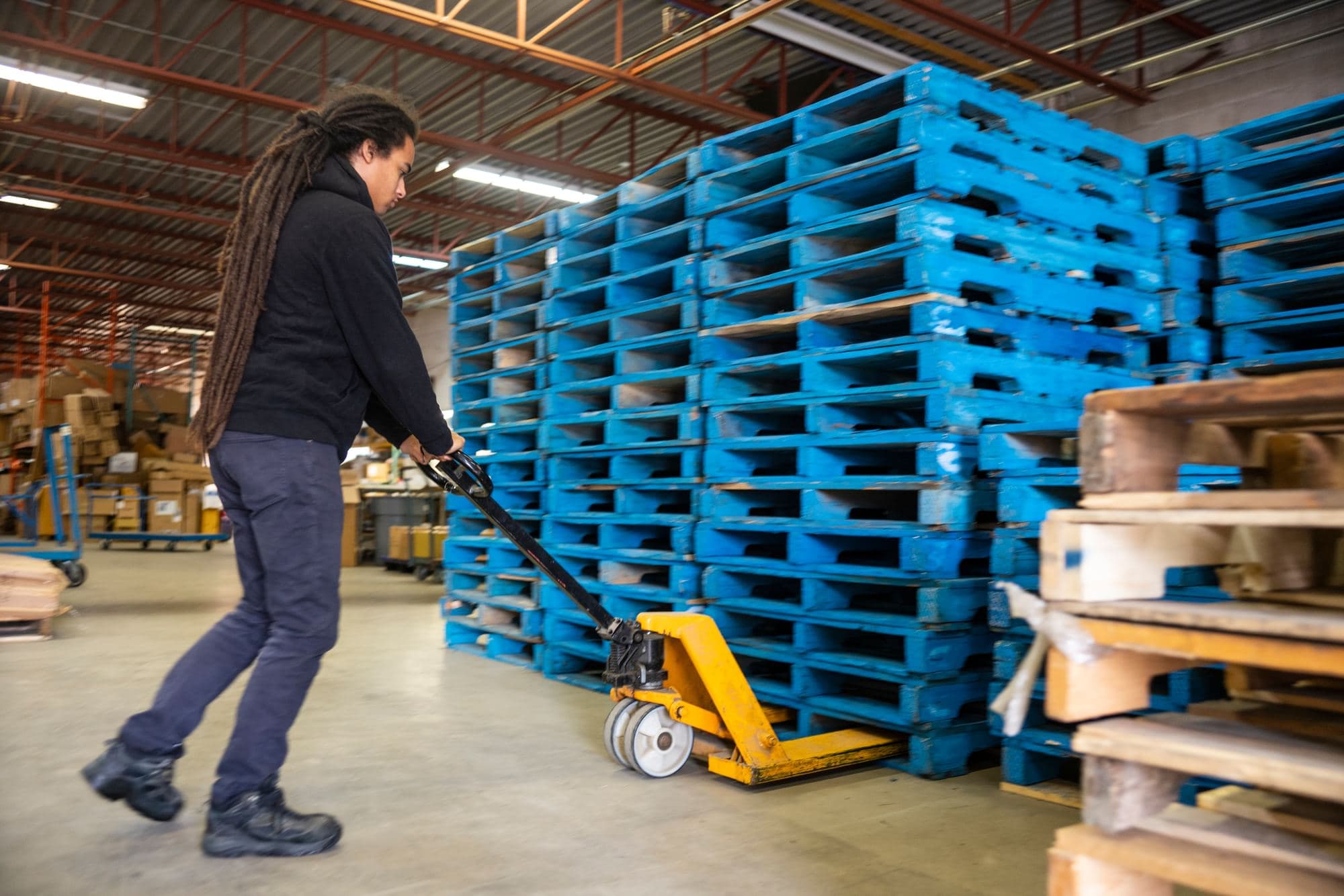
The review should also include the equipment and floor conditions around the task. A damaged cart, rough transition, poorly maintained pallet jack, deep rack position, or crowded aisle can add force or awkward movement that a written procedure never shows.
Compare the Same Work Across Shifts
Day and night operations may use the same process on paper while working under different conditions. Equipment may be harder to find after hours. Staffing may be thinner. Replenishment may place products in temporary locations. Overtime, seasonal volume, and a different product mix can change both pace and recovery time.
Compare the task across normal, weekend, overtime, and peak-volume periods. Include experienced employees, new hires, and temporary workers so the review reflects how the same work is performed under different staffing conditions and experience levels.
Reduce the Physical Demand
Employees can recognize the risks and use equipment correctly, but they still face a shelf that requires an extended reach or a route that makes them twist while handling a load. The task itself needs to change when the work design is creating the physical demand.
OSHA recommends engineering controls where feasible. In a warehouse, that may mean changing storage height, reducing load weight, bringing high-volume items closer to a neutral reach, improving cart or pallet-jack maintenance, adding a lift or positioning aid, or changing the path between picking and packing. Administrative controls, such as rotation or work-rest scheduling, may also help, but the rotation needs to move employees to work that uses meaningfully different motions or muscle groups.
Check the full effect of any change before rolling it out. Moving a pallet or adding equipment can affect traffic, access, guarding, and powered-industrial-truck movement. Test the change under normal production, ask the people doing the work what improved, and confirm that the fix still works on other shifts.
Make Reporting Lead to Action
Employees usually notice task drift early. They see the product that no longer fits the slot, the cart that takes more force to move, or the packing setup that adds an awkward reach. Give them a simple reporting path, name the person responsible for follow-through, and set a date to check whether the correction worked.
Keep the operational record practical. Capture the task, shift, load, conditions observed, worker input, proposed control, owner, due date, and effectiveness check. That management record does not replace any required injury and illness record or confidential medical documentation.
Keep the Regulatory Boundary Clear
Federal OSHA has no single ergonomics standard covering every warehouse task. Employers still have a duty to protect workers from recognized serious hazards, and OSHA may use the General Duty Clause when its criteria are met. State Plan requirements may differ.
OSHA's updated National Emphasis Program for Warehousing and Distribution Center Operations took effect on July 31, 2026. It lists ergonomics among the workplace hazards that inspections under the program focus on. The directive targets specified warehousing, distribution, mail, courier, and delivery operations. It does not mean every business that stores products is automatically covered.
GMG EnviroSafe can support an on-site assessment of changing warehouse work, help document the findings, and organize follow-through within the agreed scope. If tasks look different from one shift to the next, that is the right place to begin.
Sources
(1) Occupational Safety and Health Administration. Warehousing: Hazards and Solutions. https://www.osha.gov/warehousing/hazards-solutions
(2) National Institute for Occupational Safety and Health. Step 1: Identify Risk Factors. https://www.cdc.gov/niosh/ergonomics/ergo-programs/risk-factors.html
(3) Occupational Safety and Health Administration. Ergonomics: Solutions to Control Hazards. https://www.osha.gov/ergonomics/control-hazards
(4) Occupational Safety and Health Administration. Ergonomics for the Prevention of Musculoskeletal Disorders, Temporary Worker Initiative Bulletin No. 13. https://www.osha.gov/sites/default/files/publications/OSHA4382.pdf
(5) Occupational Safety and Health Administration. National Emphasis Program on Warehousing and Distribution Center Operations, CPL-03-00-026. https://www.osha.gov/enforcement/directives/cpl-03-00-026-0
(6) Occupational Safety and Health Administration. Ergonomics: Standards and Enforcement FAQs. https://www.osha.gov/ergonomics/faqs