Auto
SPCC Plans for Auto Repair Shops: What Triggers the Requirement and How to Stay Ready
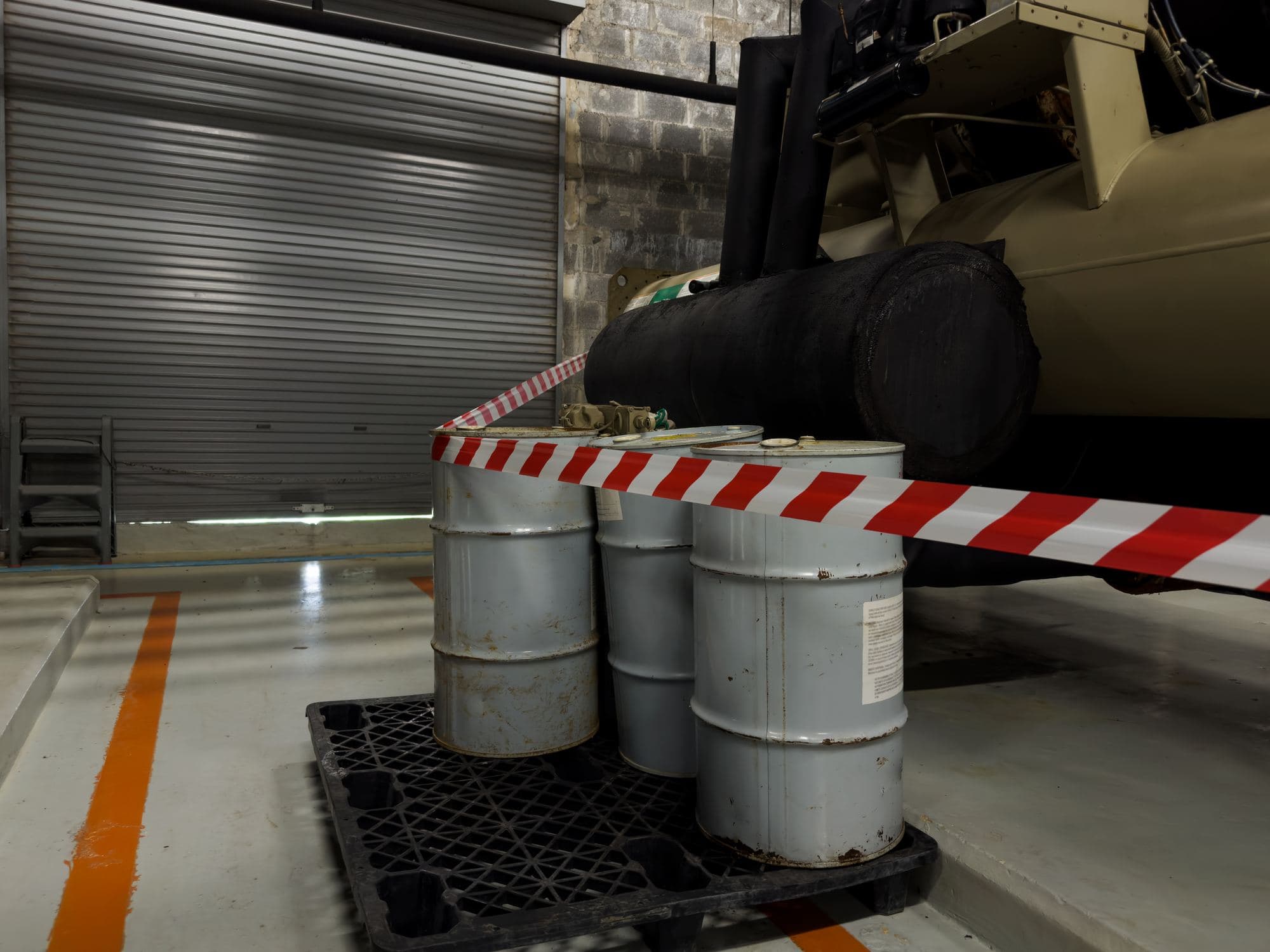
One used-oil tank rarely tells the whole environmental story of an auto repair shop. New oil, used oil, hydraulic fluid, drums, totes, bulk tanks, and transfer areas can sit in separate parts of the property. The practical question is whether anyone has evaluated the whole facility, its oil storage capacity, and the route a discharge could take if normal controls fail.
An SPCC Plan is not triggered by capacity alone. EPA's rule applies to certain non-transportation-related facilities that use, store, process, refine, transfer, distribute, or consume oil, exceed the applicable storage threshold, and could reasonably be expected to discharge oil in harmful quantities to navigable waters or adjoining shorelines. (1)
SPCC Applicability Depends on Capacity and Discharge Potential
For aboveground storage, the federal threshold is more than 1,320 gallons of aggregate capacity. For completely buried storage, it is more than 42,000 gallons. The calculation is based on the container's shell capacity, not the amount of oil on hand that day. Containers with a capacity of less than 55 gallons are excluded from the aboveground calculation. (1)
The capacity review is only one part of the test. A shop should also examine drains, storm sewers, roadside ditches, slopes, nearby water, soil conditions, and reasonably foreseeable weather. EPA explains that a reasonable expectation of discharge is based on the facility's location and geography. The analysis cannot rely on manmade containment, such as berms or dikes, to conclude that oil could not reach water. (2)
That matters in auto repair because an ordinary transfer point or outdoor waste-oil area can connect to a drainage path that is easy to miss. A documented facility walk should identify where oil is stored and handled, where it could leave the property, and which conditions could change that path.
Count the Right Containers Before Drawing a Conclusion
Not every fluid or vessel should be counted the same way. The rule defines oil broadly, but the facility still needs to identify oil regulated under the SPCC rule and apply the rule's exclusions correctly. For example, a motive-power container is excluded from SPCC applicability, while other fixed oil-filled equipment may need review. Underground storage tanks subject to all technical requirements of 40 CFR Parts 280 or 281 are also excluded. (1)
Facility boundaries matter, too. A business with multiple buildings or locations should not assume that common ownership alone determines whether they are one SPCC facility. The regulatory definition turns on the boundaries of the facility and related oil-handling operations. (3)
This is why a useful review begins with a container and equipment inventory, not a guess based on one tank. Record shell capacity, contents, location, whether the container is aboveground or completely buried, and how oil moves through the operation. When the facts are unclear, obtain qualified environmental or legal guidance before deciding that the rule does not apply.
Make the Written Plan Match the Actual Shop
For a facility subject to the SPCC rule, the SPCC Plan must be prepared and implemented in accordance with the rule. Its controls should reflect the real layout: tanks and drums, loading and transfer points, drainage, secondary containment, inspections, security, personnel responsibilities, and spill response procedures. (4)
Secondary containment is not a single checkbox. The rule requires appropriate containment or diversionary structures to prevent a discharge from reaching navigable waters. Bulk-storage facilities also have specific sized-containment requirements, including capacity for the largest single container and sufficient freeboard for precipitation where appropriate. (4)
The plan also needs an operating rhythm. The rule calls for written inspection and testing procedures, records kept for at least three years, employee training for oil-handling personnel, annual discharge-prevention briefings, and a person accountable for discharge prevention. (4)
Do not let a plan become a snapshot of a former shop layout. Owners or operators must review the plan at least every five years and amend it when a material change in facility design, construction, operation, or maintenance materially affects discharge potential. Required amendments must be prepared within six months, with implementation as soon as possible and no later than six months after the change. (5)
Know the Certification and Reporting Boundaries
Most SPCC Plans require certification by a licensed Professional Engineer. Some qualified facilities may self-certify, but eligibility depends on specific capacity and spill-history conditions. Tier I qualified facilities have additional criteria, including no individual aboveground oil container larger than 5,000 gallons. State and local requirements can still apply, so federal self-certification should not be treated as the complete compliance answer. (6)
A spill response procedure also needs to distinguish immediate reporting from follow-up obligations. EPA directs persons in charge to notify the National Response Center immediately when they know of a discharge of oil into or upon navigable waters or adjoining shorelines that causes a harmful effect. Certain larger discharges can also trigger reporting to the EPA Regional Administrator under the SPCC rule. (7)
An SPCC Plan is not the same as a Facility Response Plan. The latter has separate applicability criteria and response-planning requirements. Do not assume that one document satisfies the other. (8)
For auto repair shops, the strongest next step is a fact-based review of storage, drainage, and operating changes. Contact GMG EnviroSafe to discuss a practical review of your oil-handling conditions and the documentation questions your operation needs to address.
Sources
(1) eCFR, 40 CFR 112.1, General Applicability. https://www.ecfr.gov/current/title-40/chapter-I/subchapter-D/part-112/section-112.1
(2) eCFR, 40 CFR 112.1(d)(1)(i), Reasonable Expectation of Discharge. https://www.ecfr.gov/current/title-40/chapter-I/subchapter-D/part-112/section-112.1
(3) eCFR, 40 CFR 112.2, Definitions. https://www.ecfr.gov/current/title-40/chapter-I/subchapter-D/part-112/section-112.2
(4) eCFR, 40 CFR 112.7 and 112.8, General and Onshore Facility Requirements. https://www.ecfr.gov/current/title-40/chapter-I/subchapter-D/part-112/section-112.7; https://www.ecfr.gov/current/title-40/chapter-I/subchapter-D/part-112/section-112.8
(5) eCFR, 40 CFR 112.5, Amendment of SPCC Plans. https://www.ecfr.gov/current/title-40/chapter-I/subchapter-D/part-112/section-112.5
(6) eCFR, 40 CFR 112.3 and 112.6, Plan Certification and Qualified Facilities. https://www.ecfr.gov/current/title-40/chapter-I/subchapter-D/part-112/section-112.3; https://www.ecfr.gov/current/title-40/chapter-I/subchapter-D/part-112/section-112.6
(7) eCFR, 40 CFR 110.6 and 112.4, Oil-Discharge Reporting. https://www.ecfr.gov/current/title-40/chapter-I/subchapter-D/part-110/section-110.6; https://www.ecfr.gov/current/title-40/chapter-I/subchapter-D/part-112/section-112.4
(8) eCFR, 40 CFR 112.20, Facility Response Plans. https://www.ecfr.gov/current/title-40/chapter-I/subchapter-D/part-112/section-112.20