Distribution
Fire Protection and Egress Compliance in High-Rack Storage: What Distribution Centers Need to Know
Most distribution centers have a fire protection system designed for a facility that no longer exists. Rack heights have increased, commodities have changed, storage density has grown, and layouts have been reconfigured, none of which automatically triggered a reassessment of whether the system could still do its job.
That is where the risk develops. Not from a lack of systems, but from a mismatch between how those systems were designed and how the facility is actually operating today.
Fire protection systems are built on specific assumptions about storage height, commodity classification, and rack configuration. When those assumptions change, system performance can no longer be relied on.
Why High-Rack Storage Creates a Different Fire Problem
High-rack storage is not simply more of the same. It creates a different fire environment.
Fires in rack storage spread vertically at a much faster rate due to the chimney effect between pallet loads. Heat release rates increase significantly, particularly with plastic commodities. Smoke behavior changes in ways that can delay detection. Sprinkler discharge may be obstructed or insufficient if the system was not designed for the current configuration.
Facilities storing materials at 25, 30, or 40 feet are operating in conditions that require precise alignment between storage and fire protection design. When that alignment is lost, a functioning sprinkler system may still fail to control a fire.
Commodity Classification Is the Variable Most Often Overlooked
Fire protection design is driven less by rack height than by what is stored in the racks.
NFPA 13 classifies commodities based on fire behavior. (1) Lower-hazard commodities fall into Class I through Class IV. Group A plastics represent the highest-hazard category due to significantly higher heat release rates -- and the high-piled storage threshold for Group A plastics drops to as low as five feet, meaning protection requirements can trigger well below the storage heights that typically come to mind.
This distinction matters operationally. A system designed for Class III or IV commodities may not be capable of protecting Group A plastics at the same height or density. Changes such as increased plastic packaging, shrink-wrapped pallets, or new product categories can shift a facility into a higher hazard classification without triggering any formal reassessment. Emerging risks including lithium-ion batteries and aerosol products introduce additional complexity that standard warehouse fire protection systems were not originally designed to address.
If the commodity mix changes, the system's design assumptions must be reviewed against those changes.
Clearance and Flue Space: Requirements That Disappear Under Operational Pressure
Sprinkler systems depend on physical space to function as designed.
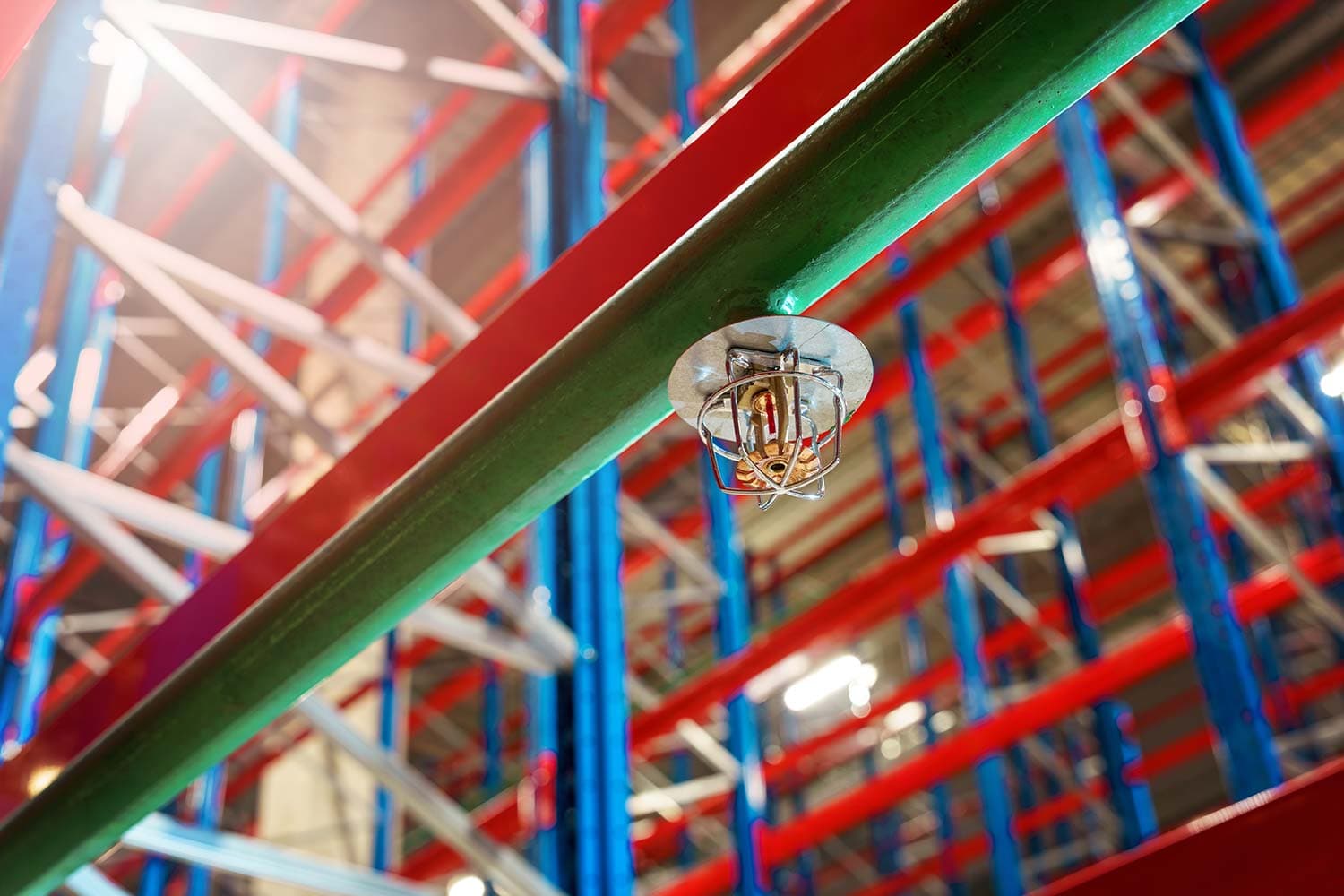
OSHA 29 CFR 1910.159(c)(10) and NFPA 13 require a minimum of 18 inches of vertical clearance between stored materials and sprinkler deflectors for standard systems. Early Suppression Fast Response systems require 36 inches. (1)(2) When storage encroaches into that clearance zone, water distribution is disrupted. The sprinkler activates but cannot perform as designed.
This clearance is frequently compromised when additional storage levels are added or overflow product is stacked above intended limits. It is among the most common violations OSHA inspectors observe under the Warehousing National Emphasis Program because it is visible during a walkthrough. (3)
Flue spaces present the same dynamic. These vertical and horizontal gaps between pallet loads allow sprinkler water to penetrate downward and heat to rise to activate in-rack heads at the correct level. When pallets are pushed together, overhang accumulates, or shrink wrap closes those gaps, the system's ability to reach a fire at lower rack levels is compromised. Large-scale fire testing has confirmed that ceiling sprinklers alone cannot control fires in double-row racks when flue spaces are fully blocked.
These are not design failures. They are operational drift away from the conditions the design assumed.
Egress in High-Rack Environments: The Gap Between the Drawing and the Floor
Egress requirements are straightforward in written plans. They are among the most common compliance gaps in active distribution operations.
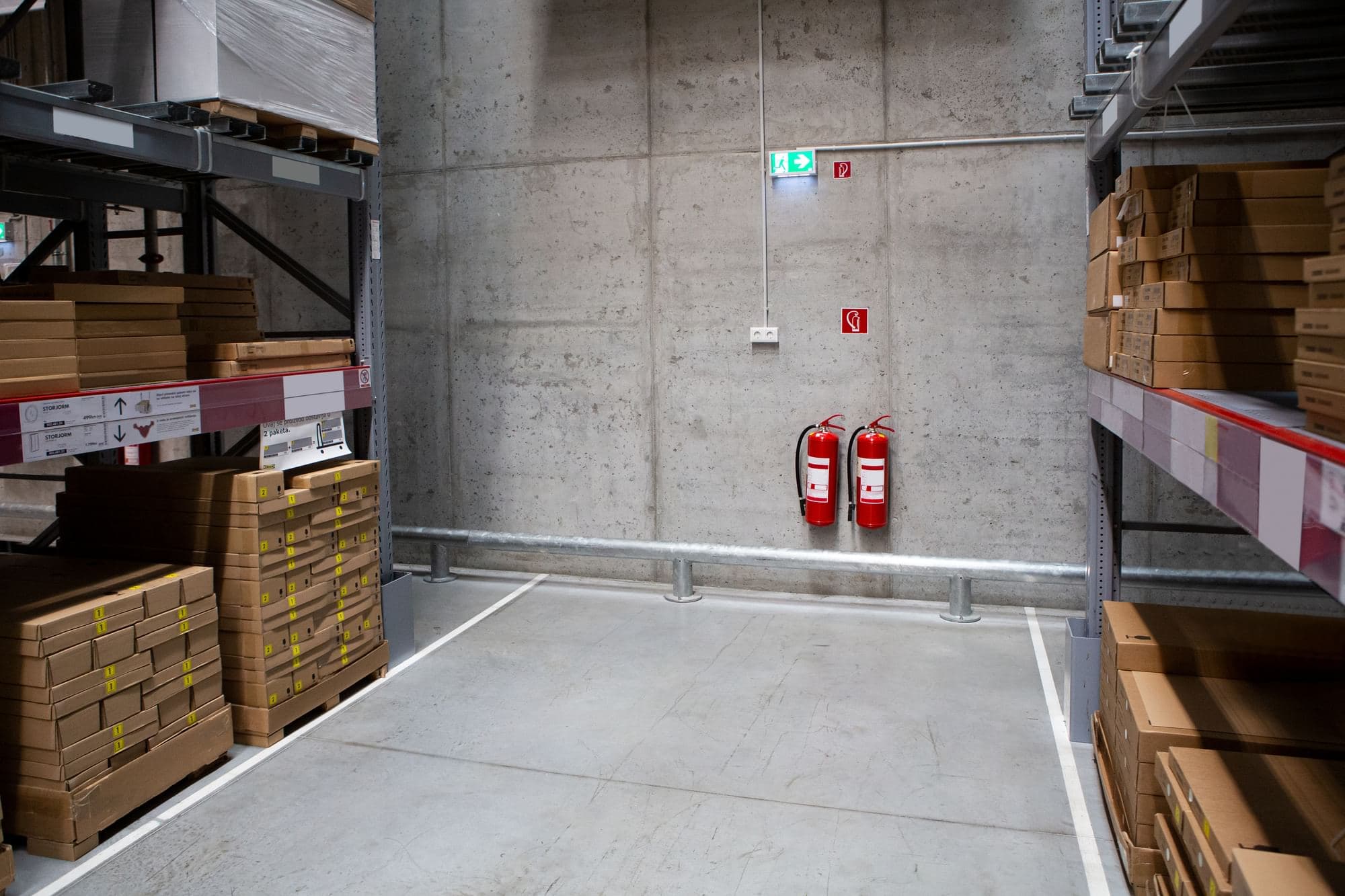
OSHA requires exit routes to be unobstructed, clearly marked, and maintained. (2) IFC Chapter 32 requires aisles providing access to exits to meet minimum width requirements and be kept clear of storage, waste, and equipment. (4) In active facilities, pallets get staged in egress aisles, temporary storage becomes semi-permanent, aisle widths narrow as capacity is added, and exit doors end up partially or fully blocked. None of these conditions appear in the original compliance documentation, and none of them are visible on an egress plan.
High-rack configurations add a visibility dimension that is easy to underestimate. Tall racking creates corridor-like aisles where exit signage positioned for an open warehouse floor may not be visible from within the racking structure. Lighting that was adequate before a reconfiguration may no longer adequately illuminate egress paths after one.
An exit route that exists on a drawing but is blocked, narrowed, or not visible from the floor is not compliant.
The Reconfiguration Gap: No Trigger, No Review
The most common failure in distribution fire protection and egress compliance is not a lack of awareness. It is the absence of any formal trigger for reassessment.
Most facilities have no defined process that requires fire protection and egress systems to be reviewed when rack heights increase, commodity types change, storage density grows, or layouts are modified. Without that trigger, systems gradually fall out of alignment with actual conditions while the original approved documentation remains in place, giving the appearance of compliance.
The result is a facility operating outside the assumptions its safety systems were built on, without anyone having made a deliberate decision to accept that risk.
Effective programs close this gap by treating operational changes as safety triggers. Any change in rack height, commodity classification, storage configuration, or aisle layout should initiate a review of whether current fire protection and egress conditions still match the requirements those conditions generate. Routine checks of sprinkler clearances, flue space maintenance, and aisle and exit accessibility keep the day-to-day operations from drifting away from design conditions. And the people making operational decisions on the floor need to understand the fire protection consequences of how they make those decisions.
Distribution Center EHS Support from GMG EnviroSafe
GMG EnviroSafe helps distribution operations identify where fire protection and egress systems no longer align with current storage conditions. That means evaluating facilities based on how they are operating today, not how they were originally designed, identifying the specific gaps between current storage configurations and the system assumptions those configurations have outpaced, and supporting the processes that keep compliance current as operations evolve.
OSHA's Warehousing NEP has made fire protection and egress active inspection targets in distribution environments. If your facility has changed since its last formal review, those changes may represent compliance exposure that is not visible in your documentation but is easily identified during a site walkthrough.
If you are already working with GMG EnviroSafe, a current-state review of your high-rack storage conditions is a practical next step. If you are not yet a client and want to understand where your facility stands before an inspector does, we are ready to help.
Contact GMG EnviroSafe to assess your fire protection and egress systems against the storage conditions your distribution center is actually operating today.
Sources
(1) NFPA 13: Standard for the Installation of Sprinkler Systems. National Fire Protection Association. https://www.nfpa.org/codes-and-standards/nfpa-13-standard-development/13
(2) OSHA. (2024). 29 CFR 1910.176: Handling Materials -- General. https://www.osha.gov/laws-regs/regulations/standardnumber/1910/1910.176
(3) OSHA. (2023). National Emphasis Program on Warehousing and Distribution Center Operations. CPL 03-00-026. https://www.osha.gov/enforcement/directives/cpl-03-00-026
(4) International Fire Code, Chapter 32: High-Piled Combustible Storage. International Code Council. https://codes.iccsafe.org
(5) NFPA 25: Standard for the Inspection, Testing, and Maintenance of Water-Based Fire Protection Systems. National Fire Protection Association. https://www.nfpa.org/codes-and-standards/nfpa-25-standard-development/25