Distribution
The Forklift and Powered Industrial Truck Violations That Keep Putting Warehouses on OSHA's Radar
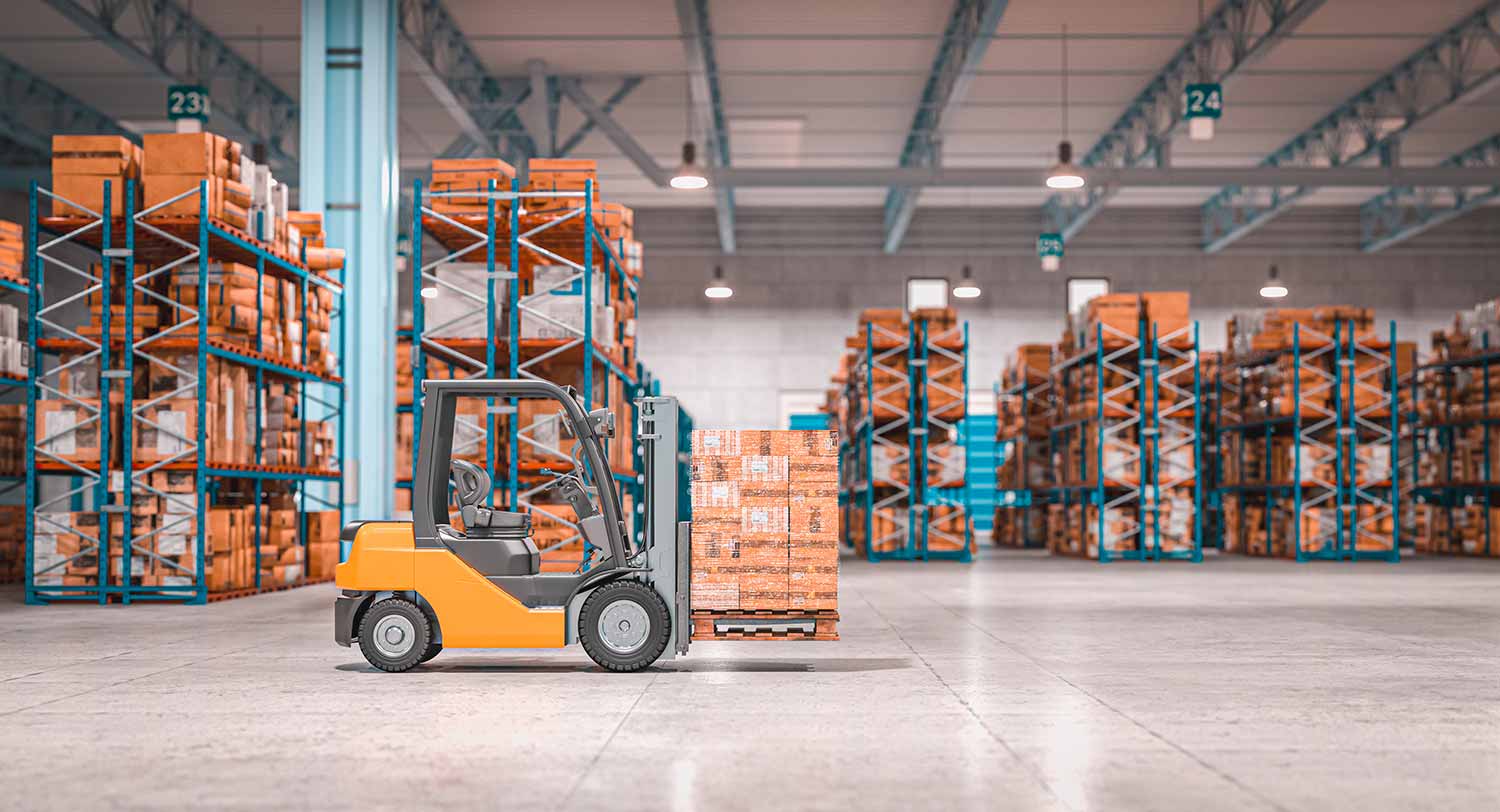
Forklifts and powered industrial trucks (PITs) keep warehouses and distribution centers running. They also keep showing up in citations from OSHA, year after year, for the same predictable reasons.
That predictability is the good news. The violations that put warehouses on OSHA's radar are rarely mysterious, and they are rarely just one operator making a bad call. They are system gaps: an operator evaluation that fell overdue, an inspection that never got documented, a pedestrian walkway that was never marked, or a defective truck that stayed in service because orders had to ship.
This article breaks down the forklift violations OSHA cites most in warehouses, why they keep happening, and how to close them before they grow into a safety incident or a compliance problem.
Why Forklift OSHA Violations Are So Common in Warehouses
Powered industrial trucks (29 CFR 1910.178) ranked number 8 on OSHA's Top 10 most frequently cited standards for fiscal year 2025, with 1,826 citations nationwide. (1) Zoom into warehousing and storage specifically, and the picture is sharper: powered industrial trucks are the single most cited OSHA standard in the industry. (2)
Warehousing and distribution has also been a focused OSHA enforcement priority. As of June 2026, OSHA's Warehousing and Distribution Center Operations National Emphasis Program (directive CPL 03-00-026) remains active and is scheduled to terminate on July 13, 2026, unless OSHA updates the directive. It directs inspectors to look closely at powered industrial vehicle operations, material handling and storage, walking-working surfaces, means of egress, and fire protection. (3)
It is not hard to see why warehouses draw this attention. Warehousing is a high-activity industry, and its recordable injury and illness rate runs well above private industry overall. (4) Forklift-related incidents remain a serious worker safety concern. The National Safety Council reports that forklifts were the source of 84 work-related deaths in 2024, and forklift injuries tend to keep workers off the job longer than the average case. (5)
Here is the encouraging part: these hazards respond to training. OSHA has long connected better operator training and retraining with fewer unsafe operating practices, while cautioning that a drop in operator error does not translate one-to-one into the same reduction in incidents. (6) The hazard is serious, but it is also highly manageable.
What Counts as a Powered Industrial Truck Under OSHA 1910.178
It helps to be clear on scope, because the rule covers more than the classic sit-down forklift. OSHA's powered industrial truck standard, 29 CFR 1910.178, applies to forklifts, order pickers, reach trucks, pallet trucks, motorized hand trucks, platform lift trucks, and other specialized trucks used to move, lift, stack, or retrieve materials. (7) If your team drives it to handle a load, it is very likely covered.
The standard does not apply to farm equipment, earth-moving machines, over-the-road hauling trucks, or compressed-air-powered trucks. (7) Everything below applies to the lift trucks doing the day-to-day work on your floor.
The Forklift Violations Warehouses Keep Getting Cited For
Across thousands of inspections, the same gaps recur. They fall into three areas, which is also roughly how an inspector walks your building: the operator, the truck, and the floor.
The Operator: Forklift Training, Evaluation, and Refresher Requirements
This is one of the most common and easiest-to-verify forklift compliance gaps. Sometimes the issue is missing documentation. Other times, the operator was never evaluated on the equipment or conditions they actually use.
OSHA requires every operator to be trained and evaluated before operating a truck. Training has 3 parts: formal instruction, hands-on practical training, and an evaluation of the operator's performance in your actual workplace. (6) It must be specific to the type of truck and to the conditions of your facility, and operators must be at least 18. (7) That certification has to be documented, including the operator's name, the training and evaluation dates, and who did the evaluating. (7)
A point worth clearing up for your team: OSHA does not issue a forklift "license." The employer is responsible for certifying that each operator was trained and evaluated, and a regular driver's license is not the requirement. (6) A wallet card by itself does not prove compliance.
Certification is also not a one-and-done event. OSHA requires each operator's performance to be re-evaluated at least once every 3 years. (7) Just as important, and often missed, refresher training is required sooner whenever an operator is involved in an incident or near-miss, is seen operating unsafely, is assigned a different type of truck, or when conditions on the floor change. (7) Many warehouses track the 3-year clock but never act on these trigger events.
The Truck: Daily Forklift Inspections and Defects Left in Service
Every truck must be examined before it is placed in service, at least daily, and after each shift when trucks are used around the clock. Any truck found in unsafe condition must be removed from service until it is repaired. (7)
Two failures show up again and again. The first is inspections that happen informally but are never written down, so there is no record showing the inspection was completed or acted on. The second, more serious, is a known defect that stays in service because the shift is busy: worn brakes, a leaking hydraulic line, a dead horn, damaged forks, or a missing data plate. (8) A pre-shift checklist only helps if it leads to action. OSHA expects an unsafe truck to come out of service, not keep moving because orders need to ship.
The Floor: Traffic Control, Forklift Pedestrian Safety, and Loading Docks
This is where the most serious incidents happen, and where your warehouse layout matters as much as any operator's skill.
OSHA's operating rules are specific: observe posted speed limits, keep the truck under control, slow down and sound the horn at cross aisles and blind corners, and travel with the load trailing when it blocks the operator's view. (7) The most common injuries in warehousing include workers being struck by powered industrial trucks (8), and two of the deadliest forklift events are tip-overs and workers on foot being struck. (9)
The controls that prevent these are mostly about separation and visibility: marked and, where possible, physically separated pedestrian walkways, mirrors at blind intersections, clear right-of-way rules, and dedicated forklift routes. (8) Painted lines are a reasonable starting point, but high-traffic doorways and blind corners often need more than paint. Tip-over prevention also depends on the basics inside the cab: enforcing seat belt or operator-restraint use where the truck is equipped with it, along with speed control, stable loads, and safe turning. (8)
Loading docks are where forklift safety, trailer control, and pedestrian movement all meet, so they deserve their own rules. OSHA requires operators to keep a safe distance from dock and ramp edges, to set brakes and use wheel chocks so trailers and railcars cannot move during loading, to check trailer flooring before driving onto it, and to make sure dockboards are secured and not overloaded before driving across. (7)
A few more gaps round out the list, and they are easy for an inspector to spot on a walkthrough:
- Loads beyond capacity or stability. Capacity is not just the number on the truck. Attachments, load center, height, and an unstable pallet all change what the truck can safely handle. (7)
- Battery charging area controls. Charging belongs in a designated area with ventilation, spill flushing, fire protection, and the chargers shielded from truck impact. (7)
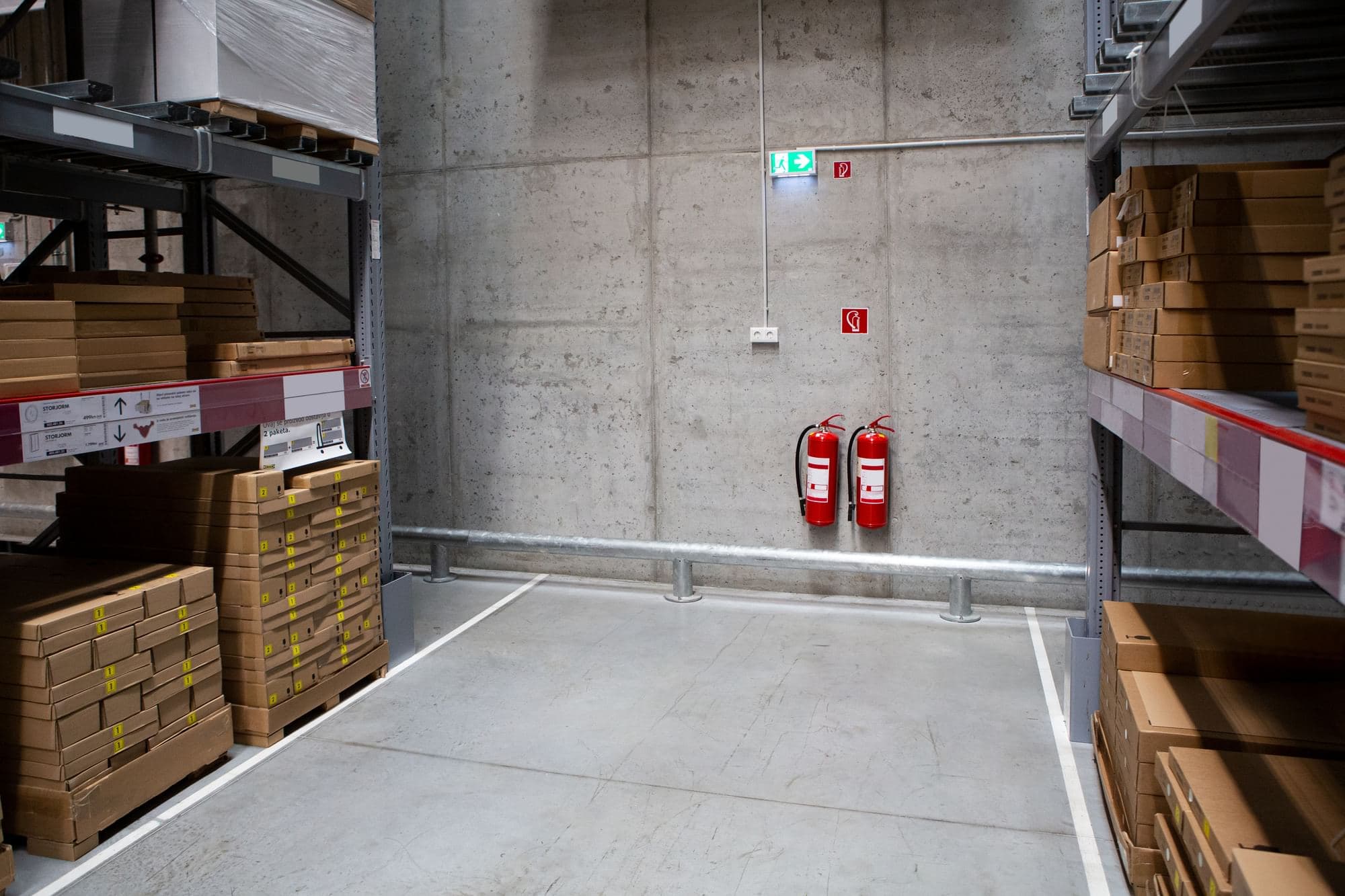
- Blocked aisles, exits, and fire equipment. Forklift citations often arrive alongside citations for cluttered aisles, product staged in front of exits, or a fire extinguisher blocked by a parked truck. (8)
Why Forklift Training Alone Isn't Enough for OSHA Compliance
The thread running through all of these is that a forklift program is not a one-time training class. It is a system: trained and evaluated operators, documented inspections, defects pulled from service, controlled traffic, protected pedestrians, dock rules, and supervisors who follow through. Training is essential, but on its own it does not keep a facility compliant or safe. Supervisors also need to know what triggers refresher training, when to remove a truck from service, and how to document corrective actions.
Unresolved or repeat forklift hazards also carry real consequences. In 2026, OSHA's maximum penalty is up to $16,550 for a serious violation and up to $165,514 for a willful or repeat one. (10) But the stronger reason to close these gaps is the one OSHA cares about most: a forklift incident can take a life, and these incidents are largely preventable.
The practical test is simple. Could you put your hands on the operator roster, the training and evaluation records, the pre-shift inspection logs, the out-of-service and repair records, and your traffic and dock procedures today? If any of those would take real digging, that is a gap to close now.
How GMG EnviroSafe Helps Warehouses Strengthen Forklift Safety and Compliance
Warehouses do not get cited because forklifts are mysterious. They get cited when specific, knowable gaps drift open over time as crews, equipment, layouts, and operations change. As your compliance partner, GMG EnviroSafe helps distribution and warehousing teams identify those gaps, correct them, and build systems that are easier to manage.
Our hands-on support includes:
- Powered industrial truck compliance assessments that review your equipment, operator training, inspection process, and documentation against current OSHA expectations.
- Operator and supervisor training, including forklift certification, refresher training, and workplace evaluations.
- Warehouse traffic and pedestrian safety reviews, covering travel lanes, blind intersections, and dock operations.
- Daily inspection and out-of-service processes that turn checklists into action.
- Battery charging and material storage reviews.
- Documentation and recordkeeping support, so your program stays organized and current.
Forklift safety does not need to be complicated, but it does need to be consistent. GMG EnviroSafe helps manage the details, so your team stays protected and your operation keeps running smoothly.
Not sure where your forklift program stands? GMG EnviroSafe can help you review your current process, identify gaps, and take the next step with confidence.
Sources
- OSHA. Top 10 Most Frequently Cited Standards, Fiscal Year 2025. osha.gov/top10citedstandards
- OSHA. Frequently Cited OSHA Standards: NAICS 4931, Warehousing and Storage. osha.gov
- OSHA. National Emphasis Program: Warehousing and Distribution Center Operations (CPL 03-00-026). osha.gov
- U.S. Bureau of Labor Statistics (BLS). Employer-Reported Workplace Injuries and Illnesses: Warehousing and Storage. bls.gov/iif
- National Safety Council (NSC). Injury Facts: Work Safety - Forklifts. injuryfacts.nsc.org
- OSHA. Powered Industrial Trucks eTool: Operator Training. osha.gov/etools/powered-industrial-trucks
- OSHA. 29 CFR 1910.178, Powered Industrial Trucks. osha.gov/laws-regs/regulations/standardnumber/1910/1910.178
- OSHA. Warehousing: Hazards and Solutions. osha.gov/warehousing/hazards-solutions
- NIOSH. Preventing Injuries and Deaths of Workers Who Operate or Work Near Forklifts. cdc.gov/niosh
- OSHA. 2026 Annual Adjustments to OSHA Civil Penalties (memorandum, May 21, 2026). osha.gov/memos