Auto
Air Quality Compliance for Paint Booths and Refinishing Operations
In every auto body and collision repair operation, the spray booth does more than refinish vehicles. It sits at the intersection of four regulatory systems: EPA's NESHAP 6H rule, OSHA's two spray booth standards, state air district rules, and federal hazardous waste regulations. When an inspector arrives, the paperwork is the first thing they ask for, and the booth is where that paperwork gets tested against what's actually happening. The compliance gaps that get cited usually started somewhere else entirely.
That layered system tightened in 2026. On April 28, the EPA's Toxic Substances Control Act ban on most commercial uses of methylene chloride took effect (1). The rule includes narrow exceptions for specific industrial uses that come with strict worker protection requirements, but for the typical auto body or collision repair shop, methylene chloride paint strippers are no longer an option. Shops that have not transitioned away from them need to do so now.
The methylene chloride deadline is one signal in a broader pattern. Air quality compliance in refinishing is moving faster than the equipment in most booths.
Why Air Quality Compliance Hits Refinishing Harder Than Most Industries
What makes refinishing different from other manufacturing is variability. A single painter can move through three or four different coating systems in one shift, each with its own hazardous air pollutants, isocyanate hardeners, solvents, and PPE requirements. A primer might contain manganese. A basecoat might contain nickel or other metallic pigments. A clear coat is almost always isocyanate-based.
OSHA covers the worker exposure side. EPA covers the environmental side. State air districts often add layers of their own. Variability between coatings creates mismatch between the program on paper and the work actually happening in the booth, and mismatch is where most refinishing compliance failures begin.
The Cornerstone: EPA NESHAP 6H
The EPA's National Emission Standards for Hazardous Air Pollutants for Paint Stripping and Miscellaneous Surface Coating Operations at Area Sources (40 CFR 63 Subpart HHHHHH), known in the industry as the 6H Rule, applies to most auto body and collision repair operations (2). It covers paint stripping with methylene chloride, spray application of coatings to motor vehicles and mobile equipment, and any surface coating containing chromium, lead, manganese, nickel, or cadmium, the five "target HAPs."
The core requirements are:
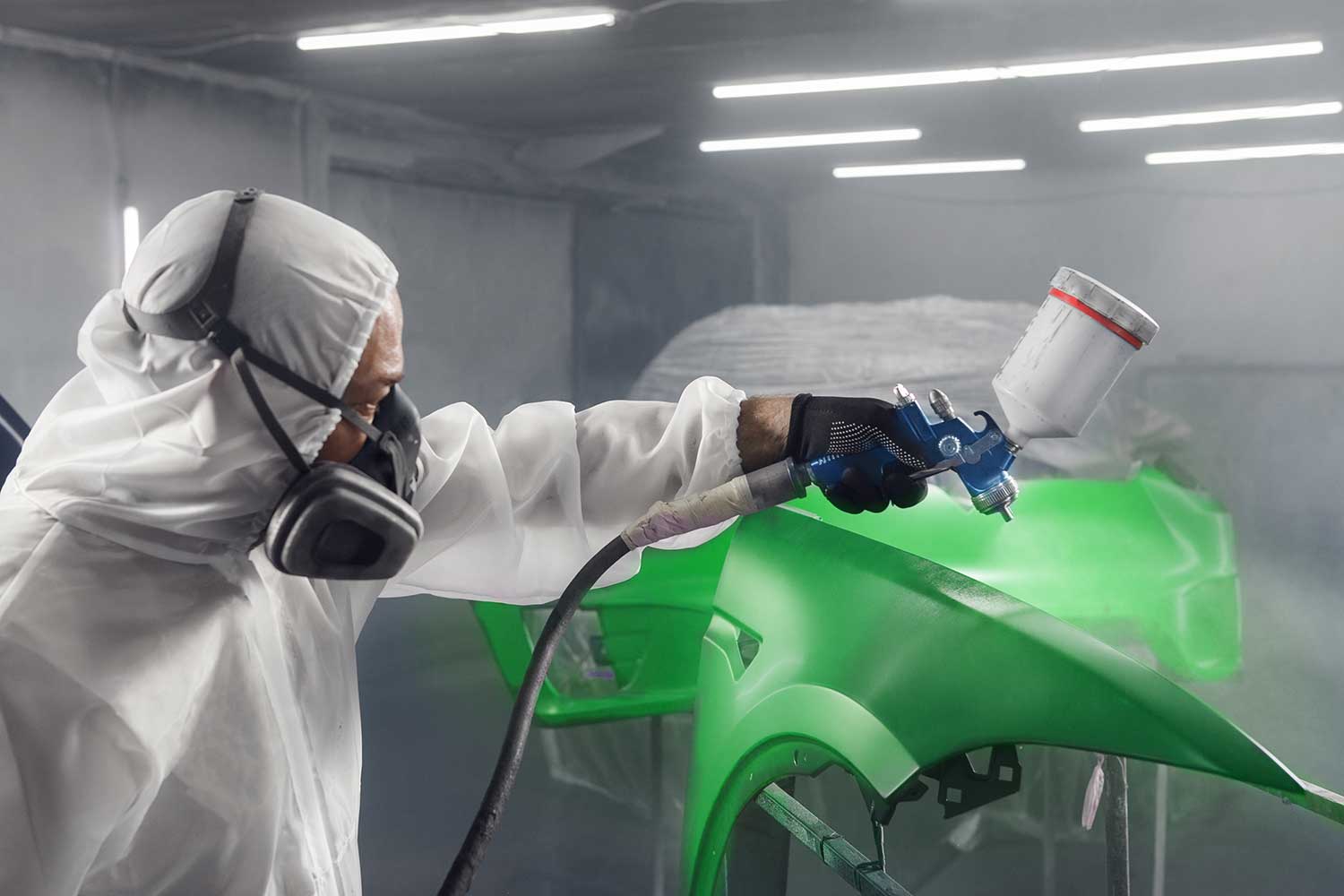
- Spray booths fully enclosed with a full roof and four walls or curtains, ventilated at negative pressure
- Exhaust filters demonstrating at least 98 percent paint overspray capture, documented through ANSI/ASHRAE 52.2-2017 testing or EPA Method 319, with vendor data accepted as documentation
- HVLP, electrostatic, airless, or air-assisted airless spray equipment
- Spray gun cleaning that does not atomize solvent outside a closed container
- Painter training and recertification every 5 years
- Initial Notification and Notification of Compliance Status filed electronically through EPA's CEDRI/CDX platform, with all compliance records kept on-site
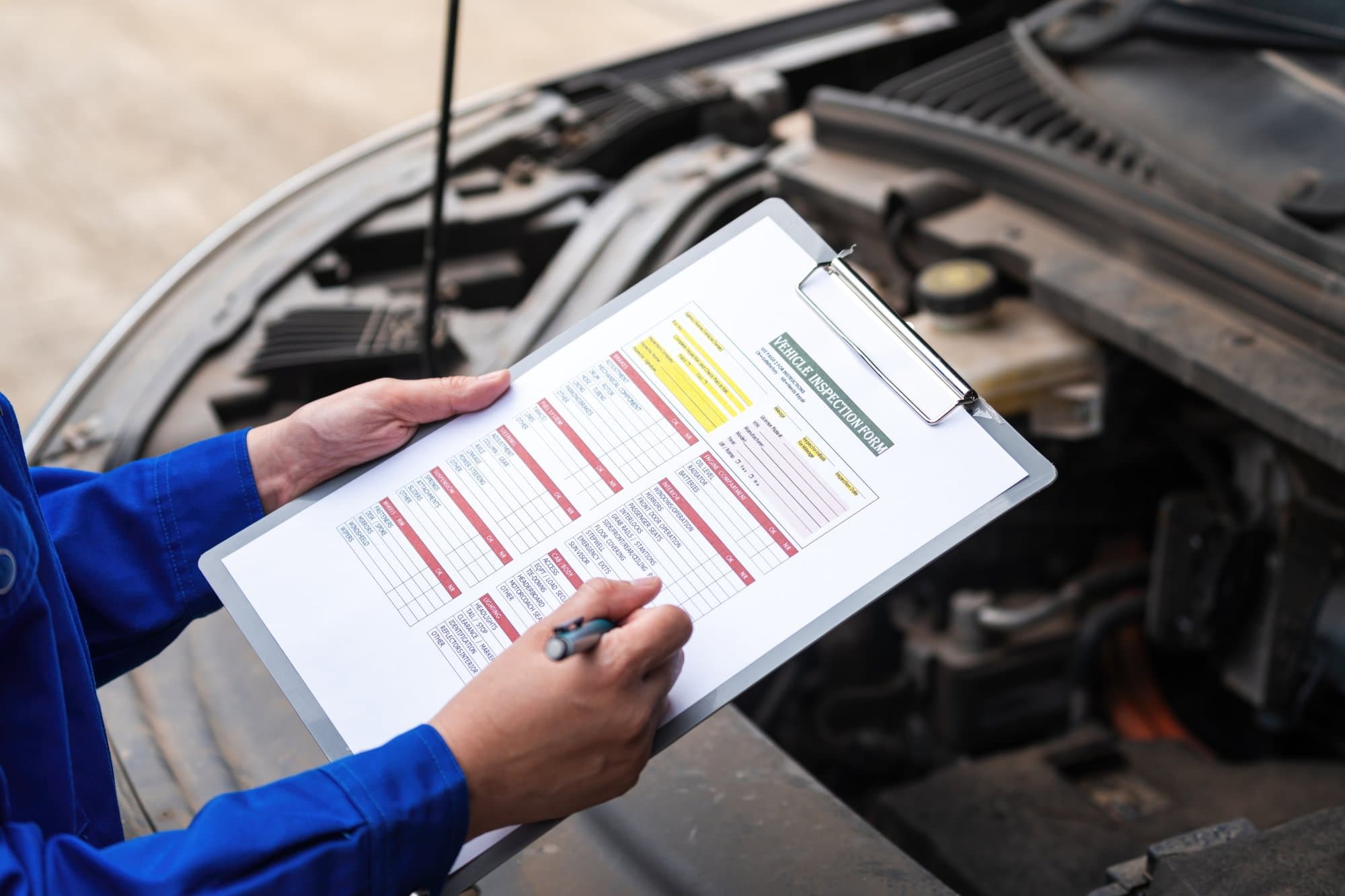
The technical requirements are usually the easy part. What inspectors find missing is rarely the equipment itself. It is the documentation that proves the equipment meets the standard, and the records that prove it has been operated and maintained that way over time.
The 2022 technology review amendments simplified the exemption process for shops not using target HAP coatings, replaced paper reporting with electronic submission, and clarified the spray gun cup liner volume rule. Those changes have been in effect since May 9, 2023 (3). The 6H Rule was not among the NESHAPs the EPA flagged for reconsideration in 2025. It is stable and remains in full force.
The 5-Year Recertification Trap
Painter training is one of the most commonly missed 6H requirements, and the reason is structural. Shops file the initial notification, train their current painters, and then the 5-year clock starts running quietly in the background. New painters get hired without certification. Existing painters reach the recertification date without anyone tracking it.
In our experience, the recertification date is rarely the gap that gets a shop noticed first. The gap that gets noticed first is a new painter who started spraying before completing certification. Both are citable. Both are easy to prevent if the training calendar is part of how the shop runs, not a binder somebody updates once and forgets.
Isocyanates: The Health Hazard With No Federal PEL
Modern automotive refinishing relies on two-part polyurethane coatings catalyzed by aliphatic isocyanates, primarily 1,6-hexamethylene diisocyanate (HDI) and isophorone diisocyanate (IPDI). Both are documented respiratory sensitizers and skin sensitizers (4). Isocyanates are the leading cause of occupational asthma in the United States.
OSHA does not have a Permissible Exposure Limit for aliphatic isocyanates. That gap surprises a lot of shop owners who expect to find a clean number to manage to. Compliance instead hinges on the General Duty Clause, the Respiratory Protection Standard at 29 CFR 1910.134 (5), the Ventilation standard for spray finishing at 29 CFR 1910.94(c), and Hazard Communication at 29 CFR 1910.1200.
In practice, this typically requires a written respiratory protection program where isocyanates are sprayed, with the trigger coming from the hazard assessment and the respiratory protection standard rather than a single exposure number. Medical evaluations and fit testing are required before respirators are worn. NIOSH recommends air-supplied respirators for spraying operations. Skin protection is not optional, because dermal absorption is a documented sensitization route.
Two OSHA Spray Booth Standards, Both in Effect
A common error in industry articles is treating OSHA's two spray booth standards as the same rule. They are not.
29 CFR 1910.107 covers fire and explosion hazards. Its source standard is NFPA 33. It requires substantial booth construction and a minimum 100 fpm air velocity over the open face during spraying (60 fpm for electrostatic). Vapor concentration must stay below 25 percent of the lower explosive limit, and combustible residue must be cleaned out daily (6).
29 CFR 1910.94(c) covers health hazards. Its source standard is ANSI Z9.3. It requires spray booths or spray rooms anywhere hazardous chemicals are sprayed. The trigger is the presence of the hazard, not the measured exposure level (7).
The two standards have different triggers and different focus areas. Most shops assume that meeting one of them covers the booth. It does not. OSHA has confirmed in formal interpretation letters that a spray booth or spray room may be required under 1910.94(c) for isocyanate exposure even when 1910.107 alone would not trigger one (8). This catches a lot of shops doing truck bed lining, undercoating, or polyurethane work outside a booth.
Where Air Quality, HazCom, and Hazardous Waste Meet
The booth is where compliance becomes visible. It is rarely where compliance breaks.
Most air quality citations in refinishing trace upstream to the SDS. The SDS identifies the target HAPs that determine whether the 6H rule applies. The SDS lists the isocyanates that drive the respiratory protection program. The SDS calls out the metals that determine whether spent booth filters are RCRA hazardous waste, with possible D-codes for arsenic, barium, cadmium, chromium, lead, mercury, selenium, and silver (9). The SDS describes the solvents that may trigger F-listed waste contamination if they reach the filters during spray gun cleaning.
When SDSs go stale, container labels are missing, or training is not refreshed, the chain breaks in predictable ways. A new clear coat with a different isocyanate gets sprayed without an update to the respiratory program. A new metallic pigment gets sprayed without a check on whether target HAPs trigger 6H requirements that previously did not apply. Spent booth filters get sent to a regular dumpster because nobody re-ran the hazardous waste determination.
This is the pattern we see most often in refinishing operations. SDS drift becomes program drift. Program drift becomes inspection findings.
What Actually Triggers an Inspection
Most auto body shops will not be picked at random for an inspection. They will get one because of:
- An employee complaint about chemical exposure, ventilation, or respirator use
- A reported respiratory illness or skin sensitization tied to spray operations
- A state air district inspection cycle, especially in California, Texas, the Northeast, and other states with active local enforcement
- A hazardous waste manifest follow-up that draws attention back to the source operation
- A 6H notification gap, including missed updates after equipment or coating changes
Once an inspector is on site, the scope rarely stays narrow. A complaint about ventilation pulls in the respiratory protection program and the SDSs behind it. A skin reaction pulls in glove and coverall selection alongside isocyanate handling. A waste manifest review pulls in booth filter characterization and gun cleaning practices. And the same gap, found across multiple coatings or multiple painters, multiplies. One finding becomes three. Three become eight.
State enforcement is currently more active than federal. EPA's 2025 priorities shifted toward cooperative compliance and the Audit Policy, while state agencies including the South Coast Air Quality Management District and other CARB districts in California, TCEQ in Texas, MassDEP in Massachusetts, and NJ DEP have continued routine inspections. Shops operating in those states are facing the same enforcement intensity they always have.
What Holds Up Under Inspection
The refinishing operations that hold up under inspection share a small set of operational habits:
- The painter training calendar is owned by someone, not buried in a binder
- Filter efficiency documentation is on file, not assumed from the box
- Booth pressure is verified and recorded, not felt at the curtain
- Spray gun cleaning happens in a closed container, every time, every painter
- New coatings trigger an SDS review and a respiratory program check, not just a reorder
- 6H notifications are updated when the operation changes, not when an inspector calls
- Booth filter waste is characterized on the way out, not when it surfaces on a manifest
None of this is glamorous. All of it is the difference between a clean inspection and a citation.
Auto Refinishing EHS Support from GMG EnviroSafe
Air quality compliance in refinishing is not complicated. It is continuous. The operations that stay ahead are not the ones with the most expensive booths. They are the ones whose programs match the chemistry actually moving through their shop.
That is the work GMG EnviroSafe handles alongside auto body and collision repair operations. Site-specific compliance assessments tied to your actual coatings and processes, 6H notification and recordkeeping support, written respiratory protection programs, painter training documentation, and hazardous waste characterization that holds up.
In our experience, the operations that pass inspections without a scramble are not lucky. They have programs that move with the work, not behind it. That is what we help build.
If your auto body or collision repair facility needs an upgrade on its air quality compliance program, contact GMG EnviroSafe today. We are here to help.
Sources
(1) Environmental Protection Agency. (2024). Risk Management for Methylene Chloride Under the Toxic Substances Control Act. Retrieved from: https://www.epa.gov/assessing-and-managing-chemicals-under-tsca/risk-management-methylene-chloride
(2) Environmental Protection Agency. (2024). 40 CFR Part 63 Subpart HHHHHH, National Emission Standards for Hazardous Air Pollutants: Paint Stripping and Miscellaneous Surface Coating Operations at Area Sources. Retrieved from: https://www.ecfr.gov/current/title-40/chapter-I/subchapter-C/part-63/subpart-HHHHHH
(3) Environmental Protection Agency. (2022). National Emission Standards for Hazardous Air Pollutants: Paint Stripping and Miscellaneous Surface Coating Operations at Area Sources Technology Review, Final Rule. Retrieved from: https://www.federalregister.gov/documents/2022/11/10/2022-24129/
(4) National Institute for Occupational Safety and Health. (2024). Isocyanates Topic Page. Retrieved from: https://www.cdc.gov/niosh/topics/isocyanates/
(5) Occupational Safety and Health Administration. (2024). 29 CFR 1910.134, Respiratory Protection. Retrieved from: https://www.osha.gov/laws-regs/regulations/standardnumber/1910/1910.134
(6) Occupational Safety and Health Administration. (2024). 29 CFR 1910.107, Spray Finishing Using Flammable and Combustible Materials. Retrieved from: https://www.osha.gov/laws-regs/regulations/standardnumber/1910/1910.107
(7) Occupational Safety and Health Administration. (2024). 29 CFR 1910.94, Ventilation. Retrieved from: https://www.osha.gov/laws-regs/regulations/standardnumber/1910/1910.94
(8) Occupational Safety and Health Administration. (2006). Standard Interpretation Letter: Applicability of 1910.107 to Truck Bed Spray-On Lining Operations. Retrieved from: https://www.osha.gov/laws-regs/standardinterpretations/2006-08-15
(9) Environmental Protection Agency. (2024). 40 CFR Part 261, Identification and Listing of Hazardous Waste. Retrieved from: https://www.ecfr.gov/current/title-40/chapter-I/subchapter-I/part-261