General
How Outdoor Vehicle and Parts Storage Can Affect Stormwater Compliance
Outdoor storage is a common and often necessary part of automotive operations. Vehicles wait for repair, parts are staged in the lot, and overflow inventory is placed in designated outdoor areas. When rain or snowmelt runs across those materials and carries something with it toward a drain or ditch, outdoor storage can create an overlooked stormwater issue.
The important distinction is that storing vehicles or parts outside does not automatically mean your facility needs an industrial stormwater permit. Whether any obligation applies depends on what your operation actually does, how it's classified, where your runoff goes, and the rules in your state and city (1)(2). The sections below walk through the factors that shape that answer and the conditions worth watching.
Why stormwater runoff matters for automotive facilities
When rain or snowmelt lands on a lot, it doesn't simply disappear. It flows across pavement, gravel, and storage areas, and it usually ends up somewhere specific: a storm drain, a ditch, or a nearby stream. The U.S. Environmental Protection Agency (EPA) explains that runoff contacting material storage, maintenance, cleaning, and similar activities can pick up pollutants and carry them to a waterbody, either directly or through a storm sewer (1). That pathway is what turns ordinary rain into a compliance question.
It helps to know the plumbing. A sanitary sewer usually carries wastewater to a treatment plant, while a storm drain often carries runoff toward surface water without that same treatment. A drain in your storage area may connect to the storm system rather than the sanitary sewer, and many facilities have never confirmed which one they have. Tracing where each drain actually leads is one of the most useful things a facility can do before worrying about permits at all, and confirming those drainage paths is one of the first things GMG looks at during a site walkthrough.
Which automotive operations need an industrial stormwater permit
Federal rules under the Clean Water Act's National Pollutant Discharge Elimination System (NPDES) apply industrial stormwater permitting to specific categories of industrial activity, not to the simple fact of having vehicles outside (1)(2). In the automotive world, the categories that matter most are:
- Salvage, recycling, and dismantling. Automobile salvage yards and junkyards are specifically named among the regulated categories, along with metal scrapyards and battery reclaimers (2). When stormwater discharges are associated with those activities, the facility generally needs permit coverage unless an applicable exclusion is available. Under EPA's federal Multi-Sector General Permit framework, automobile salvage yards are addressed as Sector M (4).
- Certain transportation and fleet facilities that conduct vehicle maintenance, equipment cleaning, fueling, or related activities, though only for the portions of the site involved in those activities (2).
- Vehicle and parts manufacturing, which falls under regulated manufacturing categories.
A retail auto repair shop, collision center, dealership, or quick-lube facility is not automatically placed in a federal industrial category just because it stores vehicles outdoors. The wrinkle is that the same business can cross into one of these categories without intending to: a shop that tows and accumulates wrecked vehicles, dismantles cars for parts, or recycles batteries and scrap may be doing regulated work without thinking of itself that way. State and local programs, co-located activities, and site-specific designations can also change the answer. What settles it is the actual activity, classification, drainage, and exposure at the site, not the name on the building. Working out which category, if any, fits a given operation is one of the questions GMG helps facilities answer, by reviewing actual activities against federal, state, and local requirements.
When outdoor vehicle and parts storage becomes stormwater exposure
Once you know runoff has a pathway and your activity might be covered, everything turns on a single word: exposure. The question is never simply whether something sits outdoors. It's whether rain or snowmelt can reach it and carry pollutants away.
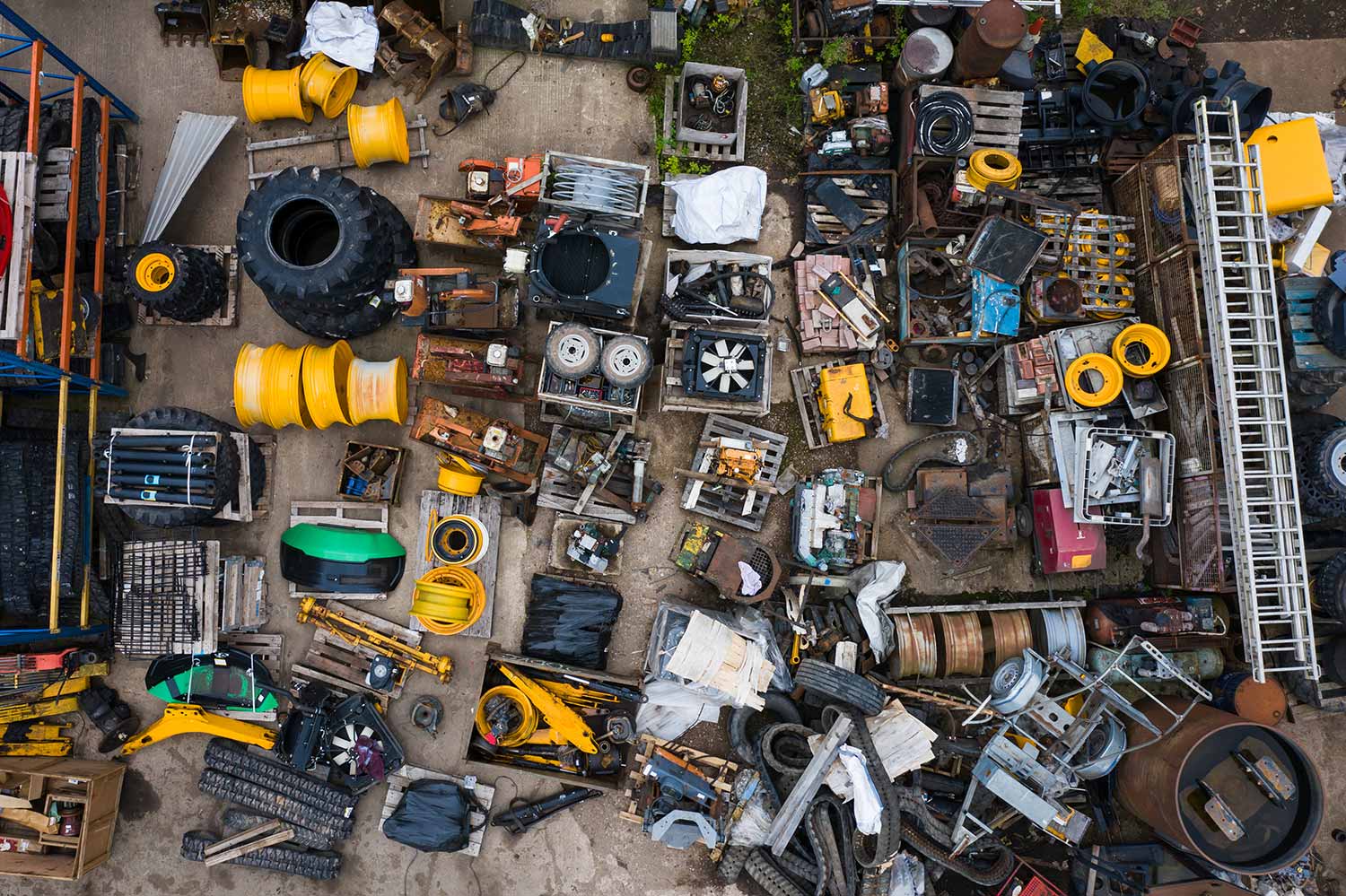
An intact, non-leaking vehicle is very different from a wrecked or leaking one. The same logic runs through the lot: a closed, sound container is very different from one that is open, damaged, or leaking; parts kept under a storm-resistant shelter are lower risk than oily parts left out in the rain; and a clean paved storage area is a different situation from a fluid-stained surface that drains toward an inlet. The materials that tend to create exposure are familiar ones, including leaking or damaged vehicles, engines and oily parts stored in the open, lead-acid batteries on bare ground, open or deteriorating waste containers, and outdoor fluid draining or dismantling. The pollutants they release are familiar too: oil and grease, fuel, antifreeze, brake and transmission fluid, battery acid, solvents, sediment, and metals such as lead, copper, and zinc (4). If a material can drip, flake, or wash off, runoff can carry it toward a drain.
The stormwater no-exposure exclusion, and how facilities lose it
This is where many automotive facilities have more room than they expect. Even when a facility falls into a covered category, it may be able to stay out of full permitting through a conditional "no exposure" exclusion. The principle is simple: if all industrial materials and activities are protected by a storm-resistant shelter so they aren't exposed to rain, snow, snowmelt, or runoff, the facility may be eligible to certify a condition of no exposure instead of obtaining permit coverage (2)(3).
The exclusion comes with conditions. It applies across the whole facility, so apart from a few narrow regulatory exceptions, industrial materials and activities have to stay protected from precipitation and runoff (3). It is neither automatic nor permanent: under the federal framework the certification is generally filed with the permitting authority once every 5 years, and the no-exposure condition has to hold the entire time, though state procedures can differ (3). The exceptions are also narrower than they sound. Federal rules let a few things remain outside, such as certain tightly sealed containers and adequately maintained material-handling vehicles (2), but a leaking, dismantled, or fluid-contaminated vehicle is a different matter, and whether a given storage practice qualifies should be confirmed under the applicable program.
The reason this matters for storage is that eligibility can slip away without anyone deciding to let it. A site may have genuinely qualified when it filed its certification, then changed in ways the paperwork never caught up to: parts moved outdoors, a covered bay turned into open storage, damaged vehicles began accumulating, or a roof or containment area deteriorated. The certification on file says one thing; the site says another. That mismatch, more than any single leaking part, is what tends to create an overlooked problem. Because those conditions can change quietly, GMG reviews whether a no-exposure exclusion still holds as a site evolves, and flags where it may no longer apply.
Stormwater best practices for outdoor storage areas
Managing exposure is mostly a matter of attention and containment rather than major construction. The habits that help are routine: checking arriving vehicles for leaks and walking the lot for drips, stains, and worn covers; moving oily parts, used filters, and actively leaking vehicles under a roof or a genuinely storm-resistant cover; and keeping higher-risk storage contained with drip pans, secondary containment, and curbing or berms, with batteries in protected, contained areas (4). Containment only helps if it's maintained, so drip pans and berms need to be inspected and emptied before they overflow in a storm, and unpaved areas deserve attention too, since leaked fluids and contaminated sediment can migrate well beyond the spot where they started.
A few practices cause more trouble than their size suggests. A tarp is not automatically the same as a permanent storm-resistant shelter; whether it counts depends on whether it consistently keeps precipitation and runoff off the materials and whether the permitting authority accepts it, and tarps tear, shift, and let rain run underneath. Vehicle and parts washing can create wastewater that a stormwater permit does not authorize, so the lawful disposal route should be confirmed rather than assumed to be the nearest drain. Spill materials should be on hand and staff should know how to use them, with cleanup and disposal documented when a release happens. And if a facility already operates under a Stormwater Pollution Prevention Plan (SWPPP), it's worth confirming that new storage areas, drains, and waste streams actually appear in it, because a plan that no longer matches the site offers little protection. Putting these measures in place and keeping them documented, from practical containment recommendations to a SWPPP that still reflects the site, is a large part of the support GMG provides.
Automotive stormwater compliance support from GMG EnviroSafe
The hardest part of this topic is rarely the cleanup. It's knowing where you actually stand: whether your operation falls into a regulated category, whether a no-exposure exclusion applies or still holds, and where your runoff ultimately goes. Those answers come from looking at operations, the lot, and the documentation together, and when conditions change later, a quick reassessment keeps permits, certifications, and plans aligned with what's really on site. Outdoor storage doesn't have to be a source of uncertainty. If you'd like a clear read on where your facility stands, contact GMG EnviroSafe for a stormwater exposure walkthrough, or for help with permit applicability and no-exposure eligibility.
Sources
- EPA. "Stormwater Discharges from Industrial Activities."
- Electronic Code of Federal Regulations. "40 CFR 122.26, Storm Water Discharges." Industrial-activity categories and the conditional no-exposure exclusion, including limited exceptions.
- EPA. "Stormwater Discharges from Industrial Activities: Conditional No Exposure Exclusion."
- EPA. "Industrial Stormwater Fact Sheet Series, Sector M: Automobile Salvage Yards." EPA guidance specific to automobile salvage yards.